shining bright

a British lighting manufacturer with a difference

Obsessed with solving problems, not just selling 'stuff': we were born from a belief that the lighting industry deserved better.

China Top Parking Lot Lighting Manufacturers

Choosing a parking lot lighting manufacturer in China involves more than comparing prices or browsing product photos. Buyers need fixtures that provide consistent illumination, manage glare, and withstand rain, dust, and temperature changes. A bright sample is not enough. Installation conditions matter.

This guide introduces Chinese manufacturers and the factors worth checking before requesting a quotation. It considers product ranges, optical design, materials, production capabilities, customization, and after-sales support. It also explains why useful documentation matters, including photometric files, warranty terms, and clear specifications. Details count.

A supplier’s catalog may look complete, yet the best fit depends on the site. A small retail lot, a busy distribution center, and a shared apartment parking area have different layouts and operating needs. Mounting height, pole spacing, existing wiring, and control preferences can all affect fixture selection. For projects with specific requirements, buyers should confirm details directly with the manufacturer and review relevant test records.

The companies discussed should be treated as options to research, not as a guarantee of suitability. Product quality and service can vary between models and projects. A polished specification sheet can still leave practical questions unanswered. That deserves a closer look. By comparing measurable performance, communication, and support alongside cost, readers can build a more informed shortlist and ask better questions before placing an order.
China Top Parking Lot Lighting Manufacturers

Overview of China's Parking Lot Lighting Industry

China’s parking lot lighting industry is shaped by dense urban development, expanding commercial sites, and pressure to reduce energy use. The National Bureau of Statistics reported that China’s urbanization rate reached 66.16% in 2023. This growth creates demand for dependable lighting in apartment complexes, logistics yards, shopping centers, and public parking areas. The figure is a useful backdrop, not a direct measure of parking-light sales.

Efficiency is another driver. The International Energy Agency’s Energy Efficiency 2023 report estimates that lighting uses about 15% of global electricity. For parking operators, LED fixtures, motion controls, and careful zoning can help cut wasted light during quiet hours. Details matter: a pole must illuminate vehicle lanes and pedestrian routes without creating harsh glare across nearby windows.

Wet pavement can also reflect light differently than a design plan suggests. That part gets overlooked. Chinese manufacturers serve a broad range of project needs, from coastal sites exposed to salt and humidity to industrial lots with dust and heavy vehicle traffic. Buyers should compare measured efficacy, ingress protection, corrosion resistance, and warranty terms, rather than relying on wattage alone. Specifications can look convincing on paper; an on-site trial still reveals uneven coverage and uncomfortable shadows.

Key Technologies in Parking Lot Lighting

China Top Parking Lot Lighting Manufacturers

Key Technologies in Parking Lot Lighting

A well-designed parking lot lighting system balances visibility, energy use, and comfort. LED luminaires are common because they provide efficient light and can be dimmed. But wattage alone says little about performance. Optical lenses shape the beam, helping direct light onto stalls and driving lanes instead of nearby windows. Uniformity matters. Bright patches beside dark corners can make pedestrians harder to see.

Photometric planning uses site measurements and lighting simulations to estimate coverage before installation. Pole height, spacing, and mounting angle all affect the result. A small angle change can create glare for drivers. Controls add another layer: photocells respond to daylight, while occupancy sensors can reduce output in quiet areas. Set the dimming levels carefully. A sensor that reacts too slowly may leave a person walking through a dim section.

Heat management also affects LED life. A sturdy housing should release heat and protect electrical components from rain and dust. Look for clear specifications on ingress protection, operating temperature, and measured light output. These details matter more than a polished product image. Still, simulations cannot capture every tree, sign, or wet pavement reflection. On-site checks after installation often reveal something the plan missed. That is worth admitting.

China Top Parking Lot Lighting Manufacturers - Key Technologies in Parking Lot Lighting

Technology or Design Factor What It Does Typical Specification or Practice Practical Benefit Key Selection Consideration
LED light sources Convert electrical energy into light using semiconductor-based emitters. Compare measured luminaire efficacy, lumen output, color temperature, and color rendering; values vary by product and operating conditions. Offer instant switching, controllability, and generally lower energy use than older high-intensity discharge systems. Evaluate the complete luminaire, not just the LED chip. Review test data, thermal design, and maintained-light-output information.
Optical distribution Direct light onto parking bays, drive aisles, pedestrian paths, and entrances. Distribution types include symmetrical and asymmetric patterns; the suitable optic depends on pole position, mounting height, and site layout. Can improve coverage while limiting wasted light beyond the parking area. Use a site-specific photometric layout to check average illuminance, minimum illuminance, uniformity, and spill light.
Glare and light-spill control Manage high-angle light and direct light toward intended areas. Options include shielding, careful aiming, suitable optics, and appropriate mounting heights. Can support visual comfort for drivers, pedestrians, and neighboring properties. Assess glare and boundary-light effects in the context of the site; brighter output alone does not ensure better visibility.
Adaptive dimming Adjust light output according to schedules, occupancy, or other control inputs. Common approaches include time-based schedules and step dimming; control compatibility should be confirmed before installation. Can reduce energy consumption during periods of lower activity while retaining required lighting levels. Set minimum output and response behavior to suit traffic, pedestrian use, and local safety requirements.
Occupancy sensing Detect movement and trigger or raise light levels in selected areas. Sensor coverage and response depend on sensor type, mounting position, detection range, and site conditions. Can help avoid operating all luminaires at full output when areas are unoccupied. Check for blind spots, false triggering, detection across vehicle lanes, and coordination between neighboring fixtures.
Photocell and time-clock control Switch lighting in response to ambient daylight or programmed operating hours. Photocells respond to measured light; time clocks follow configured schedules. Either can be used with dimming controls. Automates switching and can prevent unnecessary daytime operation. Choose appropriate sensor placement and settings to reduce interference from nearby luminaires, headlights, or reflected light.
Solar-powered lighting Uses photovoltaic modules, a battery, and a charge controller to operate a luminaire without a standard grid connection. System sizing depends on solar resource, panel orientation, battery capacity, load, operating hours, and required backup autonomy. Can serve remote locations or sites where grid connection is difficult or costly. Confirm performance for local seasonal conditions and define a battery replacement and maintenance plan.
Weather and impact protection Protects electrical and optical components from water, dust, and mechanical impact. Ingress-protection and impact-protection ratings are product-specific and should be verified from test documentation. Appropriate protection can support reliable operation in exposed outdoor environments. Match the rating to the installation conditions; an IP rating describes enclosure protection and does not by itself establish overall product durability.
Thermal management Moves heat away from LEDs and electronic components through the luminaire housing and heat-dissipation design. Review operating-temperature limits, thermal test information, and the manufacturer’s lumen-maintenance data. Managing operating temperature helps maintain performance and component life. Consider local ambient temperatures, airflow, mounting orientation, and exposure to direct sun.
Surge protection and electrical safety Helps protect drivers and other electrical components from transient voltage events. Protection levels and grounding arrangements vary; confirm the stated rating and installation requirements for each product. Can reduce the risk of damage from electrical disturbances when correctly specified and installed. Coordinate luminaire protection with the site’s electrical system, earthing, and applicable local codes.
Color temperature and color rendering Describe the appearance of white light and how naturally colors are rendered. Common outdoor LED options include warm-white and neutral-white color temperatures; exact choices depend on the project brief. Can support visibility and a consistent appearance across the site. Specify a consistent color appearance and consider visual comfort, surrounding uses, and local environmental guidance.
Lighting layout and maintenance factor Account for fixture spacing, mounting height, surface reflectance, and gradual light depreciation. Designs should use project-specific photometric files and include a maintenance factor appropriate to the environment and maintenance plan. Helps ensure the planned lighting remains suitable over the expected maintenance interval. Verify calculations against applicable local standards and the actual site plan; requirements differ by location and facility type.

Note: Specifications and lighting levels are project-dependent. Confirm product test reports, photometric files, local codes, and site-specific design calculations before selection.

Leading Parking Lot Lighting Manufacturers in China

Leading Parking Lot Lighting Manufacturers in China serve projects ranging from small retail lots to large logistics sites. Their strengths often include in-house assembly, flexible production volumes, and experience adapting fixtures to different pole heights. Buyers should examine more than wattage. Ask for photometric files, beam-angle options, driver details, and evidence of thermal testing. A 150-watt fixture can still create dark corners if its optics are poorly matched to the layout. Details matter.

Reliable suppliers can explain how housing materials, seals, and heat sinks perform in wet or dusty environments. Request sample units and inspect cable entries, finish quality, and mounting hardware before approving a large order. Compare quoted specifications with test reports, and confirm whether reported lumen output refers to initial or maintained performance. No factory gets every detail right on the first sample. That takes time. Communication can also be uneven, especially when drawings change late, so record revisions clearly and review them with the production team. These practical checks help identify manufacturers suited to a site’s lighting needs, budget, and maintenance plan.

How to Evaluate Chinese Lighting Manufacturers

When comparing China’s top parking lot lighting manufacturers, judge evidence, not catalogue claims. Ask for the exact fixture’s IES file and independent LM-79 test report. Check delivered lumens, wattage, color temperature, and beam distribution against your site plan. A broad, even beam can reduce dark patches between poles. Review housing material, gasket design, surge protection, and IP rating for the site’s rain, dust, and coastal exposure. One detail is easy to miss: confirm that the tested model matches the quoted model.

The U.S. Department of Energy’s 2017 Solid-State Lighting energy-savings forecast estimated that LED adoption could save about 569 TWh of U.S. electricity in 2035, compared with a no-LED baseline. That projection is not a promise for any single project. Ask manufacturers for LM-80 data and TM-21 lifetime projections, while treating rated life as an estimate, not a guarantee. Check how they handle failed samples, replacement parts, warranty claims, and production changes. A factory audit or live video inspection can help verify assembly and quality checks, but neither replaces a clear written specification.

Tips: Request a sample from the actual production line. Small details matter. Photograph the driver label, seals, and mounting points, then compare them with the approved drawings. Ask for a written tolerance on output and color. A neat sample can still hide inconsistent batch control; this is where buyers sometimes trust too quickly.

China Top Parking Lot Lighting Manufacturers: How to Evaluate Lighting Suppliers

A practical 100-point evaluation framework for comparing suppliers. The category weights are suggested assessment priorities, not measured market data.

Compare documented product performance, safety and compliance evidence, project references, warranty terms, and delivery capability. Verify certificates and test reports for the specific product model being quoted.

Applications, Standards, and Industry Trends

China Top Parking Lot Lighting Manufacturers

Applications, Standards, and Industry Trends

Parking lot lighting serves open lots, garages, loading zones, and transit hubs. Each setting needs clear visibility without harsh glare. Designers consider pole height, fixture spacing, pavement reflectance, and light reaching pedestrian faces. ANSI/IES RP-8-22 provides recommended practices for roadway and parking facility lighting; local codes may add requirements. A compliant layout still needs a real nighttime check. Drawings can miss dark corners.

The U.S. Department of Energy’s 2020 U.S. Lighting Market Characterization estimated that LEDs represented 48% of installed lighting stock nationwide. That figure covers many settings, not parking lots alone, but it signals a broad shift toward efficient lighting. Current projects increasingly pair LED luminaires with photocells, occupancy sensors, and dimming controls. These can reduce unnecessary operating hours, though poor sensor placement may leave walkways unexpectedly dim. More controls are not automatically better.

Tips: Request a photometric plan, then inspect the site after dark. Look for even pavement coverage, readable faces, and spill light near property edges. Record the checks; maintenance teams often inherit the blind spots.

Our story

When The Light Went On

The idea for Acrospire was formed in 2012 when founder Tim envisioned a different kind of lighting manufacturer: one that would not only deliver outstanding customer experiences but also prioritise fair treatment for its employees.

We’ve come a long way

Working from any nook and cranny we could find

Motivated by the belief the industry wanted and needed better, Tim shared his plan to establish his own venture with Hatty, who simply couldn't let him do it alone.

The rest, as they say, is history.

Protecting local jobs and ensuring the best quality possible.

The products sold should, where possible be manufactured here in the UK

Working from a rented office by day and assembling lanterns in a garage at night, Tim and Hatty set to work.

11 Years later

and a lot has changed

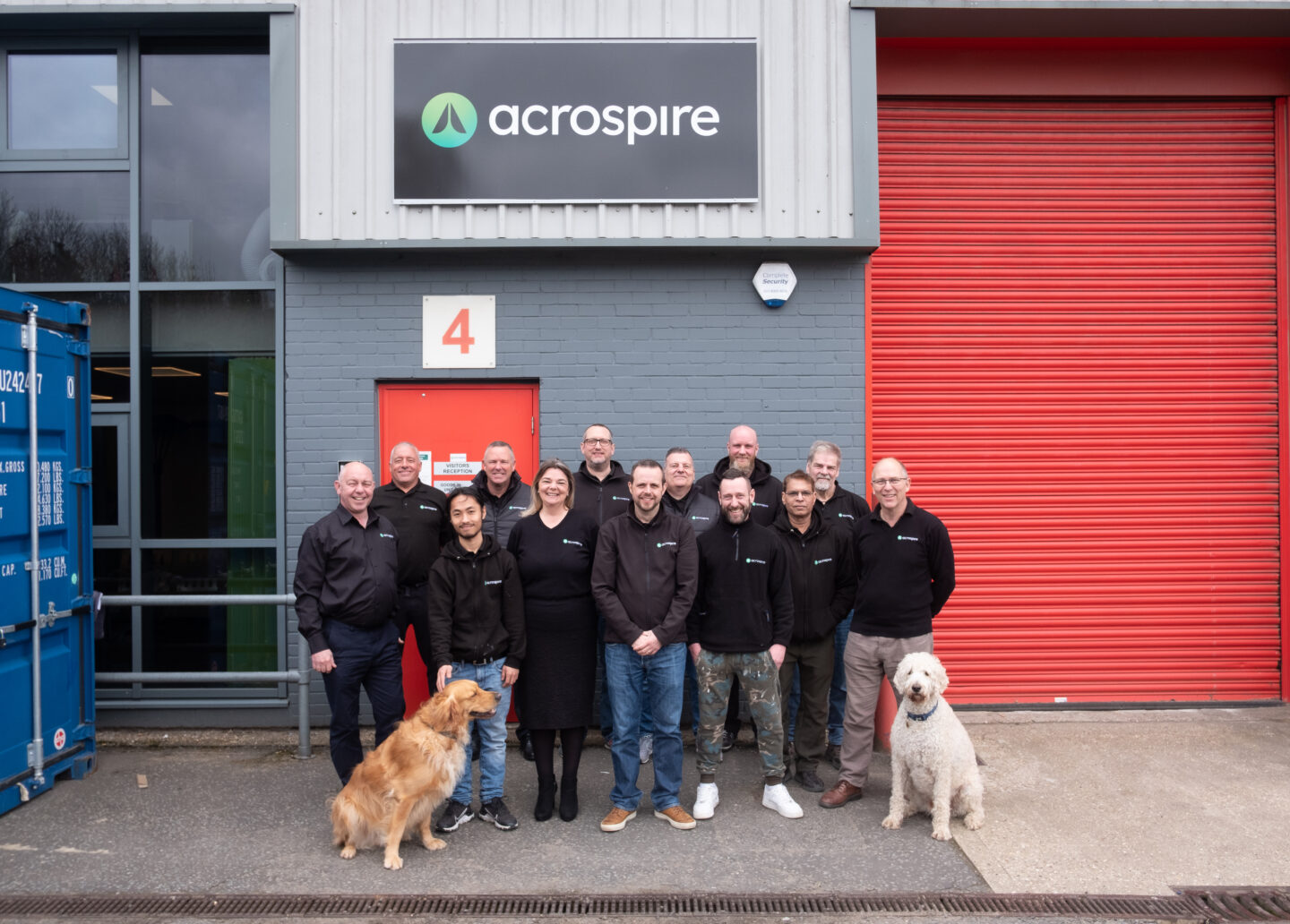
Acrospire now inhabits a 14000² ft manufacturing facility in Basingstoke, Hampshire. We’re a proud partner of the Made in Britain scheme, ISO9001 certified and a member of all relevant lighting industry trade bodies.

We've built a reputation to be proud of

Along with great relationships with our customers and a great team! We've attracted some of the most experienced members of the lighting industry, all by following one golden rule.

A simple ethos

Creating work to be proud of

That runs through all that we do. Customers who have made the switch to Acrospire have found working with us to be a breath of fresh air.

Market leading warranty

If you’re a professional in the lighting industry, you’re probably familiar with warranties that range from 3 to 10 years, with extensions available on special request or at additional cost. At Acrospire, where we’re proud to be different, we offer a market-leading simple 12-year warranty, as standard.

Tight Control on Quality

We focus on our customers not our competition. We manufacture our products in the UK: with the exception of our solar products, our supply chain is within a 60-mile radius of our factory in Basingstoke: to maintain greater control over quality. We al

Speed is key

Speed of response is crucial when it comes to resolving warranty issues. If we’ve made a mistake, we own it, get to the root cause, and fix it as quickly as possible. We believe in timely communication with our customers and making the resolution pro

Test and Test Again

We believe in independent testing and certification. Our new product development is in line with ISO 9001. Many of our products hold ENEC Certification. To meet the requirements of ENEC we also send random product samples for third party safety testi

Quality by design

Our product design is another key factor in our ability to offer a 12-year warranty. We value engineer rather than cost cut, never compromising on quality. We stick to our processes and engage with our supply chain to ensure that every product meets