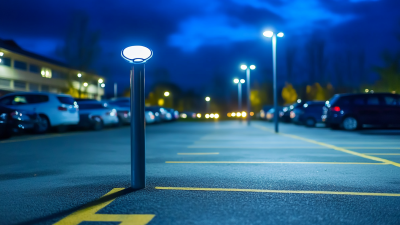
What Is the Best Type of Parking Lot Lighting from China?
Choosing the best parking lot lighting from China requires more than comparing prices or wattage. A suitable system must provide clear visibility, stable performance, and reasonable energy use. In real parking areas, drivers notice uneven brightness quickly. Dark corners, harsh glare, and flickering fixtures can reduce confidence after sunset.
LED lighting is usually the strongest starting point. It offers efficient output, long service life, and flexible beam distribution. However, not every LED fixture delivers the same results. A reliable supplier should provide photometric files, tested lumen data, IP and IK ratings, and clear warranty terms. These details matter near loading zones, car entrances, and exposed pavement.
Solar LED systems can work well where trenching power cables is difficult. Hybrid solar solutions may perform better in regions with cloudy winters. For large commercial lots, grid-connected LED fixtures often provide more consistent illumination. Smart controls can reduce output during quiet hours, but poor programming may create unsafe transitions. That possibility deserves attention.
Supplier experience also matters. Ask for installation photos, project references, sample testing, and production quality records. A physical sample can reveal heat dissipation problems that brochures hide. Check the driver brand, housing material, corrosion resistance, and maintenance access. Local electrical requirements and lighting recommendations must guide the final selection.
There is no universal winner. The best parking lot lighting depends on climate, pole height, traffic patterns, budget, and maintenance capacity. Some buyers focus too heavily on initial cost. That choice may become expensive when drivers, batteries, or LED modules fail early. A careful evaluation should balance measured performance with long-term reliability. Even experienced buyers can overlook glare control. Reflective pavement can make that mistake more obvious.
What Defines the Best Parking Lot Lighting from China?
What defines the best parking lot lighting from China? It is not the lowest price or the highest wattage. It is verified performance, reliable manufacturing, and suitability for the site. IES RP-8-22 recommends evaluating illuminance, uniformity, glare, and pedestrian visibility together. A good supplier should provide LM-79 test results, LM-80 data, photometric files, and clear warranty terms. These documents help engineers model lighting before installation.
Energy performance also matters. The U.S. Department of Energy reports that LED lighting can use up to 75% less energy than incandescent technology and last up to 25 times longer. However, parking lots often replace HID systems, so actual savings may differ. That detail is easy to overlook. The best Chinese-made fixture combines efficient LEDs, stable drivers, thermal control, and suitable optics. IP and impact ratings should match rain, dust, vehicles, and maintenance conditions. CIE 150:2017 also highlights controlling unwanted outdoor light near homes and roads.
Tips: Request a complete photometric simulation, not only a product sheet. Check the driver’s operating temperature range and surge protection. Ask for sample testing under real mounting heights. A lower wattage can look impressive, but dark walking areas create poor results. Factory audits, batch records, and independent laboratory reports strengthen trust. Some suppliers present excellent samples, yet production consistency remains uncertain. That is where careful verification matters.
Which Chinese Parking Lot Lighting Types Are Available?
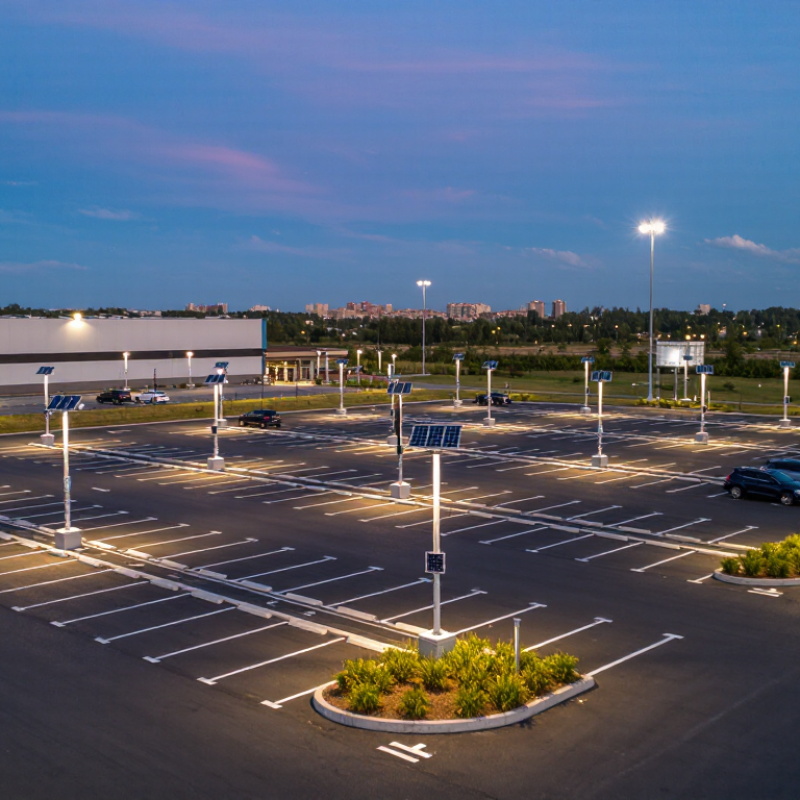
Chinese parking lots offer several lighting types, each suited to a different site condition. Grid-connected LED pole lights remain common for medium and large parking areas. They provide stable brightness throughout the night. Adjustable optics can direct light across parking bays instead of neighboring roads. This reduces glare and wasted energy. High-mast LED fixtures cover broad spaces, but their height may increase maintenance difficulty.
Solar LED pole lights combine photovoltaic panels, batteries, and efficient luminaires. They work well where underground cabling is expensive or unavailable. Integrated solar units place all components on one pole. Split solar systems use separate panels for better positioning. Hybrid solar-grid lights can provide extra reliability during long cloudy periods. Check battery capacity carefully. Weather data matters here.
Chinese suppliers also provide wall-mounted LED lights, bollards, and low-level pathway fixtures. Wall lights suit entrances, payment areas, and building edges. Bollards can improve pedestrian visibility near sidewalks. Use them selectively. Photocells, motion sensors, and remote controls help reduce unnecessary operation. Before ordering, request photometric files, protection ratings, battery test data, and warranty terms. A lighting engineer should model spacing and uniformity with local site measurements. One practical mistake is choosing maximum wattage instead of suitable distribution. I would rather accept slightly lower brightness than create harsh shadows and glare.
How to Compare Performance, Efficiency, and Durability
When choosing parking lot lighting from China, compare measured performance, not attractive catalog claims. The U.S. Department of Energy reports that LED systems can use at least 75% less energy than incandescent lighting and last up to 25 times longer. However, parking lots usually replace HID fixtures, so the comparison is not perfectly equal. Ask for system efficacy in lumens per watt, delivered lumens, and tested power consumption.
Measure the pavement.
Performance depends on more than brightness. Review photometric files, uniformity ratios, glare control, and mounting height. The Illuminating Engineering Society recommends evaluating illuminance across the entire parking area, including corners and pedestrian routes. A fixture producing 160 lm/W may still create dark patches if its optics are poorly matched. Request independent test reports under LM-79 conditions, rather than relying only on laboratory LED-chip data.
Durability needs evidence over time. Check LM-80 and TM-21 reports for lumen maintenance, then examine the driver separately. Look for operating-temperature data, surge protection, corrosion-resistant housings, and an IP66 or higher enclosure rating. IP protection does not prove long-term salt, dust, or thermal resistance. The U.S. DOE’s Solid-State Lighting reports also stress thermal management as a major factor in LED lifetime. In practice, inspect drainage paths and cable seals closely. These details are easy to overlook. A five-year warranty sounds reassuring, but replacement access, spare drivers, and documented testing may matter more than the warranty wording.
What Features Suit Different Parking Lot Requirements?
What Is the Best Type of Parking Lot Lighting from China?
What Features Suit Different Parking Lot Requirements?
Choosing parking lot lighting starts with site conditions, not product appearance. A compact retail lot may need wide, uniform illumination for pedestrians and vehicles. A multi-level garage often needs low-glare fixtures with strong vertical light. This helps drivers see signs, walls, and moving people clearly.
Outdoor lots need weather-resistant housings, usually with suitable IP protection and corrosion resistance. Areas near the coast require extra attention to salt exposure. Beam angle matters too. A narrow beam can create bright spots, while a wider beam may reduce dark gaps. For large sites, dimming controls and motion sensors can lower energy use during quiet hours. However, poor sensor settings may cause unwanted switching.
Tips: Check the lighting layout before ordering samples. Ask for photometric files, lumen maintenance data, temperature tests, and protection ratings. Confirm pole height, spacing, mounting angle, and local voltage requirements. A sample test at night is more useful than attractive catalog photos.
From practical project reviews, reliable suppliers should explain tolerances and testing limits clearly. Look for stable color temperature, surge protection, thermal management, and accessible replacement parts. Chinese manufacturers can often customize optics, housing materials, and control systems. Still, customization may increase lead time and inspection needs. I have seen projects focus on wattage while ignoring glare. That mistake can make a bright parking lot feel uncomfortable and unsafe.
How to Select a Reliable Chinese Lighting Manufacturer
For a parking lot, lighting is not only about brightness. It must guide drivers, reveal pedestrians, and resist rain, dust, and vibration. In my experience, reliable selection begins with the manufacturer, not the catalog. Ask for lighting calculations, photometric files, and a clear explanation of glare control. A supplier that only promises “high wattage” may not understand parking environments. More power can create harsh shadows and waste energy. That is an easy mistake.
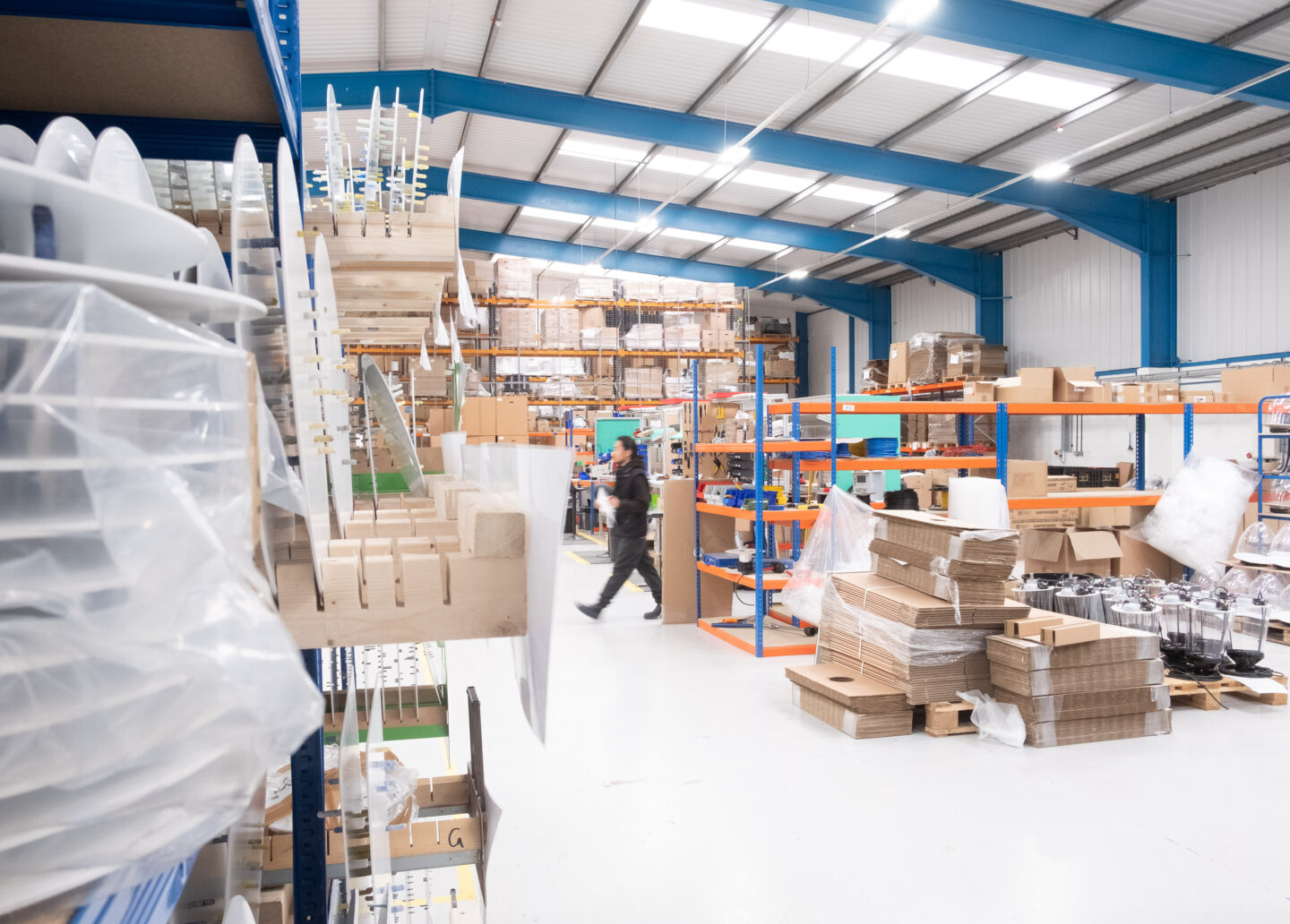
When evaluating a Chinese lighting manufacturer, check its production process in practical detail. Request photos or videos of assembly, aging tests, waterproof testing, and final inspection. Verify whether test reports match the exact model, driver, and lens being offered. Independent certifications can support trust, but certificates alone are not enough. Check their issuing bodies and dates. Ask how they handle failed samples, replacement parts, and warranty claims. Responsive technical support matters after installation, especially when pole heights or local weather differ from the original plan. A factory should provide drawings, installation guidance, and clear English communication.
I also compare a small sample order with the final production batch. The sample may look excellent, while later units can vary. Measure pavement illuminance, inspect cable glands, and record operating temperatures. This takes time. It prevents costly assumptions. A dependable manufacturer welcomes questions, admits limitations, and suggests better specifications when needed. I would not choose solely by the lowest quotation. Long-term performance, documented quality, and honest communication usually protect the project better. Still, every claim deserves verification before payment and shipment.
What Is the Best Type of Parking Lot Lighting from China? - How to Select a Reliable Chinese Lighting Manufacturer
| Lighting Type |
Typical System Efficiency |
Typical Service Life |
Color Rendering |
Start-Up Performance |
Maintenance Requirement |
Suitability for Parking Lots |
| LED Area Light |
Approximately 100–180 lm/W at system level |
Typically 50,000–100,000 operating hours to L70, depending on temperature and design |
Usually CRI 70–80; higher CRI options are available |
Instant-on and suitable for dimming, photocells, timers, and motion controls |
Low; periodic cleaning and inspection are normally sufficient |
Best overall option for most new and retrofit projects |
| Solar LED Area Light |
Approximately 100–180 lm/W for the LED module; total performance depends on solar and battery sizing |
LED: 50,000–100,000 hours; battery commonly requires replacement after about 3–8 years |
Usually CRI 70–80 |
Automatic dusk-to-dawn operation; output can decrease after several cloudy days |
Low electrical maintenance, but panels need cleaning and batteries need monitoring |
Useful where grid connection is difficult or trenching costs are high |
| High-Pressure Sodium |
Approximately 60–150 lm/W |
Typically 20,000–30,000 operating hours |
Usually CRI 20–40 with a yellow-orange appearance |
Requires warm-up time and may need restriking after power interruption |
Medium to high; lamps and control gear require periodic replacement |
Suitable mainly for legacy systems where color quality is not important |
| Metal Halide |
Approximately 65–115 lm/W |
Typically 10,000–20,000 operating hours |
Usually CRI 65–90, depending on lamp type |
Requires warm-up and cool-down periods; limited restart capability |
High compared with LED because lamps and ballasts wear out |
Acceptable for older installations but generally less attractive for new projects |
| Recommended Selection |
Choose the highest practical system efficacy after checking photometric results, not LED chip efficacy alone |
Request an LM-80/TM-21 or equivalent LED lifetime basis and a clearly stated L70 rating |
CRI 70 or higher is generally suitable for standard parking areas; select higher CRI where security or identification is important |
Prefer instant-on operation and programmable dimming for energy savings |
Confirm replaceable drivers, surge protection, warranty terms, and spare-part availability |
For most projects, a properly designed LED area-light system offers the best balance of efficiency, control, maintenance, and lighting quality |
Key Checks When Selecting a Chinese Lighting Manufacturer
Verify independent photometric files, electrical safety and EMC test reports, ingress and impact protection ratings, operating-temperature data, surge protection level, production quality controls, sample consistency, warranty coverage, factory inspection access, and the availability of replacement drivers and spare parts. Ask for a lighting simulation based on the actual pole height, spacing, mounting angle, parking layout, and required illuminance.
Note: Performance figures are typical industry ranges and vary by product design, operating temperature, control gear, installation conditions, and local standards. Final selection should be based on a project-specific photometric calculation.