Top 10 RGBW Floodlight Manufacturers for Global Buyers
Choosing RGBW floodlights for a global project involves more than comparing wattage or color options. Buyers must consider how each fixture performs outdoors, integrates with controls, and holds up under regular use. A broad plaza, a hotel façade, and a sports venue each place different demands on beam shape, brightness, and color consistency. Small details matter.
This guide to the Top 10 RGBW Floodlight Manufacturers for Global Buyers offers a practical starting point for comparing suppliers. It considers product range, published technical information, customization, manufacturing experience, and support for international orders. Look closely at ingress protection ratings, housing materials, heat management, dimming methods, and warranty terms. Ask for photometric data and confirm that certifications match the destination market and project requirements. Specifications on a product page are useful, but they do not replace project-specific testing or clear answers from the manufacturer.
No single supplier will suit every installation. Some buyers may prioritize dependable lead times; others may need precise color control or tailored mounting options. A ranking can simplify a crowded market, though it cannot capture every site condition or service experience. Treat the manufacturers below as candidates to evaluate, not automatic endorsements. Compare documented performance, request samples where practical, and clarify support arrangements before placing a large order.
Understanding RGBW Floodlights and Their Core Technology
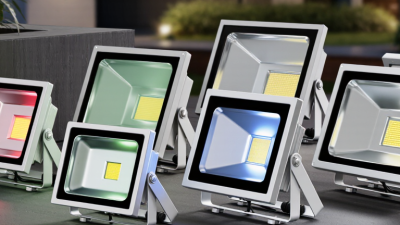
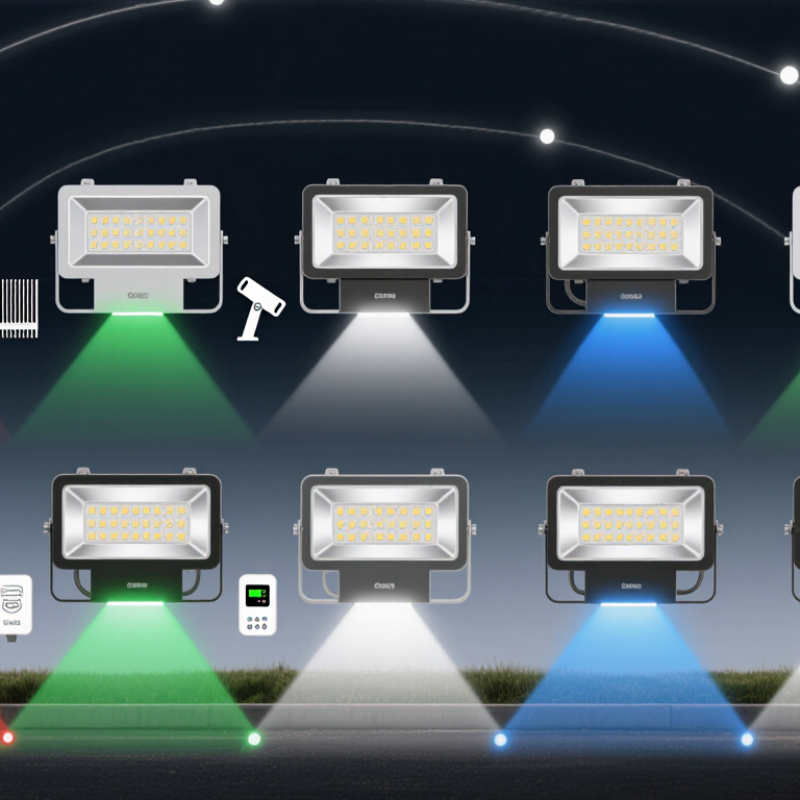
RGBW floodlights combine red, green, and blue emitters with a dedicated white LED. The RGB channels create saturated colors; the white channel produces cleaner whites and often improves useful white-light output. A driver adjusts each channel, while optics blend them into one beam. On a wet stone wall, poor mixing can show colored fringes. It happens.
The U.S. Department of Energy’s 2022 SSL R&D Opportunities report sets a future LED-package efficacy goal of up to 250 lumens per watt. This is a research target, not a promise for a finished floodlight. The International Energy Agency’s lighting analysis also highlights why efficiency matters: lighting remains a significant electricity use worldwide. For buyers, compare system efficacy, beam angle, color consistency, and thermal performance—not chip figures alone. Heat buildup can shift color and shorten component life, especially in sealed outdoor housings.
Tips: Ask for measured output in both white and color modes, plus test conditions. Check how smoothly the fixture dims, and whether its white channel can hold a stable color temperature. A specification sheet may look precise; field results can still vary with installation and ambient temperature.
Key Performance Specifications for Commercial RGBW Floodlights
Commercial RGBW floodlights should be assessed by usable light output, not wattage alone. Request lumen data for both white and mixed-color modes, since RGBW output can change considerably by channel. Check the white channel’s color temperature and color-rendering index against the site’s needs. A loading area may need clear, neutral white, while a façade may prioritize saturated colors. Small differences show.
Beam angle and mounting height affect coverage. A narrow beam can create bright patches on a wall; a wider optic may spill light beyond the target. Ask for photometric files and examine uniformity at the planned distance. For outdoor installations, check the stated ingress and impact ratings, operating-temperature range, and corrosion resistance. Confirm that thermal protection does not sharply reduce output during long operating periods. Dimming behavior matters, too: request flicker data at multiple levels and verify control-system compatibility before ordering.
Tips: Compare test conditions, not just catalog figures. Ask for a sample or independent photometric report when practical. Spec sheets can omit useful details; treat missing data as a question, not an assumed pass.
Top 10 RGBW Floodlight Manufacturers for Global Buyers - Key Performance Specifications for Commercial RGBW Floodlights
| No. | Performance specification | Common commercial range or option | Buyer verification point |
|---|---|---|---|
| 1 | Rated input power | Approximately 50–1,000 W, depending on fixture size and application | Compare actual input watts and power consumption at the intended color mix, not LED chip wattage alone. |
| 2 | Supply voltage and frequency | Many models support 100–240 V AC, 50/60 Hz; some are voltage-specific | Check the product label, driver input range, regional plug or wiring requirements, and local electrical compliance. |
| 3 | Color channels and white output | Red, green, blue, and a dedicated white channel; white-channel CCT is commonly specified around 2,700–6,500 K | Request separate color-channel data and clarify whether CCT applies to the white LEDs or a mixed RGBW output. |
| 4 | White-light color rendering | Ra 80 or higher is a common general-purpose target; higher-CRI options may be available | Check the CRI test report for the white channel at the selected CCT; RGB color mixing does not establish white-light CRI. |
| 5 | Beam angle and optics | Common options range from narrow beams near 10° to wide beams around 60° or more | Request photometric files, such as IES or LDT, and verify beam distribution for the mounting height and target area. |
| 6 | Ingress protection | IP66 is a common rating for outdoor commercial fixtures; lower ratings may suit protected locations | Confirm the rating applies to the complete assembled fixture, including connectors and cable entries. |
| 7 | Impact protection | IK08–IK10 options are found in rugged commercial and outdoor product ranges | Check the declared IK rating and test documentation where the fixture may be exposed to impact or vandalism. |
| 8 | Control and dimming | DMX512 is common for color control; RDM and other control options vary by model | Confirm protocol version, channel modes, addressing method, cable requirements, and compatibility with the control system. |
| 9 | Operating temperature | A range around −20°C to +50°C is common, but limits are product-specific | Check the rated ambient temperature and any output derating, especially for enclosed or high-temperature installations. |
| 10 | Lifetime and surge protection | Some products publish L70 life estimates up to 50,000 hours; surge protection varies by driver and configuration | Request the lifetime test basis, warranty terms, and surge-protection rating in kV; published lifetime is an estimate, not a guarantee. |
How to Evaluate RGBW Floodlight Manufacturers
Top 10 RGBW Floodlight Manufacturers for Global Buyers
How to Evaluate RGBW Floodlight Manufacturers
Choosing an RGBW floodlight manufacturer takes more than comparing brightness figures. Ask for measured lumen output, beam angle, color consistency, and test data for the exact model you plan to buy. A specification sheet may look complete, yet installation conditions can change real performance. Check how the housing handles heat, rain, and dust, especially for fixtures mounted outdoors for long hours. That matters.
Review the control system before requesting a quote. Confirm compatibility with your controller, dimming method, and power supply, then test a sample in the intended setting. Look for smooth transitions between red, green, blue, and white, without visible flicker or uneven color across the beam. Ask how the manufacturer checks production batches and manages replacement parts. A polished sample is useful, but it does not prove every unit will match. I would verify that point.
Tips: Request a sample, test it at the expected mounting height, and compare its output with the stated data. Ask for clear warranty terms and written test reports. If answers are vague, pause before placing a large order.
Top 10 RGBW Floodlight Manufacturers for Global Buyers
For global buyers, a “top 10” RGBW floodlight shortlist should compare manufacturing capability, not just bright product photos. RGBW units combine red, green, blue, and a dedicated white channel, which can produce more practical white light than RGB alone. Check published lumen data, beam angles, color consistency, and dimming behavior. Ask whether test results apply to the exact model you plan to order.
Outdoor conditions change the decision. Compare the stated ingress protection rating with the fixture’s exposure to rain, dust, and cleaning routines. Review housing materials, heat management, cable entries, mounting hardware, and warranty terms. Request photometric files and installation guidance, then confirm that product certifications match the destination market. A sample tested at full output can reveal color shifts or excess heat that a catalog cannot. Details matter.
A dependable manufacturer should answer technical questions clearly and provide traceable documentation, spare-part information, and realistic lead times. Compare at least ten suppliers using the same checklist; otherwise, unlike-for-like quotations can distort the ranking. I would still double-check claims against independent test reports where available. No shortlist is perfect. Small gaps in documentation may be easy to overlook, yet they can complicate installation and maintenance months later.
Global Sourcing, Compliance, and After-Sales Considerations
Global sourcing for RGBW floodlights starts with a clear specification, not a low quotation. Define wattage, beam angle, control method, housing material, and operating temperature. Ask for a production sample and check color consistency across red, green, blue, and white channels. Small details matter. A vivid sample may still differ from a full production batch, so agree on measurable acceptance criteria before ordering.
Compliance requirements vary by destination and installation type. Request current test reports and certificates for the exact model, not a similar product. Verify that documents match the product label, driver, and supplied accessories. Also confirm ingress protection and electrical ratings suit the planned environment. A document check helps, but it cannot replace technical review. No checklist catches every installation issue.
After-sales support deserves equal attention. Clarify warranty coverage, response times, replacement-part availability, and who pays freight for confirmed defects. Keep records of batch numbers and installation conditions; these make fault diagnosis less uncertain. Ask whether the supplier can provide wiring diagrams and troubleshooting guidance. A factory audit may look reassuring, yet it cannot predict every delay or communication gap. Test the support process with specific questions before committing to a large order.
Water-Jet Test Flow Rates for IPX5 and IPX6
IEC 60529 specifies a water flow of 12.5 L/min for the IPX5 jet test and 100 L/min for the IPX6 powerful-jet test. These ratings describe different test conditions, not a complete measure of outdoor suitability. When evaluating RGBW floodlights, check the exact IP rating on the product documentation and request applicable test reports; installation, cabling, and maintenance also affect real-world protection.
Related Posts
-
How to Choose China Top RGBW Floodlights?
-
How to Choose RGBW Floodlights in 2026?
-
Understanding RGBW Floodlights: Innovative Lighting Solutions for Every Application
-
How to Choose the Best Track Lights for Your Home Lighting Needs
-
10 Best Outdoor Lighting Products for Global Buyers
-
Exploring the Best Street Lights: A Comprehensive Comparison for Global Buyers