How to Choose RGBW Floodlights in 2026?
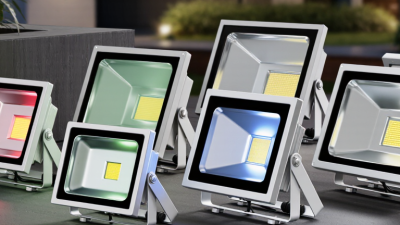
Choosing RGBW floodlights in 2026 requires more than comparing brightness figures and app features. A reliable fixture must deliver vivid color, usable white light, stable outdoor performance, and predictable control. RGBW floodlights add a dedicated white LED channel, unlike many RGB-only products that create white by mixing colors. That difference matters when illuminating a garden path, hotel façade, stage backdrop, or architectural wall.
Look closely at lumen output, beam angle, color temperature, CRI, and dimming quality. A narrow beam can highlight a statue, while a wider beam spreads light across a brick façade. Check the IP rating, housing material, cable quality, and thermal design before trusting impressive marketing images. Heat buildup can reduce brightness and shorten LED life. It is easy to overlook.
Control compatibility deserves equal attention. Confirm whether the light supports DMX, Wi-Fi, Bluetooth, or another system used by your installation. In 2026, buyers should also review firmware support, privacy practices, and compatibility with current smart-home platforms. Specifications should come from the manufacturer, while independent testing and installer feedback can reveal practical weaknesses.
No fixture is perfect. Some models produce excellent colors but weak whites. Others offer strong brightness but noisy fans or limited software. A dependable decision balances performance, installation conditions, maintenance access, warranty coverage, and energy use. Measure the mounting distance and target surface first. Then compare verified data rather than choosing from photographs alone. A cautious evaluation may take longer, but it prevents costly replacements and disappointing nighttime results.
What Are RGBW Floodlights and How Do They Work?
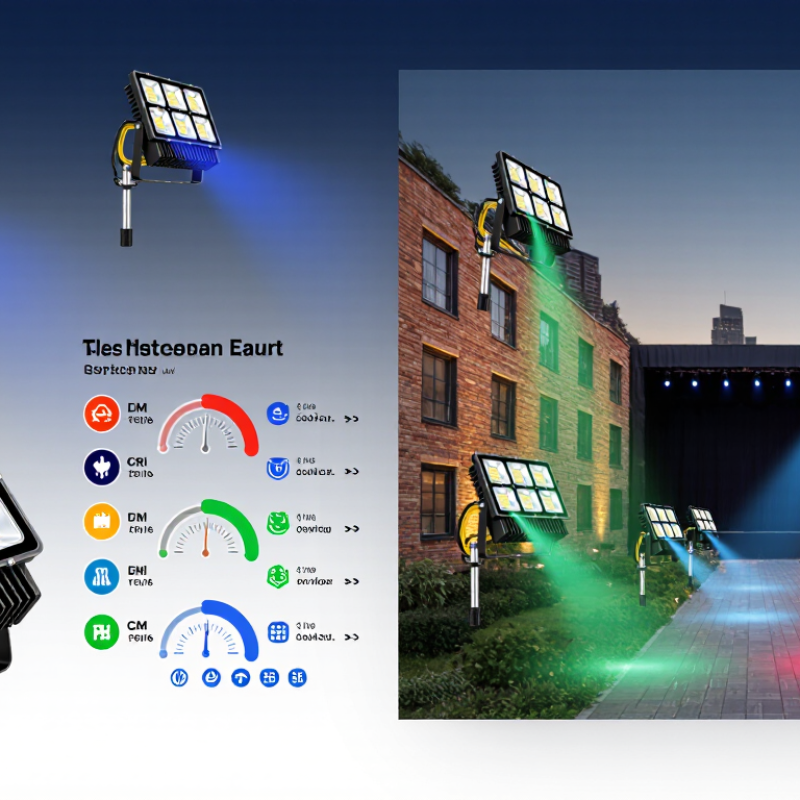
RGBW floodlights combine red, green, blue, and white light-emitting diodes in one fixture. RGB channels create colored light through additive mixing. The separate white channel produces cleaner illumination than mixing three colors alone. It can deliver soft warm white, neutral white, or cooler daylight tones, depending on the design. This matters when a garden, façade, or event area needs both color and comfortable visibility.
The fixture’s controller adjusts LED intensity through pulse-width modulation or regulated current. A lighting console, wall controller, or wireless system sends these commands. Quality drivers reduce visible flicker, while proper heat sinks protect the LEDs during long operation. Check the beam angle carefully. A narrow beam creates sharp accents, but a wide beam covers paths and walls more evenly.
When choosing RGBW floodlights in 2026, inspect the rated lumen output for white mode, not only the color claims. Review the color-rendering value, adjustable color temperature, power efficiency, and control compatibility. An IP65 or higher enclosure suits many exposed outdoor installations, but installation details still affect water resistance. I once selected a bright fixture with a poor beam pattern. It wasted light beyond the target wall. That was a useful mistake. Measure the mounting distance, test one unit at night, and compare the result with its technical data. Photometric files and flicker information provide stronger evidence than attractive specifications.
How to Define Your Lighting Needs and Installation Environment
Before choosing an RGBW floodlight, define the scene you need to create. A warehouse entrance needs visibility and uniformity. A garden wall may need softer color and controlled beam spread. The International Energy Agency reports that lighting uses about 15% of global electricity. Efficiency matters, but wasted light also matters. Measure the target area, mounting height, viewing distance, and operating hours. Then estimate lumens, beam angle, color temperature, and RGBW control requirements.
The installation environment decides the fixture specification. Outdoor units should match the expected water and dust exposure under IEC 60529 ratings. IP65 may suit rain and dust, but standing water demands greater caution. Check corrosion risks near coastal air, heat around dark walls, and vibration on poles. The U.S. Department of Energy states that LED lighting can use at least 75% less energy and last up to 25 times longer than incandescent lighting. That benchmark is useful, not a promise for every RGBW product. Thermal design, driver quality, and dimming behavior still affect results.
Leave room for doubt. A bright test sample can hide glare, color shifts, or poor coverage at night. Test one unit after sunset, preferably in wet and dry conditions. Record surface temperature and control response. I would also question whether full-color effects are genuinely needed every evening. A simple schedule may reduce energy use and maintenance. Many lighting plans fail because they measure brightness, but ignore neighbors, reflections, and future access for repairs.
Which RGBW Specifications Matter Most in 2026?
How to Choose RGBW Floodlights in 2026?
In 2026, RGBW specifications matter more than decorative color claims. Start with usable white output, measured in lumens, not total diode wattage. The U.S. Department of Energy’s 2023 Solid-State Lighting R&D report identifies efficacy above 200 lumens per watt as a continuing development target. Most buyers should still compare tested system efficacy, thermal conditions, and output at full color. A bright specification can become disappointing after heat builds inside a sealed housing.
White quality needs closer inspection. Check correlated color temperature, CRI, and IES TM-30 data together. CRI 90 may sound excellent, yet weak R9 performance can make red objects look dull. TM-30 values such as Rf and Rg reveal fidelity and saturation more clearly. Ask for test reports.
Not just marketing.
For outdoor use, verify IP65 or IP66 protection under IEC 60529, then examine IK impact resistance, cable glands, and drainage design. Color consistency also matters across multiple fixtures. Look for binning information and a stated color tolerance, preferably in MacAdam steps. A control system supporting smooth dimming, adjustable white balance, and local fallback is valuable when networks fail. I would also question lifetime claims based only on LED hours. LM-80 and TM-21 evidence is useful, but it does not fully predict the complete floodlight. Thermal testing, driver reliability, and warranty terms deserve equal attention. Some specifications remain vague. That is the warning sign.
How to Choose RGBW Floodlights in 2026?
Which RGBW Specifications Matter Most in 2026?
The selection index prioritizes the specifications that most directly affect color quality, outdoor reliability, operating cost, and lighting flexibility. In practical 2026 projects, look for CRI 90 or higher, IP66 protection, a rated life of around 50,000 hours, approximately 80–120 lm/W efficacy, a tunable white range near 2200–6500K, and interchangeable beam angles suited to the installation.
The index is a technical decision aid based on commonly used professional lighting thresholds, not a market-share or brand ranking.
How to Compare Controls, Compatibility, and Energy Efficiency
How to Choose RGBW Floodlights in 2026?
How to Compare Controls, Compatibility, and Energy Efficiency
Control quality often matters more than maximum brightness. Check whether the floodlight supports DMX, DALI, 0–10V, or wireless control. Match the protocol with your existing controller before ordering. A four-channel RGBW unit needs separate red, green, blue, and white channels. Some controllers group these channels differently, causing incorrect colors. Ask for a wiring diagram and test one fixture first. Small tests prevent expensive rewiring.
Compatibility also includes voltage, connectors, enclosure rating, and dimming behavior. A 24-volt system cannot safely replace a mains-voltage fixture without suitable equipment. Outdoor installations need protection against rain, dust, and condensation. Confirm the operating temperature range, especially for roof areas and exposed walls. Flicker may appear during slow-motion filming or camera surveillance. The specification sheet may not reveal everything.
Energy efficiency requires more than checking watts. Compare useful light output, color quality, thermal performance, and standby consumption. A fixture with efficient LEDs can still waste energy through poor heat control. Look for stable dimming below 20 percent, because many projects operate at low brightness overnight. Measure actual power with a meter if possible. Datasheets are useful, but they are not perfect. In practice, cable losses, heat, and control settings can change results. I would also leave room for revision after a short site trial. Brilliant colors are attractive, yet excessive saturation may consume more power than expected.
How to Choose RGBW Floodlights in 2026? — How to Compare Controls, Compatibility, and Energy Efficiency
A practical comparison of control methods, system compatibility, installation requirements, and energy-performance factors for RGBW floodlights.
| Control Approach | Typical Operating Range | Compatibility Requirements | Energy and Operating Considerations | Best-Suited Applications | Main Limitations |
|---|---|---|---|---|---|
| Standalone / Manual Local switches, onboard buttons, or simple wired controllers. |
Usually one fixture or a small group located within the controller’s cable range. | Confirm the fixture voltage, current rating, RGBW channel layout, and connector type. A four-channel RGBW driver or controller is required for independent red, green, blue, and white adjustment. | Lowest standby complexity. | Small architectural features, signs, gardens, and installations that do not require scheduling or remote access. | Limited automation, grouping, scene storage, and remote monitoring. |
| Bluetooth Short-range app-based control. |
Generally suitable for nearby control; practical range depends on walls, antennas, and the Bluetooth implementation. | Phone or tablet must support the required Bluetooth version and app. Check whether one app can group fixtures from different manufacturers; many systems use proprietary profiles. | Low control-system power use. Fixtures still consume energy according to brightness, color mix, and operating schedule. | Residential projects, retail displays, hospitality areas, and small installations with local app control. | Range can be reduced by concrete and metal. Remote internet access may require a separate gateway. |
| Wi-Fi / IP Control Network-based control through a local network or cloud service. |
Network coverage is the limiting factor rather than a fixed lighting-control cable length. | Check 2.4 GHz or 5 GHz requirements, network security, app or API support, cloud dependency, and whether the fixture supports standard protocols or only a proprietary platform. | Allows scheduling that can reduce operating hours. Network devices add a small continuous standby load, especially when gateways remain powered. | Homes, commercial spaces, signage, and sites requiring remote access, schedules, or integration with building software. | Performance depends on network reliability. Cloud-only systems may lose remote functions during an internet outage. |
| DMX512-A Dedicated digital lighting-control network. |
One DMX universe provides up to 512 control channels. A basic RGBW fixture commonly uses four channels, although dimming, strobe, and other functions may require additional channels. | Verify DMX input/output or DMX-over-network support, channel footprint, addressing method, termination requirements, cable type, and whether an opto-isolated splitter is needed. | Highly controllable and suitable for precise scenes; energy savings depend mainly on programmed intensity, schedules, and fixture efficiency. | Events, façades, stages, entertainment venues, and projects requiring synchronized color effects across many fixtures. | Requires addressing and commissioning. A DMX controller cannot automatically replace a compatible power supply or RGBW driver. |
| DALI-2 Addressable building-lighting control. |
A DALI line can support up to 64 control gear units and up to 64 control devices, subject to the installation design and power budget. | Confirm that the RGBW fixture supports the appropriate DALI device type, such as DT8 for colour control, and verify the gateway, bus power supply, and commissioning software. | Strong scheduling, grouping, fault reporting, and dimming capability can reduce unnecessary runtime. | Offices, hotels, public buildings, and projects already using a DALI-based lighting-management system. | Not every RGBW driver supports colour control through DALI. Compatibility must be checked at the driver and controller level. |
| 0–10 V / Analog Low-voltage analog control. |
Commonly used for dimming one control channel. Independent RGBW adjustment normally needs separate control channels or an additional RGBW decoder. | Check whether the fixture has four independent control inputs, a compatible decoder, correct source/sink wiring, and suitable isolation. | Simple and reliable, but advanced scheduling and feedback generally require additional control equipment. | Basic commercial dimming systems and retrofit projects where analog control wiring already exists. | Less suitable for complex color scenes. Wiring errors or incompatible signal types can cause flicker or incorrect output. |
| Selection Factor | What to Compare | Recommended 2026 Check | Why It Matters | Practical Target or Rule |
|---|---|---|---|---|
| RGBW Channel Architecture | Separate red, green, blue, and white channels; white LED colour temperature; independent dimming capability. | Confirm whether the white channel is fixed white, tunable white, or part of a colour-mixing algorithm. | A four-channel fixture can produce more useful pastel and white-light tones than an RGB-only fixture. | Choose four independently controllable channels for genuine RGBW operation. |
| Light Output | Delivered lumens, beam angle, photometric distribution, and output at the selected colour. | Compare measured output at RGBW modes rather than relying only on maximum white-channel lumens. | RGB, mixed colours, and white light can have significantly different output levels. | Use photometric files or test data for final aiming and spacing decisions. |
| Energy Efficiency | System watts, delivered lumens, standby power, dimming behaviour, and operating schedule. | Compare lumens per watt in the intended mode and include controller, driver, and gateway consumption where relevant. | Rated LED efficacy does not equal whole-system efficiency, especially when saturated colours or network equipment are used. | Prioritize efficient white operation, automatic dimming, and scheduled shutoff. |
| Ingress Protection | IP rating for dust and water resistance. | IP65 is dust-tight and protected against water jets; IP66 adds protection against powerful water jets; IP67 includes temporary immersion protection under specified test conditions. | Outdoor exposure, wash-down areas, and temporary flooding require different levels of protection. | Do not treat an IP rating as protection against impact, corrosion, or improper cable glands. |
| Thermal Management | Housing material, heat sink design, operating temperature range, and thermal derating. | Review rated output and service life at the actual ambient temperature, not only at laboratory conditions. | Excessive heat can reduce light output, colour consistency, and LED or driver life. | Allow ventilation and avoid enclosing high-power fixtures without thermal calculations. |
| Electrical Compatibility | Input voltage, frequency, power factor, inrush current, surge protection, and driver type. | Match the fixture to the site supply and verify dimmer/controller compatibility before installation. | Incorrect drivers or insufficient surge protection can cause flicker, nuisance trips, or premature failure. | Use the specified driver and provide suitable outdoor-rated connections. |
| Colour Quality | Colour consistency, calibrated output, white-channel colour temperature, and colour rendering. | For white illumination, compare CRI/Ra and, when relevant, R9 or TM-30 data. For colour effects, check consistency between fixtures. | High colour saturation does not automatically provide good white-light quality. | Specify white-light quality separately from RGB colour performance. |
| Lifecycle and Maintenance | Rated life, warranty terms, replaceable drivers, cable access, spare parts, and control-system support. | Check whether firmware, app, gateway, and protocol support will remain maintainable throughout the planned service period. | Control obsolescence and difficult access can increase total ownership cost. | Prefer documented protocols, replaceable components, and accessible service connections. |
Note: Actual performance varies by fixture design, LED drive current, optics, ambient temperature, controller settings, and installation quality. Always verify the manufacturer’s current datasheet, photometric files, wiring diagram, IP test conditions, and control-protocol documentation before purchasing or commissioning an RGBW floodlight.
How to Evaluate Quality, Safety, and Long-Term Value
How to Choose RGBW Floodlights in 2026?
How to Evaluate Quality, Safety, and Long-Term Value
A serious evaluation starts with evidence, not saturated showroom color. The U.S. Department of Energy reports that LED lighting can use at least 75% less energy and last up to 25 times longer than incandescent lighting. That advantage can disappear when drivers run hot or controls waste standby power. Request LM-80 test data, but read it carefully. LM-80 measures LED package maintenance. TM-21 projects future performance. Neither proves the complete floodlight will deliver its rated life. Check lumen maintenance, thermal conditions, power factor, and control compatibility.
Safety deserves a physical inspection. For outdoor mounting, IP65 indicates dust protection and water jets, not immersion. IEC 60529 defines those limits. Confirm cable glands, seals, grounding, and surge protection. IEC 62471 helps assess photobiological risks, especially with powerful blue channels. A low-cost housing may feel solid. Corrosion can still begin behind a gasket after one wet season. This detail is often missed.
Long-term value includes color stability. Ask for white-channel data, dimming curves, and color consistency tolerances. A 3000 K setting may drift when RGB channels heat unevenly. The DOE figure is useful, but imperfect for every RGBW fixture. Compare watts, delivered lumens, warranty exclusions, driver access, and controls over five years. Sometimes the efficient choice is simply the one that can be serviced.
Related Posts
-
How to Choose China Top RGBW Floodlights?
-
Understanding RGBW Floodlights: Innovative Lighting Solutions for Every Application
-
Why Choose LED Rail Lights for Global Projects?
-
Solutions for Enhancing Safety and Efficiency with the Best Rail Light Technology
-
Understanding the Future of Electric Vehicle Charging for Sustainable Travel
-
Top Strategies for Choosing the Best Track Lights for Your Space