Why Choose Outdoor Garden Solar Lights for Your Business?
For hotels, cafés, garden centers, and office campuses, outdoor lighting shapes how visitors read a space after sunset. An Outdoor Garden Solar Light can mark a path, brighten a planter edge, or add a warm pool of light beside a sign. It can also reduce wiring work where trenching would disrupt finished landscaping. Small details matter: a panel hidden beneath dense leaves may collect too little sunlight, while a poorly aimed fixture can shine into a guest’s eyes.
Lighting researcher Dr. Mariana Figueiro has said, “Light is the most important synchronizer of our biological clock.” Her observation concerns light’s broader effects, but it also reminds businesses that placement and brightness deserve care. Solar garden lights offer flexible installation and use daylight to recharge, yet their performance depends on sun exposure, battery capacity, weather, and operating hours. A shaded courtyard may need a different solution. So may a site that requires dependable illumination late into the night.
The appeal is real. So are the trade-offs. Before buying, compare the fixture’s stated runtime with the site’s darkest season, check whether the battery can be replaced, and test light output at the actual mounting height. One attractive product photo cannot answer those questions. A thoughtful choice can make outdoor areas easier to navigate and more inviting, without promising that every solar fixture will perform equally well everywhere.
What Outdoor Garden Solar Lights Are
Outdoor garden solar lights are self-contained fixtures that use sunlight to power LEDs after dark. A typical unit contains a small photovoltaic panel, a rechargeable battery, a light sensor, and control electronics. Some models combine these parts in one housing; others connect the panel to the lamp with a short cable.
During daylight, the panel converts light into electricity and charges the battery. At dusk, a sensor usually switches the LEDs on. Many fixtures are designed for paths, planting beds, entrances, or outdoor seating areas. They may be mounted on stakes, posts, or walls. Simple in principle. Their actual performance depends on placement, battery condition, and available daylight.
For a business, the key question is whether the site receives enough sun. A panel beneath dense tree cover or beside a tall wall may charge poorly, especially in winter. Check the stated runtime and brightness, but treat them as estimates: cloudy weather and aging batteries can change results. A brief site walk can reveal shaded corners and useful mounting points. Solar lighting can reduce wiring needs, but it is not a perfect fit for every garden. Not magic.

How Outdoor Garden Solar Lights Work
Outdoor garden solar lights use photovoltaic cells to convert sunlight into electricity. During the day, a small charge controller directs power into a rechargeable battery. At dusk, a light sensor detects lower brightness and switches on the LED. The battery then supplies power through the night. It is a simple system, but each part matters: a shaded panel or tired battery can reduce operating time.
For a business, placement affects performance as much as the fixture itself. Panels need clear access to daylight, while lights should illuminate paths, entrances, or planted areas without shining into visitors’ eyes. In practical use, cloudy weather and winter days can shorten runtime. Solar lighting is not perfectly consistent, and that can be frustrating when dependable brightness is essential. Check panel cleanliness, battery condition, and light output regularly.
Tips: Position panels away from tree shade and building shadows. Wipe dust from the panel with a soft, damp cloth. Test lights after installation, then check them again after several cloudy days. Keep a simple maintenance note; small changes in brightness are easy to overlook.
Benefits of Solar Lighting for Businesses
Why Choose Outdoor Garden Solar Lights for Your Business?
Benefits of Solar Lighting for Businesses
Outdoor solar lights can brighten paths, entrances, and seating areas without trenching power cables across a garden. For businesses with outdoor space, that can reduce installation disruption and grid electricity use for those fixtures. Results depend on sunlight, though. A shaded courtyard may not charge lights reliably, and winter evenings can reveal weak battery capacity. No system is effortless.
Well-placed lighting can also create a more welcoming first impression. Soft, downward-directed beams can define a walkway, illuminate a sign, or help guests find an outdoor table without flooding nearby windows. Choose fixtures with durable housings and replaceable batteries where possible. Check their rated operating hours against your closing schedule, and inspect panels for dust or fallen leaves. Small details matter.
Tips: Map shaded areas at different times of day before buying. Test one fixture through a full week, including cloudy days. Keep lights away from sprinklers where practical, and leave room to clean the panels. If brightness drops early, check orientation and battery condition before adding more units. Solar lighting is useful, but not magic; some sites may still need wired backup.
Types of Outdoor Garden Solar Lights
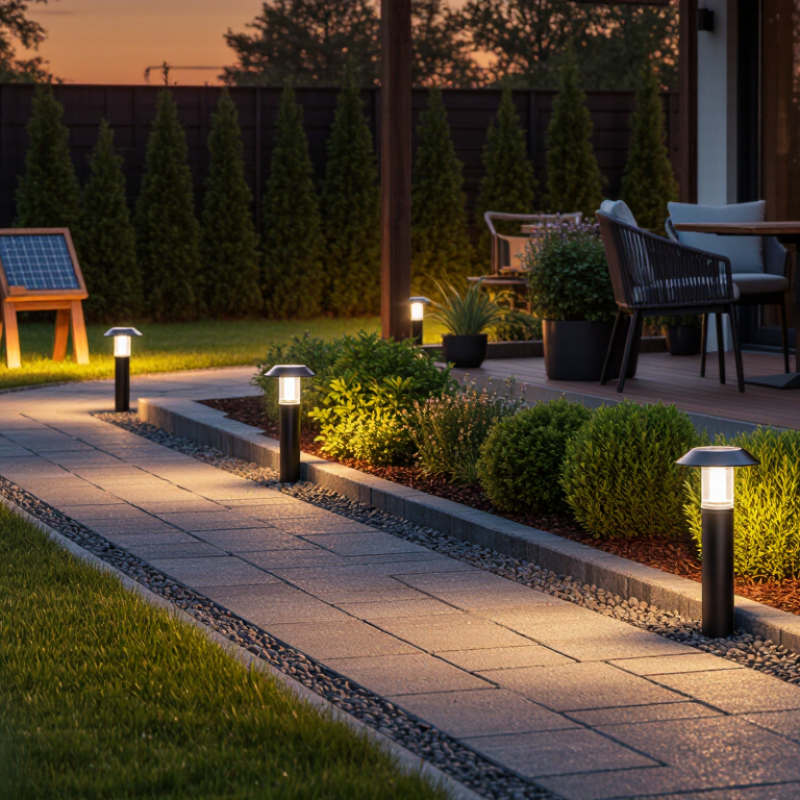
Outdoor garden solar lights serve different jobs. Path lights mark walkways and soften planting-bed edges. Spotlights highlight trees, signs, or building details with a focused beam. Wall and fence lights add visibility near entrances, while string lights create a warmer feel over patios. For larger areas, solar bollards provide a broader pool of light.
Placement matters: a spotlight aimed at a pale wall may glare rather than guide visitors.
Most fixtures use LEDs. The U.S. Department of Energy’s Energy Saver guidance says LEDs use up to 75% less energy and last up to 25 times longer than incandescent lighting.
These figures compare lighting technologies, not complete solar fixtures, so actual runtime still depends on panel exposure, battery capacity, and weather. Cloudy weeks can leave lights dim. That is worth planning for.
Tips: Match brightness to the task, and check the panel’s sun exposure before installation. Keep panels clear of leaves and dust. Test one fixture through several evenings before ordering many; specifications do not always predict performance in a shaded garden.
How to Choose Solar Lights for a Business Property
Choosing solar lights for a business property starts with a site walk, not a catalog. Note where trees, signs, loading canopies, or nearby buildings cast afternoon shade. A sunny noon reading can mislead; check the actual installation spots throughout the day.
Start outdoors. Record which areas need clear visibility, such as entry paths, bicycle racks, or a delivery gate.
Match light output and beam shape to each task rather than choosing the brightest fixture everywhere. Low, shielded path lights can guide visitors, while broader fixtures may suit a parking edge. Check published runtime alongside battery capacity, and ask whether performance is tested in cloudy conditions.
Winter days matter. Confirm expected operating hours during the shortest, least sunny season.
Look for weather-resistant construction, secure mounting, and batteries that can be serviced without replacing the whole unit. Photocells or motion controls can conserve stored energy, but test their placement to avoid dark gaps or repeated triggering. For staff areas, consider consistent color and glare control; harsh light can obscure faces and bother nearby tenants.
Plan simple checks for dust, loose mounts, and declining battery life. I would not assume one solar fixture will cover every corner. Trial one or two units, then inspect the walkway after dusk and after several cloudy days.