
shining bright

a British lighting manufacturer with a difference

Obsessed with solving problems, not just selling 'stuff': we were born from a belief that the lighting industry deserved better.

Why Choose a China Pendant Lamps Supplier?

Choosing a China Pendant Lamps Supplier can give buyers access to broad product ranges, flexible production, and established lighting-manufacturing expertise. But the right choice depends on more than a polished catalogue. Ask how the supplier controls materials, wiring, finishes, and final assembly. Request clear specifications, current product photos, and a sample before approving a larger order. Small details matter: the canopy should sit flush, the cord should hang evenly, and the finish should match the agreed sample.

As lighting sourcing specialist Lin Wei puts it, “A dependable supplier is one that can explain every detail behind the sample.” Treat that as a practical sourcing principle, not a substitute for checking references and product documentation. A capable partner should answer technical questions directly, describe its quality checks, and communicate realistic production timelines. Ask who handles changes when a requested finish or dimension cannot be produced as specified. Clear answers build trust.

There are trade-offs. A lower quoted price may exclude packaging details, testing records, or custom adjustments. Shipping schedules can shift, too. Check costs and responsibilities in writing. Compare samples under the kind of lighting where the pendant will actually be used; brushed brass, for instance, can look warmer in a showroom than at home. Not every supplier will be the right fit. And that is worth admitting. A careful comparison helps buyers find a China Pendant Lamps Supplier whose craftsmanship, communication, and production capacity match the project—not just its budget.
Why Choose a China Pendant Lamps Supplier?

What Is a China Pendant Lamps Supplier?

A China pendant lamps supplier is a business that helps buyers source hanging light fixtures from China. Some suppliers manufacture lamps in their own workshops. Others coordinate with factories and handle communication, customization, and export arrangements. The distinction matters. A supplier should explain who makes the product and who checks it.

For a pendant lamp, useful details include shade dimensions, canopy size, hanging length, socket type, finish, and wiring options. A buyer might request a sample to check the weight, surface texture, and light direction in person. Ask for clear drawings and written specifications before production. Confirm that electrical components suit the intended market, and agree on how quality checks are documented. A polished catalog is not proof of consistent production. It can be a useful start, though. Sometimes a small sample reveals a finish that looks warmer—or duller—than expected. Suppliers may also help coordinate packaging and shipping, but those services vary. Clarify responsibilities, timelines, and inspection arrangements early.


How China’s Pendant Lamp Supply Chain Operates

Why Choose a China Pendant Lamps Supplier?
How China’s Pendant Lamp Supply Chain Operates

A pendant lamp often passes through several specialist stages before packing. Metal workshops form canopies and frames; glass or textile suppliers make shades; electrical-component makers provide sockets, wiring, and compatible drivers. Assemblers bring these parts together, then check dimensions, finish, suspension points, and electrical function. China’s supplier network can make component sourcing and production coordination efficient, though quality varies between factories. A low quote alone tells you little.

The International Energy Agency’s Energy Efficiency 2023 report says LEDs reached about 50% of global lighting sales in 2022, up from 5% in 2013. This shift affects pendant sourcing: buyers increasingly need clear specifications for LED modules, drivers, dimming, and heat management. Ask how suppliers verify these parts and whether production samples match the final batch. A polished sample is not proof of consistent production. I have seen small finish differences matter more than expected.

Tips: Request a component list, measured drawings, and photos of in-process checks. Confirm shade dimensions, cable length, suspension load, and packaging protection before approving a sample. Keep one approved reference sample for comparison. That extra step can feel slow, but it may prevent avoidable rework.

Why Choose a China Pendant Lamps Supplier? - How China’s Pendant Lamp Supply Chain Operates

Typical supply-chain stages and indicative planning ranges. Actual timelines depend on product design, order quantity, component availability, testing requirements, and destination.

Supply-Chain Stage Typical Activities Key Inputs Typical Planning Range Quality or Compliance Check
Product specification Confirm dimensions, materials, finish, light source, electrical requirements, and packaging. Drawings, reference samples, target market, and order requirements 1–5 working days Review specifications, wiring details, and applicable destination-market requirements.
Component sourcing Arrange shades, metal or wooden parts, sockets, cables, canopies, fasteners, and other components. Approved specifications and supplier availability Several days to a few weeks Check component dimensions, material, finish, and relevant electrical ratings.
Part fabrication Form, cut, cast, or machine the shade and structural parts; prepare surfaces for finishing. Metal, glass, wood, or other specified materials About 1–3 weeks for many standard parts Inspect dimensions, construction, surface condition, and consistency against the approved sample.
Surface finishing Apply or complete finishes such as painting, plating, polishing, or protective coating. Fabricated parts and approved finish samples About 3–10 working days Check finish appearance, color consistency, adhesion, and visible defects.
Electrical assembly Fit the socket, cable, connectors, canopy, and other electrical or mounting components. Finished parts and specified electrical components About 2–7 working days Check assembly, wiring, grounding where applicable, and operation according to the product specification.
Product inspection and testing Inspect finished lamps and conduct checks required by the order or destination market. Completed products and inspection criteria About 1–5 working days Possible checks include visual inspection, functional operation, and electrical safety testing. Requirements vary by market and product.
Packing and export preparation Protect the lamp and components, prepare cartons, and organize export documents. Approved packaging plan, shipping details, and order documents About 1–5 working days Check packing protection, carton markings, quantities, and document consistency.
International transport Move packed goods by sea, air, or another agreed method, followed by destination handling. Shipment-ready cartons and transport documents Route-dependent; sea freight commonly takes several weeks port to port Confirm booking, shipping documents, insurance arrangements, and import requirements for the destination.

What Products and Customization Options Are Available?

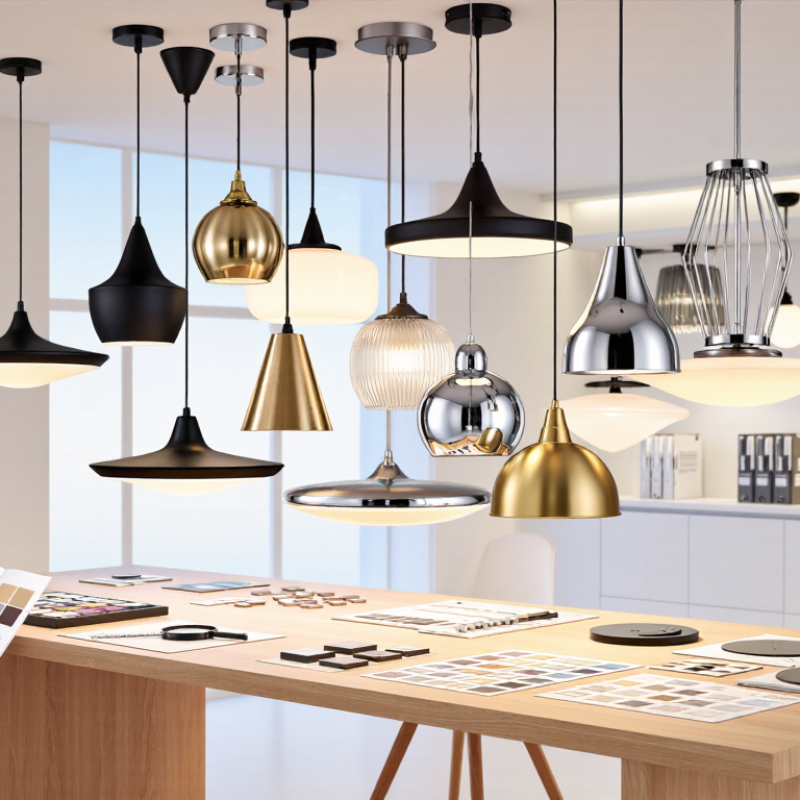
Pendant lamp suppliers in China may offer single-drop fixtures, multi-light clusters, and linear models for kitchen islands. Common materials include clear or smoked glass, aluminum, steel, and ceramic. Each changes the feel of a room: a ribbed glass shade softens a bare bulb, while a metal dome directs light onto a table. Ask for product drawings and dimensions, not just staged photographs. Canopy width, shade diameter, and cable length matter when fitting a real ceiling. Small details matter.

Customization can include shade shape, finish, cable color, suspension length, and the number of lights. Some suppliers also adjust color temperature, lamp holders, or dimming compatibility. Share the ceiling height and installation setting before requesting a quotation; a long pendant that looks elegant in a showroom may hang too low above a dining table. Request a sample or finish swatch when color consistency is important. Even then, handmade or coated surfaces can vary slightly between batches. That is worth checking.

Confirm voltage, certifications, packaging, and replacement-part availability in writing, then have a qualified installer review the specifications for your location. A clear brief helps, though revisions may still be needed after a sample is reviewed.

How Quality, Safety, and Compliance Are Managed

Why Choose a China Pendant Lamps Supplier?

Quality, Safety, and Compliance Are Managed

A dependable pendant lamp starts with controlled materials and repeatable checks. Suppliers should verify wire gauge, socket fit, insulation, grounding, and canopy strength before assembly. Inspect the finish under direct light; tiny scratches can disappear in a dim workshop. They may stand out above a dining table. Small details matter.

Ask for test records tied to the exact model, not just a general certificate. Records should identify components, test dates, and the responsible laboratory. Applicable requirements vary by destination, so confirm the target market and relevant electrical and chemical standards before production. The U.S. Department of Energy reports that LED lighting can use at least 75% less energy than incandescent lighting. That benefit depends on sound driver, thermal, and electrical design—not the label alone. A supplier should document these checks and keep samples traceable to production batches.

Factory audits can reveal storage practices, calibration routines, and how rejected parts are handled. Request dated inspection reports and review a production sample before approving bulk orders. No audit catches everything. I have seen tidy paperwork fail to answer a basic question: which component changed? That is not enough. Ask suppliers to record design revisions and notify buyers when critical materials or electrical parts change. This makes problems easier to investigate and helps keep each shipment consistent.

How to Evaluate and Choose a Suitable Supplier

Choosing a China pendant lamp supplier starts with the fixture, not the catalog. Define the room, ceiling height, bulb type, finish, and target quantity. Ask for a drawing with dimensions, material thickness, wiring details, and canopy measurements. Request a production sample in the proposed finish. Check its weight, surface consistency, socket fit, and hanging hardware by hand. Small inconsistencies matter. A polished sample can still differ from a full production run, so ask how batch inspections are recorded.

Evaluate communication as carefully as price. Send the same specification sheet to several suppliers and compare their answers, not just their quotations. Confirm minimum order quantity, sample charges, tooling costs, lead time, carton protection, and how defects are handled. Ask for recent project references and relevant test reports, then check that documents match the exact model and electrical configuration. If possible, arrange a video walk-through of assembly and inspection areas. No checklist catches everything. A clear, prompt reply is useful, but it does not prove consistent production. Keep unresolved questions in your notes and revisit them before placing a deposit. Supplier selection can feel less certain than a spreadsheet suggests, and that is worth acknowledging.

Our story

When The Light Went On

The idea for Acrospire was formed in 2012 when founder Tim envisioned a different kind of lighting manufacturer: one that would not only deliver outstanding customer experiences but also prioritise fair treatment for its employees.

We’ve come a long way

Working from any nook and cranny we could find

Motivated by the belief the industry wanted and needed better, Tim shared his plan to establish his own venture with Hatty, who simply couldn't let him do it alone.

The rest, as they say, is history.

Protecting local jobs and ensuring the best quality possible.

The products sold should, where possible be manufactured here in the UK

Working from a rented office by day and assembling lanterns in a garage at night, Tim and Hatty set to work.

11 Years later

and a lot has changed

Acrospire now inhabits a 14000² ft manufacturing facility in Basingstoke, Hampshire. We’re a proud partner of the Made in Britain scheme, ISO9001 certified and a member of all relevant lighting industry trade bodies.

We've built a reputation to be proud of

Along with great relationships with our customers and a great team! We've attracted some of the most experienced members of the lighting industry, all by following one golden rule.

A simple ethos

Creating work to be proud of

That runs through all that we do. Customers who have made the switch to Acrospire have found working with us to be a breath of fresh air.

Market leading warranty

If you’re a professional in the lighting industry, you’re probably familiar with warranties that range from 3 to 10 years, with extensions available on special request or at additional cost. At Acrospire, where we’re proud to be different, we offer a market-leading simple 12-year warranty, as standard.

Tight Control on Quality

We focus on our customers not our competition. We manufacture our products in the UK: with the exception of our solar products, our supply chain is within a 60-mile radius of our factory in Basingstoke: to maintain greater control over quality. We al

Speed is key

Speed of response is crucial when it comes to resolving warranty issues. If we’ve made a mistake, we own it, get to the root cause, and fix it as quickly as possible. We believe in timely communication with our customers and making the resolution pro

Test and Test Again

We believe in independent testing and certification. Our new product development is in line with ISO 9001. Many of our products hold ENEC Certification. To meet the requirements of ENEC we also send random product samples for third party safety testi

Quality by design

Our product design is another key factor in our ability to offer a 12-year warranty. We value engineer rather than cost cut, never compromising on quality. We stick to our processes and engage with our supply chain to ensure that every product meets