shining bright

a British lighting manufacturer with a difference

Obsessed with solving problems, not just selling 'stuff': we were born from a belief that the lighting industry deserved better.

What Types of Cigarettes Can You Legally Buy in Canada?

Understanding which cigarettes can be legally purchased in Canada means looking beyond brand names and packaging. Legal retail options are regulated tobacco products sold by authorized retailers, with standardized packaging and prominent health warnings. Product formats and availability can vary, while rules on flavours, promotion, and sales differ across provinces and territories. Menthol cigarettes, for example, are prohibited under federal rules. Details matter.

A legal purchase also depends on the buyer’s age, the seller, and applicable provincial or territorial requirements. Minimum-age rules are not identical nationwide, so checking local government guidance is sensible. The phrase “cheap cigarettes online Canada” can lead to offers that are difficult to assess; a low price alone does not confirm that a seller follows Canadian rules. Before buying, verify the retailer’s legitimacy and check whether the product carries the required Canadian markings and tax information. Online sales may face additional restrictions. Keep that in mind.

This guide explains the main legal cigarette categories shoppers may encounter and the practical checks that help distinguish regulated products from questionable listings. It is not a substitute for current legal advice, and rules can change. Even careful buyers may find the details confusing. That is worth acknowledging.

What Types of Cigarettes Can You Legally Buy in Canada?

What Counts as a Cigarette Under Canadian Law?

In Canadian law, “cigarette” is a legal category, not simply a shop label. For federal excise purposes, the Excise Act, 2001 generally treats a cigarette as a tobacco product rolled in paper or another material and intended to be smoked; cigars are excluded. Form matters. A filter, printed design, or different length does not, by itself, settle the classification. The product’s contents, wrapping, and intended use are more relevant than its marketing name.

That definition answers a narrower question than “what can I buy?” Other federal and provincial rules can govern sales, packaging, taxation, and minimum purchase ages. A product may look like a cigarette yet fall under a different category under another law, depending on its contents and intended use. In practice, check the package details and relevant government guidance rather than relying only on casual terms such as “smokes” or “roll-ups.” Small details count. The legal wording can feel less clear than the object in your hand, and that distinction deserves a careful check.


Common Types of Legal Cigarettes Sold in Canada

Common Types of Legal Cigarettes Sold in Canada

Legal cigarettes sold through authorized Canadian retailers are factory-made tobacco products that meet federal requirements. Common options vary by length, diameter, filter style, and tobacco blend. You may see regular and king-size formats, as well as slim cigarettes. Availability differs by retailer and province. Packs carry standardized packaging and health warnings; flavour rules also limit which products can be sold.

Health Canada’s 2022 Canadian Tobacco and Nicotine Survey reported that about 11% of Canadians aged 15 and older smoked cigarettes.

That survey describes smoking patterns, not product quality or safety. Cigarettes are harmful regardless of size, filter, or blend. “Light” or similar descriptions should not be taken as proof of lower health risk. It is an easy detail to misread.

Tips: Check the package for required warnings and product details, and confirm the seller follows your province’s minimum-age rules. Retail selection can be narrow. If you are comparing formats, remember that a different filter or length does not make smoking safe.

Differences in Tobacco, Filters, and Product Formats

In Canada, legal cigarettes are not one uniform product. Differences include tobacco blend, cut, cigarette length, diameter, and filter design. Factory-made cigarettes come in packs, while roll-your-own tobacco is sold loose for use with papers and optional filters. The labels can be confusing. Pack size or filter length describes construction, not a reliable measure of exposure or risk.

Health Canada’s 2022 Canadian Tobacco and Nicotine Survey estimated that roughly one in ten people aged 15 and older currently smoked cigarettes. That figure describes smoking prevalence, not which formats people buy. Canadian rules also require standardized packaging and health warnings, so shoppers should rely on required product information rather than appearance or implied claims. Not safer. A filter may change how smoke feels, but it does not make smoking safe. Retail availability and purchase-age requirements can vary with applicable federal and provincial rules, so current local guidance matters.

Flavour and Packaging Rules for Cigarettes

Canadian cigarettes sold legally must follow strict federal flavour and packaging rules. Flavouring additives that give cigarettes a distinctive taste or smell, including menthol and fruit flavours, are prohibited. The restriction targets added characterizing flavours, not tobacco’s natural taste. That matters. A pack’s appearance is regulated too: plain packaging limits logos, colours and promotional design, while required health warnings cover 75% of the principal display surfaces. Provincial and territorial rules may add retail restrictions, so local requirements can differ.

Warnings now appear on individual cigarettes as well as packs. The Canadian Cancer Society’s 2023 Cigarette Package Health Warnings: International Status Report reviewed 138 jurisdictions and identified Canada as the first to require warnings directly on cigarette sticks. A tiny message printed along a paper cylinder is easy to overlook; whether people notice it is harder to measure. The regulation also standardizes pack presentation, leaving little room for decorative cues that might make one product seem milder or more appealing. When comparing legal products, check the package warnings and required information rather than relying on colour or design.

What Types of Cigarettes Can You Legally Buy in Canada?

Federal rules restrict cigarette flavours and standardize packaging. The chart shows the required health-warning share of each principal display surface.

Flavour: Federal rules prohibit additives that impart a characterizing flavour to cigarettes, including menthol. Cigarettes without a prohibited characterizing flavour may be sold, subject to other applicable rules.

Canadian cigarette packages must use standardized packaging. Brand names may appear only in prescribed formats; logos and branded designs are not allowed. The remaining 25% shown is not unrestricted branding space and remains subject to packaging requirements.

Sources: Government of Canada, Tobacco Products Labelling Regulations (Cigarettes and Little Cigars) and Tobacco Products Regulations (Prohibited Additives).

Age Limits and Where Legal Cigarettes May Be Sold

Canada sets a federal minimum sales age of 18, while provinces and territories may set a higher one. In practice, the minimum ranges from 18 to 21, so an adult eligible to buy cigarettes in one province may be too young elsewhere. Check the current rule where you are shopping, and expect staff to request government-issued photo identification if your age is uncertain. The rules can feel uneven.

Legal cigarettes are generally sold through retail outlets permitted under local rules, such as convenience stores, gas stations, and some grocery stores. Retailers must follow federal and local requirements, including restrictions on sales to minors and on how tobacco products are displayed. Special rules may also apply to vending machines and other sales settings. A store’s presence on a map does not confirm its current permissions.

The public-health context matters. Statistics Canada’s 2022 Canadian Community Health Survey estimated that 11.4% of people aged 15 and older smoked daily or occasionally. That figure describes smoking prevalence, not where cigarettes are sold, but it helps explain why sales and display rules receive close attention. Sources: Health Canada’s Tobacco and Vaping Products Act and Statistics Canada’s 2022 Canadian Community Health Survey.

What Types of Cigarettes Can You Legally Buy in Canada? — Age Limits and Where Legal Cigarettes May Be Sold
Topic Legal information Practical note
Conventional cigarettes Tobacco cigarettes that comply with Canadian product, packaging, labelling and tax requirements may be sold to adults who meet the applicable minimum age. Cigarette size or format does not, by itself, exempt a product from tobacco laws.
Flavoured and menthol cigarettes Menthol cigarettes are prohibited from sale in Canada. Federal rules also prohibit specified flavouring additives in cigarettes and certain other tobacco products. A product described as flavoured is not necessarily legal; the applicable federal and provincial or territorial rules determine whether it may be sold.
Minimum age: 18 Alberta, Manitoba, Quebec and Saskatchewan. Retailers may ask for government-issued photo identification to verify age.
Minimum age: 19 British Columbia, New Brunswick, Newfoundland and Labrador, Nova Scotia, Ontario, Yukon, Northwest Territories and Nunavut. The higher local minimum applies even though federal law sets a minimum age of 18 for tobacco sales.
Minimum age: 21 Prince Edward Island. People below the applicable minimum age may not purchase tobacco products.
Where cigarettes may be sold At retail outlets permitted under the laws of the relevant province or territory. Online sales may be available where permitted and subject to age-verification and delivery requirements. Local rules can restrict which businesses may sell tobacco and how products may be displayed or delivered.
Sales to minors and vending machines Selling or supplying tobacco to someone below the applicable minimum age is prohibited. Tobacco vending machines are generally restricted, with limited exceptions subject to applicable law. Age and sales rules can change; check current provincial or territorial requirements before buying or selling.

Our story

When The Light Went On

The idea for Acrospire was formed in 2012 when founder Tim envisioned a different kind of lighting manufacturer: one that would not only deliver outstanding customer experiences but also prioritise fair treatment for its employees.

We’ve come a long way

Working from any nook and cranny we could find

Motivated by the belief the industry wanted and needed better, Tim shared his plan to establish his own venture with Hatty, who simply couldn't let him do it alone.

The rest, as they say, is history.

Protecting local jobs and ensuring the best quality possible.

The products sold should, where possible be manufactured here in the UK

Working from a rented office by day and assembling lanterns in a garage at night, Tim and Hatty set to work.

11 Years later

and a lot has changed

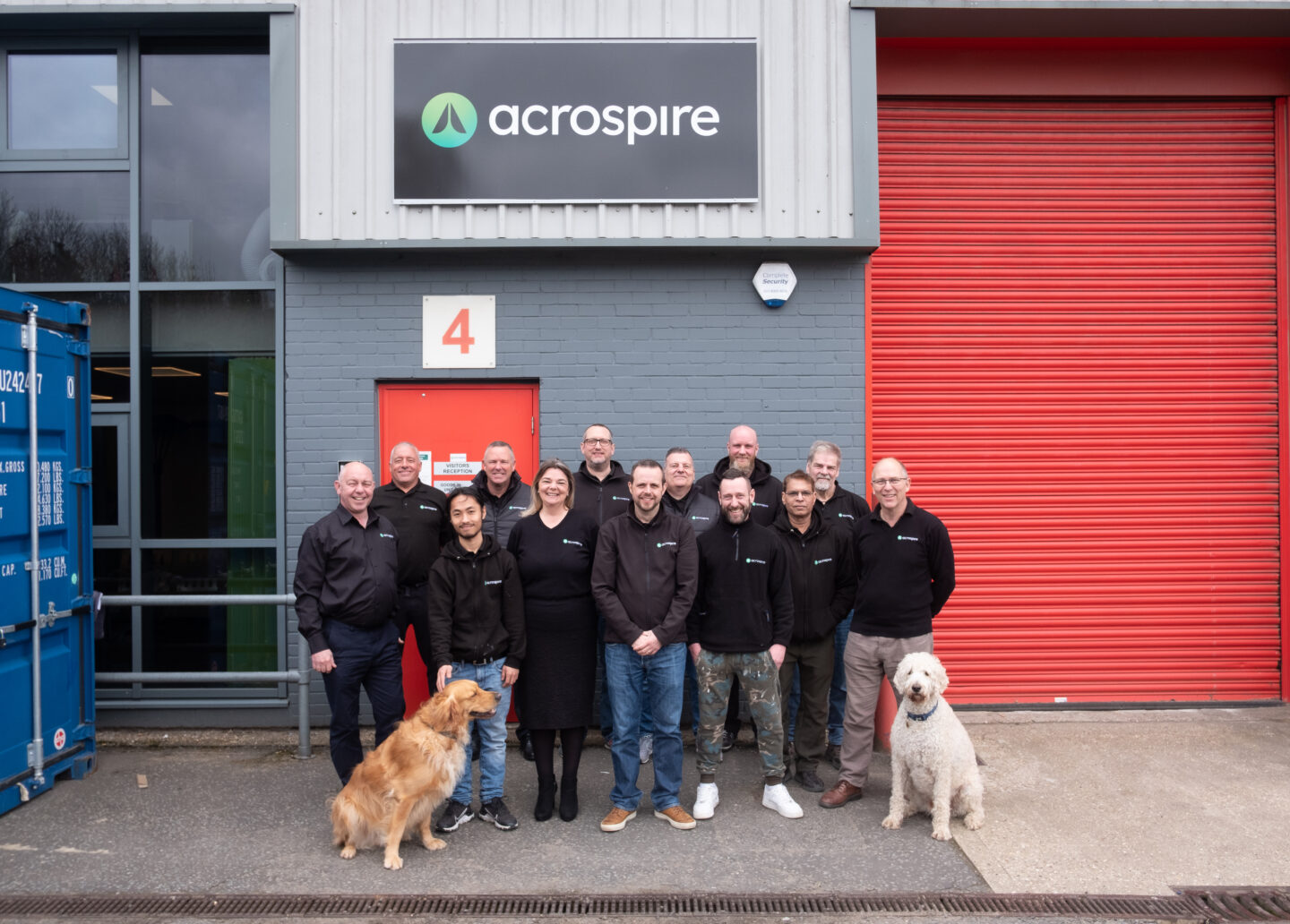
Acrospire now inhabits a 14000² ft manufacturing facility in Basingstoke, Hampshire. We’re a proud partner of the Made in Britain scheme, ISO9001 certified and a member of all relevant lighting industry trade bodies.

We've built a reputation to be proud of

Along with great relationships with our customers and a great team! We've attracted some of the most experienced members of the lighting industry, all by following one golden rule.

A simple ethos

Creating work to be proud of

That runs through all that we do. Customers who have made the switch to Acrospire have found working with us to be a breath of fresh air.

Market leading warranty

If you’re a professional in the lighting industry, you’re probably familiar with warranties that range from 3 to 10 years, with extensions available on special request or at additional cost. At Acrospire, where we’re proud to be different, we offer a market-leading simple 12-year warranty, as standard.

Tight Control on Quality

We focus on our customers not our competition. We manufacture our products in the UK: with the exception of our solar products, our supply chain is within a 60-mile radius of our factory in Basingstoke: to maintain greater control over quality. We al

Speed is key

Speed of response is crucial when it comes to resolving warranty issues. If we’ve made a mistake, we own it, get to the root cause, and fix it as quickly as possible. We believe in timely communication with our customers and making the resolution pro

Test and Test Again

We believe in independent testing and certification. Our new product development is in line with ISO 9001. Many of our products hold ENEC Certification. To meet the requirements of ENEC we also send random product samples for third party safety testi

Quality by design

Our product design is another key factor in our ability to offer a 12-year warranty. We value engineer rather than cost cut, never compromising on quality. We stick to our processes and engage with our supply chain to ensure that every product meets