What Is an Industrial TFT LCD Display?
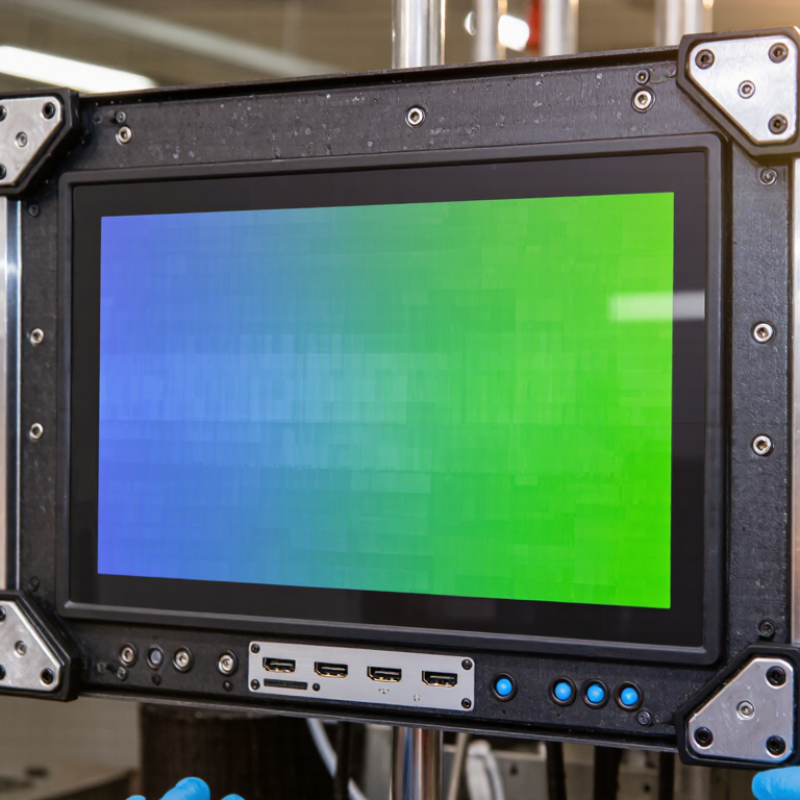
An Industrial Tft Lcd Display is a flat-panel screen designed for demanding working environments. Unlike ordinary consumer screens, it must support continuous operation, stable image quality, and predictable performance. These displays appear in factory control panels, medical equipment, transport systems, and outdoor measurement devices. A bright screen matters when sunlight strikes the glass. Reliable touch response matters when operators wear gloves.
Industrial Tft Lcd technology commonly uses thin-film transistor control for accurate pixels and consistent color reproduction. Engineers evaluate brightness, viewing angle, contrast, response time, and backlight lifespan. They also examine operating temperature, vibration resistance, input interfaces, and enclosure compatibility. Small details become important. A poorly matched connector can delay an entire machine installation. A weak mounting design may create pressure points around the panel.
Choosing the right display requires more than comparing diagonal sizes. Buyers should review datasheets, test samples, and confirm performance under real conditions. An IP-rated enclosure, optical bonding, or a projected capacitive touch layer may solve one problem while creating another. Specifications can mislead. A high-brightness panel may produce extra heat, and a wide viewing angle may reduce privacy. The choice is rarely perfect.
Manufacturers with documented quality procedures, traceable components, and long-term supply planning offer greater confidence. Field feedback also matters, especially when displays operate twenty-four hours daily. Still, every application deserves independent verification. A dependable Industrial Tft Lcd display is not simply bright or large. It is a carefully matched component that remains readable, responsive, and serviceable when the surrounding equipment cannot afford failure.
Definition and Core Characteristics of an Industrial TFT LCD Display
What Is an Industrial TFT LCD Display?
An industrial TFT LCD display is a thin-film transistor liquid crystal screen designed for demanding equipment. Each pixel uses a transistor to control light and color precisely. This active-matrix structure produces sharper images than simpler passive displays. A backlight makes the screen readable in dark factory rooms. Touch control may be added, but it is not essential.
Its core characteristics include high brightness, wide viewing angles, and stable operation across changing temperatures. A suitable panel may support continuous operation near machines, control cabinets, or outdoor enclosures. Engineers also check vibration resistance, humidity tolerance, and electromagnetic compatibility. During equipment testing, technicians often inspect text clarity at several angles. Small labels must remain readable from a standing position.
Mechanical design matters as much as image quality. A thick bezel, sealed front surface, or reinforced mounting frame can protect the panel from dust and accidental contact. Interfaces must match the controller, operating system, and communication hardware. Specifications can look impressive on paper, yet installation may reveal glare or poor touch accuracy. This is why practical testing remains necessary. Even a bright display can fail in direct sunlight without proper optical design. Viewing habits, enclosure depth, and maintenance access deserve attention.
What Is an Industrial TFT LCD Display?
An industrial TFT LCD display is an active-matrix screen designed for continuous operation in demanding environments. Compared with standard consumer panels, industrial models commonly emphasize higher brightness, wider temperature tolerance, long-term availability, rugged construction, and stable image performance.
The chart shows representative brightness levels commonly used for industrial TFT LCD applications. Brightness is measured in candelas per square metre (cd/m²); higher values improve readability under stronger ambient light. Actual specifications vary by panel size, backlight design, optical bonding, and operating environment.
Key Components and Display Technologies Used in Industrial TFT LCDs
What Is an Industrial TFT LCD Display?
Key Components and Display Technologies Used in Industrial TFT LCDs
An industrial TFT LCD display uses thin-film transistors to control individual pixels. Each transistor adjusts light passing through a liquid-crystal layer. The result is a sharp, stable image for control panels, instruments, and factory equipment. Unlike consumer screens, industrial models often operate for long hours in demanding environments.
The backlight is a critical component. Many displays use LED arrays because they provide consistent brightness and lower power consumption. A light guide plate spreads illumination across the panel. Diffusers reduce bright spots, although uneven lighting can still appear at the edges. This is easy to miss during a quick inspection. The polarizer, color filter, and glass substrates also affect contrast and color accuracy.
Different TFT technologies suit different tasks. TN panels respond quickly and cost less, but their viewing angles are limited. IPS panels provide wider viewing angles and more consistent colors. VA panels can deliver deeper contrast, though motion performance may vary. Industrial displays may also include projected capacitive touch sensors, resistive touch layers, or protective cover glass. In dusty workshops, anti-glare coatings help operators read menus under overhead lamps. In cold rooms, the liquid crystals may respond slowly unless heating elements are added. Engineers should test the complete display assembly, not only the panel. A specification sheet cannot reveal every field problem.
How Industrial TFT LCD Displays Differ from Consumer Screens
What Is an Industrial TFT LCD Display?
How Industrial TFT LCD Displays Differ from Consumer Screens
An industrial TFT LCD display is built for equipment that must operate reliably for long periods. It may appear in factory controls, medical instruments, transport systems, and outdoor monitoring panels. Unlike a household television, it often works beside vibration, dust, temperature changes, or constant electrical noise. The screen is only one part of a carefully matched system.
Consumer screens usually prioritize thin designs, vivid colors, low cost, and short replacement cycles. Industrial displays place greater emphasis on stable brightness, wide viewing angles, long-term availability, and touch performance. A control-room operator may need to read figures through safety glasses or under strong ceiling lights. Some panels support high brightness, protective glass, glove operation, or sealed front surfaces. These details matter during a twelve-hour shift.
Reliability is not automatic.
In practical testing, engineers examine startup behavior, heat buildup, connector strength, and image stability. A display rated for a wide temperature range may still need proper ventilation. This is where specifications can mislead. A strong panel cannot correct poor enclosure design or unstable power. Industrial models also tend to remain available for several years, helping manufacturers avoid sudden redesigns. That advantage can raise the initial price, although frequent consumer-screen replacement may cost more over time. I have found that viewing conditions are often underestimated; a bright screen can still be difficult to read when reflections are poorly controlled.
Performance Requirements in Industrial Operating Environments
What Is an Industrial TFT LCD Display?
Performance Requirements in Industrial Operating Environments
An industrial TFT LCD display is built for control rooms, production lines, vehicles, and outdoor equipment. Its performance depends on more than resolution or color depth. Temperature is often the first concern. A suitable panel may support -20°C to 70°C, while specialized designs require wider ranges. IEC 60068 environmental tests help evaluate heat, cold, humidity, shock, and vibration. These tests should match the actual installation, not only a laboratory checklist.
Sunlight creates another practical challenge. A display used beside a factory door may need 800 to 1,500 cd/m² brightness, optical bonding, and an anti-glare surface. Condensation is worse. Sealed front structures and controlled ventilation can reduce moisture-related failures. The IEC 60529 IP rating describes enclosure protection, but it does not automatically prove long-term chemical resistance or display reliability. That distinction is easy to miss.
Climate variation also deserves attention. The World Meteorological Organization reported that 2023 reached approximately 1.45°C above the pre-industrial average. This figure does not define cabinet temperature, but it supports wider environmental planning. The Global E-waste Monitor 2024 recorded 62 million tonnes of electronic waste generated in 2022, with only 22.3% formally recycled. Serviceable displays, replaceable components, and documented repair procedures therefore have practical value. A high MTBF figure can look reassuring. It may still hide poor cabling, thermal stress, or unsuitable installation. Field experience should challenge the datasheet, not simply repeat it.
Common Applications and Selection Considerations for Industrial TFT LCDs
What Is an Industrial TFT LCD Display?
Common Applications and Selection Considerations for Industrial TFT LCDs
An industrial TFT LCD is a flat-panel display designed for continuous operation in demanding environments. It commonly appears in factory HMIs, medical equipment, transportation controls, energy systems, and outdoor kiosks.
MarketsandMarkets estimates that the industrial display market may grow from about USD 6.5 billion in 2023 to USD 9.8 billion by 2028.
That growth reflects wider automation and stronger demand for readable operator interfaces.
Application conditions should guide selection. A factory panel may need 500–1,000 cd/m² brightness, wide viewing angles, glove-friendly touch, and resistance to vibration. Outdoor equipment requires stronger sunlight readability, wider temperature tolerance, and suitable ingress protection.
A medical display needs stable grayscale performance and consistent calibration. Resolution matters, but excessive resolution can increase cost without improving the operator’s decision speed. Not every application needs 4K.
Interface and lifecycle planning are equally important.
LVDS, eDP, HDMI, and serial interfaces should match the controller and software architecture. Check connector location carefully. Small mechanical errors can delay integration. IEC 60068 environmental testing can help assess vibration, shock, humidity, and temperature performance.
A panel’s rated lifetime also deserves scrutiny; published figures may depend on brightness and operating temperature. In practice, thermal design is often underestimated. A brighter screen generates more heat, and heat can shorten service life.
My own selection rule is imperfect: test the complete display assembly under real lighting, gloves, dust, and temperature changes before approval.