shining bright

a British lighting manufacturer with a difference

Obsessed with solving problems, not just selling 'stuff': we were born from a belief that the lighting industry deserved better.

Who Are the Top Smart Parking System Manufacturers in China?

Choosing a Smart Parking System manufacturer in China takes more than comparing product photos or headline prices. A parking facility may need space sensors, entrance cameras, guidance displays, payment connections, and management software to work together. A small mismatch can leave drivers circling, even when the dashboard looks impressive. It happens.

This guide explores manufacturers that serve different project needs, from compact commercial garages to larger, multi-site facilities. “Top” does not always mean the same thing. For one operator, it may mean reliable occupancy data; for another, responsive maintenance or straightforward integration with existing equipment. The distinction matters.

A useful comparison looks beyond brochures. Buyers should check documented deployments, product specifications, software capabilities, support arrangements, and the availability of replacement parts. They can also ask how systems perform in dim lighting, crowded entrances, or areas with inconsistent network coverage. These details are easy to overlook.

Company claims should be checked against current documentation and project references. Product ranges, service coverage, and certifications may change, so a published ranking cannot settle every purchasing decision. This article offers a practical starting point, not a substitute for site testing or direct discussions with suppliers. Some information may remain unclear until those conversations happen. That is worth admitting. The goal is to help readers ask sharper questions and identify manufacturers whose equipment and support match the real conditions of their parking facility.
Who Are the Top Smart Parking System Manufacturers in China?

What Defines a Smart Parking System in China?

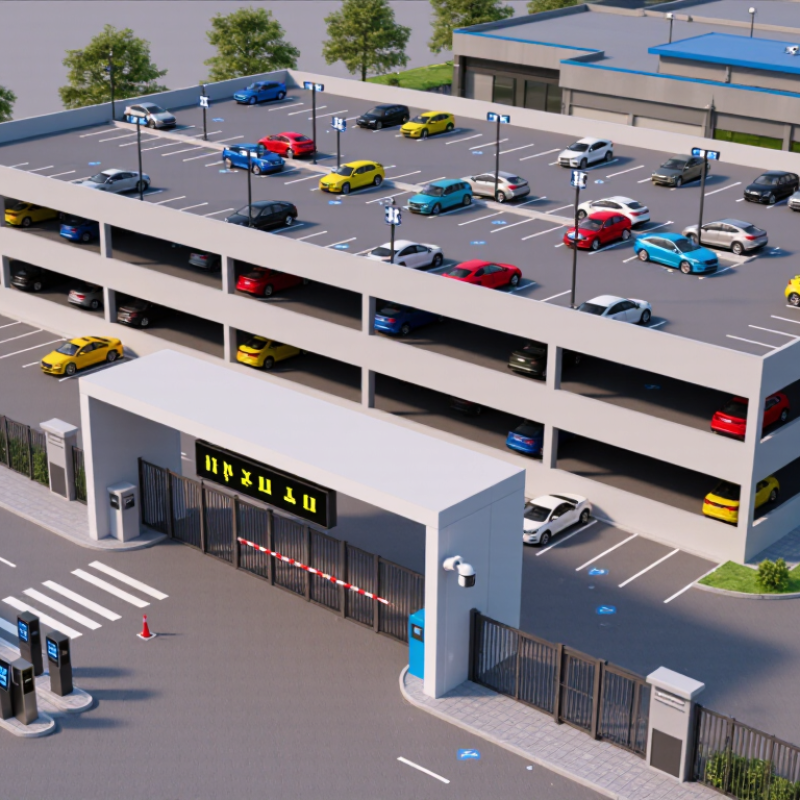
In China, a smart parking system connects space detection, communications, and driver services. Sensors or cameras report whether a bay is occupied; a platform then shares availability through signs or mobile services. In larger facilities, it may also support route guidance, payment, and operating analytics. The key is a usable data loop, not simply installing cameras. A sensor can still be wrong.

Reliable systems handle practical details: dense vehicle movement, rain, obstructed sensors, and brief network outages. They should show clear timestamps and provide a workable fallback when live data disappears. McKinsey Global Institute’s 2018 smart-city report estimated that smart mobility applications could reduce average commute times by 15–20% in studied cities. That is a broad estimate, not a parking-specific result or a guarantee. A clean dashboard can hide a messy curb.

Tips: Ask how occupancy accuracy is tested during peak hours, and whether garage and roadside data can be checked together. Test the system at a busy entrance, not only in a quiet demo. Small gaps matter.

How Are Leading Chinese Manufacturers Identified?

Identifying leading smart parking system manufacturers in China takes more than comparing product brochures. Look for evidence that the company designs and builds core equipment, rather than only reselling components. Ask for a factory audit, product test records, and a clear list of in-house engineering responsibilities. Verify that certificates match the exact models being offered.

Deployment history matters. Request references for sites with similar traffic, weather, and parking layouts. A system used in a busy hospital garage faces different demands from one installed in a small office lot. Ask how cameras perform at night, how sensors handle dust or rain, and what happens when network access fails. Specific answers are more useful than broad claims. Watch for vague language.

After-sales support can reveal how mature a manufacturer is. Check spare-part availability, response times, software update procedures, and training materials. A sample service ticket or maintenance schedule can show whether support is practical. Compare quoted specifications with the equipment shown during a demonstration; small mismatches deserve follow-up. No checklist is perfect. Even a polished factory visit cannot prove long-term reliability, so confirm claims through independent references and documented performance data. I would keep that uncertainty visible when ranking suppliers.

Who Are China’s Major Smart Parking System Manufacturers?

China’s major smart parking system manufacturers are not defined by one product alone. Strong suppliers typically combine parking guidance sensors, entry barriers, license-plate recognition, payment tools, and management software. Their systems may serve shopping centers, office buildings, hospitals, or residential complexes. The right fit depends on site size, traffic flow, and existing equipment.

Look for evidence from completed projects, not just product brochures. Ask how the system handles a busy entrance, a camera failure, or an interrupted network connection. Check whether occupancy data updates quickly and whether staff can manage permits and payments from one interface. Installation quality matters, too: poorly placed sensors can show empty spaces as occupied. A polished demonstration is useful, but it cannot reveal every on-site problem. No system is perfect.

Tips: Request a site survey and a live demonstration using realistic traffic conditions. Confirm maintenance response times, software update arrangements, and compatibility with your current equipment. Ask for measurable project results, such as reduced search time or fewer manual interventions, and verify how those figures were collected.

What Technologies and Solutions Do These Manufacturers Offer?

Chinese smart parking manufacturers offer more than parking sensors. Common systems combine ultrasonic or geomagnetic detectors, cameras, IoT gateways, and cloud software. At a curbside bay, a sensor can report occupancy within seconds. In a garage, cameras can guide drivers toward open spaces and support plate-based entry. Mobile tools may add reservations, digital payments, and alerts. Small details matter.

MarketsandMarkets’ 2023 Smart Parking Market report estimated a global market of US$6.6 billion in 2023, forecasting US$16.2 billion by 2028. Grand View Research estimated US$6.09 billion for 2023, with an 18.1% projected annual growth rate through 2030. Their figures differ, likely because market definitions vary. Both indicate rising demand for connected parking solutions. Manufacturers also provide dashboards for occupancy trends, equipment faults, and enforcement workflows. These tools help operators adjust pricing or staffing using actual site data. Yet performance depends on installation and maintenance. A poorly placed sensor may miss a vehicle, while camera accuracy can fall in rain or glare. Buyers should test systems at their own sites before scaling.

Who Are the Top Smart Parking System Manufacturers in China? - What Technologies and Solutions Do These Manufacturers Offer?

This overview compares common manufacturer and solution-provider categories in China’s smart parking market. It is not a company ranking; capabilities vary by supplier and project.

Provider Category Core Technologies Typical Hardware Software and Services Common Integrations Typical Applications
Parking access and control equipment manufacturers License-plate recognition (LPR/ANPR), vehicle detection, access control, and entry/exit automation. Barrier gates, LPR cameras, vehicle detectors, entrance kiosks, and payment terminals. Lane management, vehicle authorization, parking-session records, and operational reporting. Parking management platforms, payment services, intercoms, and site security systems. Commercial buildings, residential compounds, hospitals, campuses, and public parking facilities.
Parking guidance and space-detection system manufacturers Ultrasonic or other occupancy sensors, video-based detection, zone-level counting, and real-time guidance. Space sensors, indicator lights, LED signs, area controllers, and data gateways. Space-availability dashboards, guidance logic, occupancy statistics, and fault monitoring. Car-park signs, facility management platforms, and parking payment or reservation systems. Multi-storey garages, shopping centres, airports, and large public car parks.
Smart parking platform and software providers Cloud or on-premises data platforms, mobile access, vehicle recognition, analytics, and application programming interfaces (APIs). Typically connect to third-party cameras, gates, sensors, kiosks, and server or edge-computing equipment. Centralized site management, permissions, tariffs, reservations, occupancy analysis, and maintenance tools. Payment channels, property-management systems, municipal platforms, and equipment from multiple suppliers. Multi-site operators, property groups, municipalities, and parking networks.
Parking payment and unattended-operation solution providers Cashless payment workflows, LPR-based session matching, QR-code access, and automated fee calculation. Payment terminals, self-service kiosks, LPR cameras, barriers, and cashier workstations where required. Fee rules, payment reconciliation, electronic receipts, exception handling, and revenue reports. Mobile payment services, parking platforms, finance systems, and access-control equipment. Unattended car parks, retail sites, office buildings, and public parking operations.
Parking information and reservation platform providers Space inventory, availability updates, booking workflows, navigation, and parking-demand data analysis. Usually use connected site equipment and data gateways; consumer access is commonly through web or mobile interfaces. Search, reservation, allocation, pricing rules, operator dashboards, and usage reporting. Parking operators, navigation services, payment systems, and property or transport platforms. City parking networks, event venues, transport hubs, and facilities offering advance booking.
Integrated parking and EV-charging solution providers Parking-space management combined with charger status, charging-session data, and user or payment workflows. Parking access equipment, charging stations, energy meters, communications gateways, and optional space sensors. Combined parking and charging records, charger monitoring, access rules, and operational reporting. Charging-management platforms, parking systems, payment services, and building energy-management systems. Commercial properties, workplaces, residential developments, and public charging locations.

How Can Buyers Compare Chinese Smart Parking Manufacturers?

Comparing Chinese smart parking manufacturers starts with the site, not the brochure. A system that works in an open lot may struggle in a dim basement with concrete pillars and weak network coverage. Ask how cameras, bay sensors, gates, and software share occupancy data. Request test records from sites with similar layouts, and check what happens when a sensor fails or a connection drops. Specific answers matter.

Look beyond the quoted hardware price. Compare installation scope, software fees, spare-part availability, and response times for remote support. Ask for a live demonstration using a realistic parking scenario, such as a full level and a blocked camera view. A glossy dashboard is not proof. Run a small pilot and measure occupancy accuracy, entry delays, and manual corrections over several weeks. Some results may vary with weather, lighting, and driver behavior; that uncertainty deserves discussion. I would also ask who owns the operational data and how access is managed. No comparison is perfect, but documented evidence is more useful than confident promises.

Our story

When The Light Went On

The idea for Acrospire was formed in 2012 when founder Tim envisioned a different kind of lighting manufacturer: one that would not only deliver outstanding customer experiences but also prioritise fair treatment for its employees.

We’ve come a long way

Working from any nook and cranny we could find

Motivated by the belief the industry wanted and needed better, Tim shared his plan to establish his own venture with Hatty, who simply couldn't let him do it alone.

The rest, as they say, is history.

Protecting local jobs and ensuring the best quality possible.

The products sold should, where possible be manufactured here in the UK

Working from a rented office by day and assembling lanterns in a garage at night, Tim and Hatty set to work.

11 Years later

and a lot has changed

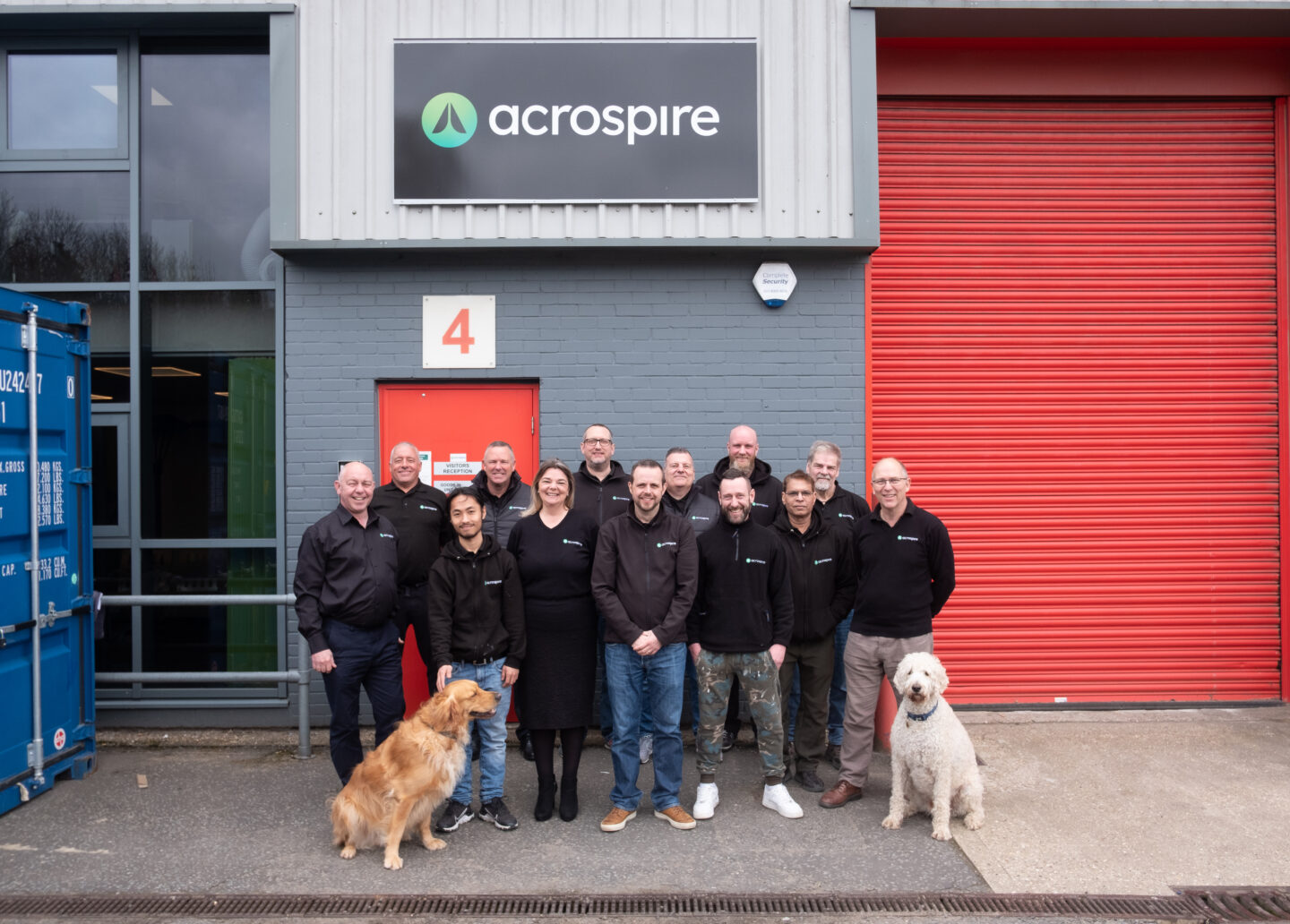
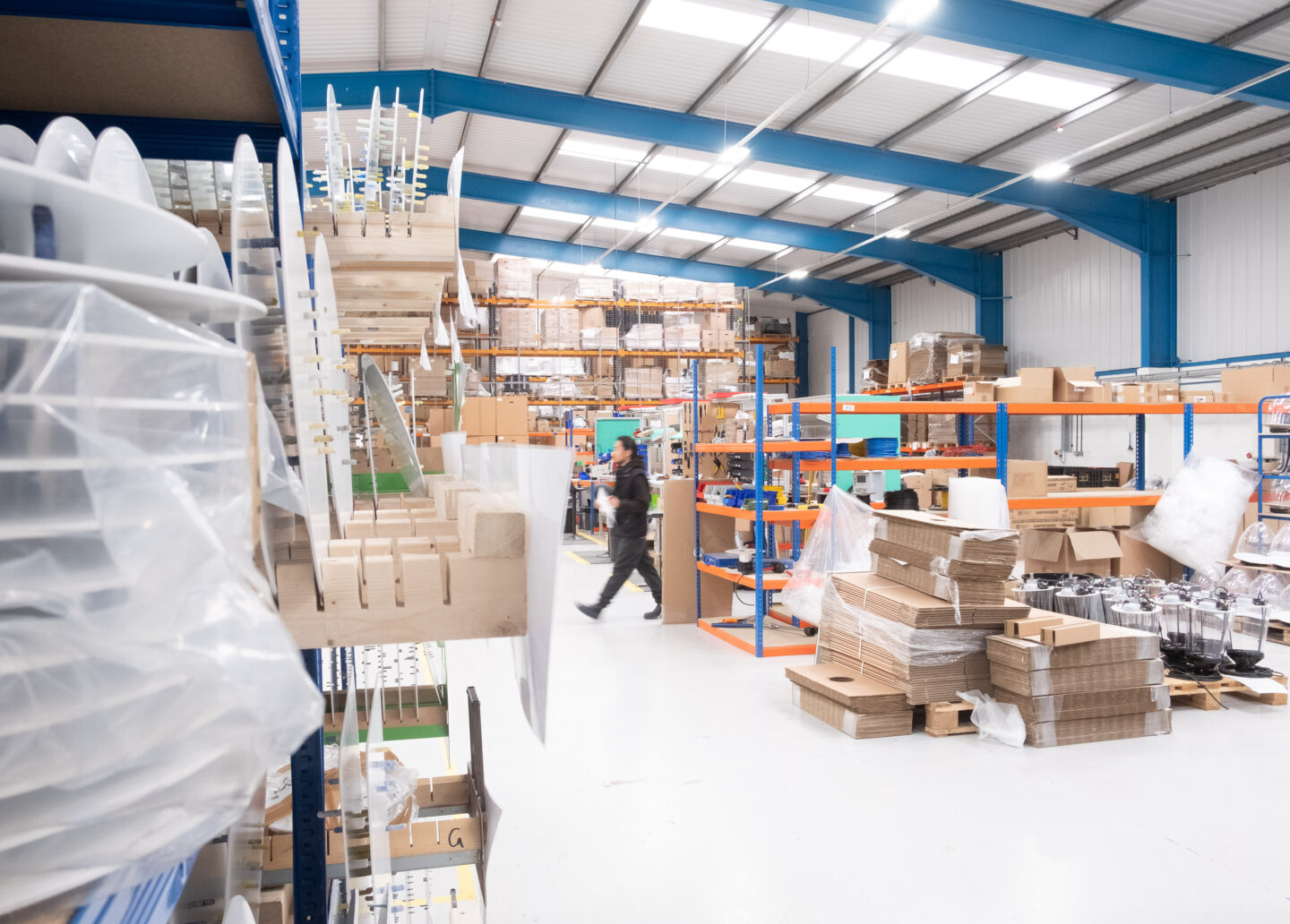
Acrospire now inhabits a 14000² ft manufacturing facility in Basingstoke, Hampshire. We’re a proud partner of the Made in Britain scheme, ISO9001 certified and a member of all relevant lighting industry trade bodies.

We've built a reputation to be proud of

Along with great relationships with our customers and a great team! We've attracted some of the most experienced members of the lighting industry, all by following one golden rule.

A simple ethos

Creating work to be proud of

That runs through all that we do. Customers who have made the switch to Acrospire have found working with us to be a breath of fresh air.

Market leading warranty

If you’re a professional in the lighting industry, you’re probably familiar with warranties that range from 3 to 10 years, with extensions available on special request or at additional cost. At Acrospire, where we’re proud to be different, we offer a market-leading simple 12-year warranty, as standard.

Tight Control on Quality

We focus on our customers not our competition. We manufacture our products in the UK: with the exception of our solar products, our supply chain is within a 60-mile radius of our factory in Basingstoke: to maintain greater control over quality. We al

Speed is key

Speed of response is crucial when it comes to resolving warranty issues. If we’ve made a mistake, we own it, get to the root cause, and fix it as quickly as possible. We believe in timely communication with our customers and making the resolution pro

Test and Test Again

We believe in independent testing and certification. Our new product development is in line with ISO 9001. Many of our products hold ENEC Certification. To meet the requirements of ENEC we also send random product samples for third party safety testi

Quality by design

Our product design is another key factor in our ability to offer a 12-year warranty. We value engineer rather than cost cut, never compromising on quality. We stick to our processes and engage with our supply chain to ensure that every product meets