shining bright

a British lighting manufacturer with a difference

Obsessed with solving problems, not just selling 'stuff': we were born from a belief that the lighting industry deserved better.

China Top Explosion Proof LED Floodlight Manufacturers?

Finding China’s top explosion-proof LED floodlight manufacturers is not simply a matter of comparing prices or catalog photos. Buyers need to understand where a fixture will operate, what hazards may be present, and which documents support its stated protection level. An explosion-proof led floodlight should be judged by more than wattage or claimed brightness. Look closely at housing materials, seals, heat management, beam pattern, and access for maintenance. Details matter. A supplier’s technical response can reveal more than a glossy brochure. Ask for current certificates and test reports, then confirm they match the precise model and intended application. Requirements differ by site and destination market, so one document may not fit every project.

A careful comparison of Chinese manufacturers should also cover production consistency, inspection records, customization limits, lead times, spare parts, and warranty terms. Request sample documentation and clear answers about how changes are controlled between batches. Where practical, assess the fixture under relevant operating conditions with a qualified project team. The cheapest option is not always the best fit, while a high price alone proves little. Be specific. Share the ambient temperature, mounting height, required light distribution, and maintenance constraints when requesting quotations. This guide introduces manufacturers and practical comparison points without treating rankings as guarantees. The final choice should rest on verifiable evidence, transparent communication, and suitability for the actual site. Some details still need checking.
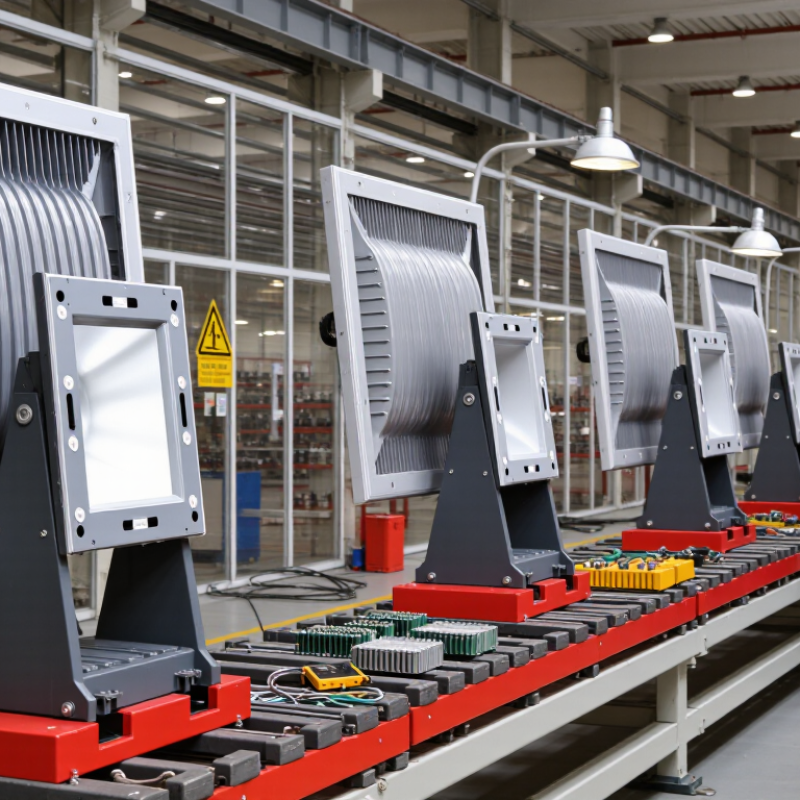
China Top Explosion Proof LED Floodlight Manufacturers?

Explosion-Proof LED Floodlights: Uses in Zone 1/2 Gas and Zone 21/22 Dust Areas

Explosion-Proof LED Floodlights: Uses in Zone 1/2 Gas and Zone 21/22 Dust Areas

Zone selection starts with the hazard, not the lamp’s brightness. Under IEC 60079-10-1, Zone 1 means an explosive gas atmosphere may occur during normal operation; Zone 2 means it is unlikely and, if present, brief. IEC 60079-10-2 applies similar principles to combustible dust: Zone 21 allows occasional dust clouds, while Zone 22 describes unlikely, short-lived clouds. A floodlight suitable for one zone is not automatically suitable for another. Check its certified zone, gas or dust group, temperature class, and permitted ambient temperature against the site assessment.

On a plant walk-through, look beyond the fixture body. Cable entries, seals, mounting points, and accumulated dust can all affect protection. A U.S. Department of Energy Energy Saver guide reports that LEDs use at least 75% less energy and can last up to 25 times longer than incandescent lighting. That comparison is not a guarantee of savings in every industrial installation; heat, switching patterns, and maintenance access matter. A cooler, longer-lasting light can help, but the wrong certification remains the wrong choice.

Tips: Confirm gas and dust hazards separately. Match the complete luminaire and cable-entry arrangement to the area classification. Keep records of inspections and cleaning; fine dust around a hot surface deserves a second look.

China Top Explosion Proof LED Floodlight Manufacturers? - Explosion-Proof LED Floodlights: Uses in Zone 1/2 Gas and Zone 21/22 Dust Areas

Hazardous Area Atmosphere and Typical Examples Minimum Equipment Protection Level (EPL) Protection Concepts Commonly Used Key Floodlight Selection Considerations
Zone 1 — Gas Flammable gas or vapour is likely to occur during normal operation occasionally. Examples may include process areas around pumps, valves, or loading points, subject to the site’s hazardous-area assessment. Gb or higher (Ga is a higher protection level). Depending on the certified design, protection may include flameproof enclosure (Ex db), increased safety (Ex eb), or another permitted protection concept. Check the gas group, required temperature class, ambient-temperature range, certification, cable entries, and installation instructions. The selected temperature class must suit the gases present.
Zone 2 — Gas Flammable gas or vapour is not likely during normal operation and, if it occurs, is expected to persist only briefly. Examples depend on the process and area-classification study. Gc or higher (Gb or Ga may also be suitable when certified for the application). Protection may include increased safety (Ex ec), flameproof construction, or another certified concept appropriate to the equipment and installation. Verify the complete Ex marking and certificate scope. Consider the likelihood of gas release, ventilation, corrosion, vibration, and the floodlight’s mounting position.
Zone 21 — Dust A combustible dust cloud is likely to occur during normal operation occasionally. Examples can include areas near powder handling, filling, or transfer equipment. Db or higher (Da is a higher protection level). Protection by enclosure, commonly marked Ex tb for suitable equipment, is used for dust hazards. The exact marking must match the dust group and application. Check dust group, maximum surface temperature, ingress-protection rating, and whether combustible dust layers can accumulate on the luminaire. Determine the permitted surface temperature from the dust hazard assessment.
Zone 22 — Dust A combustible dust cloud is not likely during normal operation and, if it occurs, is expected to persist only briefly. Dust deposits and cleaning practices should also be considered. Dc or higher (Db or Da may also be suitable when certified for the application). Protection by enclosure, commonly marked Ex tc for suitable equipment, may be used when the certification and area classification allow it. Assess dust ingress, accumulation, cleaning methods, enclosure condition, and surface temperature. Confirm that the complete equipment marking covers the specific dust group and installation conditions.

Selection note: Zone classifications and equipment requirements must be determined by a competent hazardous-area assessment. Check the product’s complete marking, certificate, applicable IEC 60079 requirements, local regulations, ambient-temperature limits, and installation instructions; IP rating alone does not establish explosion protection.
IEC 60079 Markings: Ex Protection Types, Gas Groups, and T1–T6 Limits

China Top Explosion Proof LED Floodlight Manufacturers?

IEC 60079 Markings: Ex Protection Types, Gas Groups, and T1–T6 Limits

An IEC 60079 marking is more than a label; it identifies how equipment controls ignition risks. In Ex db IIC T6 Gb, “db” indicates flameproof protection, “IIC” names the gas group, and “Gb” indicates equipment protection level. The IEC 60079 series defines these protection concepts. Read the full marking, not just “explosion proof.”

Gas groups matter. IIA covers less easily ignited gases than IIB, while IIC is the most demanding group and includes hydrogen. Temperature class limits the equipment’s maximum surface temperature. IEC 60079-0:2017 gives T1 as 450°C, T2 as 300°C, T3 as 200°C, T4 as 135°C, T5 as 100°C, and T6 as 85°C. A T6 rating is not automatically suitable everywhere; the hazardous gas and site conditions still govern selection. A neat label cannot replace checking the certificate and installation details.

Tips: Match the gas group and temperature class to the site assessment. Confirm the complete certificate marking, ambient-temperature range, and mounting instructions. Small details matter. I would also verify that the installed cable entries preserve the enclosure’s certified protection.

IP66 and IK Ratings: What IEC 60529 and IEC 62262 Specify

IP66 and IK ratings describe two different kinds of protection. IEC 60529 classifies enclosure resistance to dust and water. The first digit, 6, means dust-tight; the second, 6, indicates protection against powerful water jets. They are not interchangeable.

For an outdoor floodlight, IP66 can suit exposed locations where rain, wind-driven spray, or cleaning jets are expected. It does not certify protection against immersion. Small details matter: a damaged seal, loose cover, or poorly fitted cable gland can weaken the assembled enclosure. A rating on a datasheet may not reflect a careless installation. That distinction matters.

IEC 62262 defines IK impact resistance. IK08 corresponds to 5 joules, while IK10 corresponds to 20 joules of impact energy. This helps buyers compare how well a housing resists mechanical knocks, such as a tool striking a mounted fixture. Yet an IK rating does not guarantee the lens will remain undamaged under every real-world hit. For explosion-proof lighting, IP66 and IK ratings alone do not establish suitability for a hazardous area; check the separate certification for the intended location. I would verify the complete fixture, including its entry points, rather than relying on one impressive number.

Key Performance Metrics: Lumens, Efficacy, Power, and Rated Service Life

China Top Explosion Proof LED Floodlight Manufacturers?

When comparing manufacturers, read the performance data together, not as isolated claims. Lumens describe total light output, while efficacy shows how efficiently the fixture converts power into light. A 150-watt floodlight may produce many lumens, but beam angle and mounting height determine how much reaches the work surface. Ask for test data tied to the complete fixture, not just the LED chip. Small details matter.

Tips: Compare delivered lumens, efficacy in lumens per watt, input power, and rated service life under stated test conditions. Check whether the rating includes the driver and housing. A service-life figure is not a promise that every unit will perform identically.

Rated life often refers to gradual lumen depreciation, not sudden failure. Review the stated maintenance threshold, ambient temperature, and switching conditions. Heat can shorten component life, especially in compact housings or hot operating areas. For a fair comparison, request the same operating conditions and photometric files from each supplier. Then check whether the proposed wattage and beam pattern suit the actual mounting height. I would still question unusually high efficacy claims without supporting reports; attractive numbers alone do not light a site.

Evaluating Chinese Manufacturers: Certification, Testing, Traceability, and Support

When comparing China’s explosion-proof LED floodlight manufacturers, request certificates for the exact model and configuration—not just a factory’s general credentials. Check the protection concept, gas or dust group, temperature class, ambient range, and permitted cable entries against your site conditions. Verify certificate numbers with the issuing body, and ask for complete test reports covering temperature rise, impact, ingress protection, and electrical safety. Small details matter. A changed driver or lens can affect performance, so confirm that tested components match the supplied unit.

Traceability should reach each fixture. Look for serial numbers linked to production batches, component records, inspection results, and revision history. Ask how failed units are investigated and how corrective actions are documented. U.S. Department of Energy Energy Saver guidance reports that LEDs can use up to 90% less energy than incandescent lighting; that comparison is not a hazardous-area performance test, but it makes measured power and lumen data worth checking. Request third-party photometric results and a clear warranty process. Then test a sample under realistic operating conditions. Paperwork helps, but it cannot show every installation issue. Confirm spare-part availability, response times, and support in your working language before ordering.

Our story

When The Light Went On

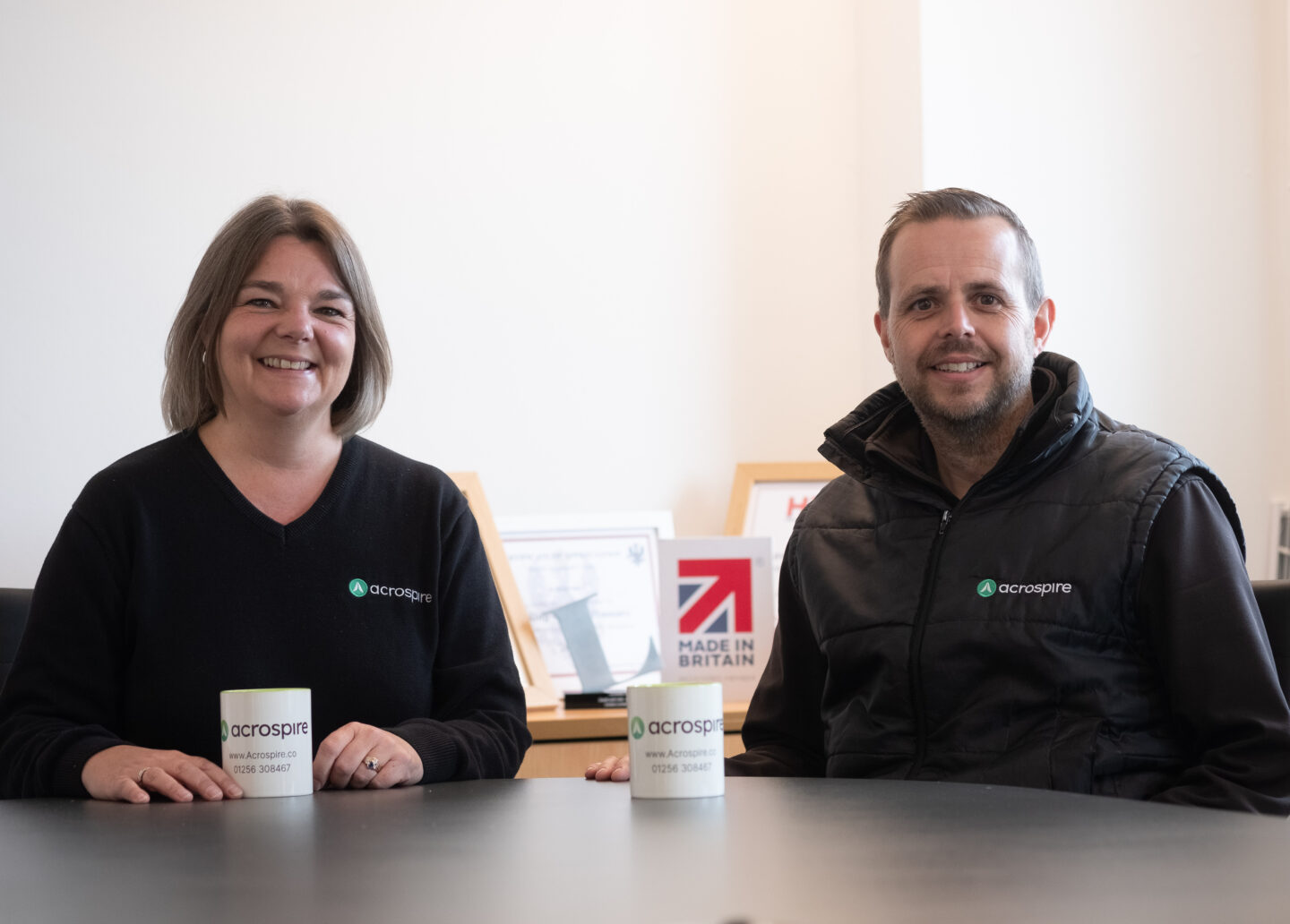
The idea for Acrospire was formed in 2012 when founder Tim envisioned a different kind of lighting manufacturer: one that would not only deliver outstanding customer experiences but also prioritise fair treatment for its employees.

We’ve come a long way

Working from any nook and cranny we could find

Motivated by the belief the industry wanted and needed better, Tim shared his plan to establish his own venture with Hatty, who simply couldn't let him do it alone.

The rest, as they say, is history.

Protecting local jobs and ensuring the best quality possible.

The products sold should, where possible be manufactured here in the UK

Working from a rented office by day and assembling lanterns in a garage at night, Tim and Hatty set to work.

11 Years later

and a lot has changed

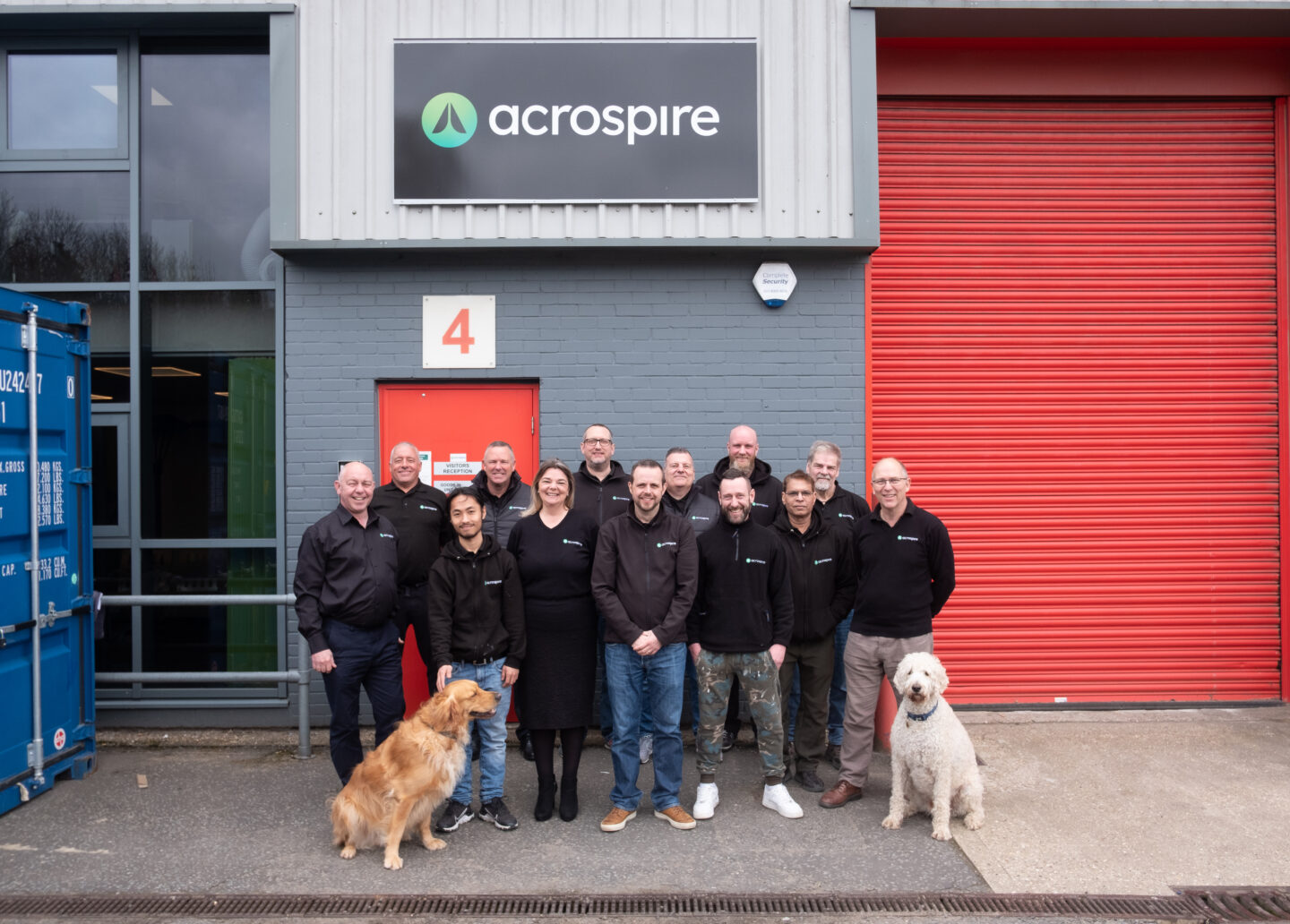
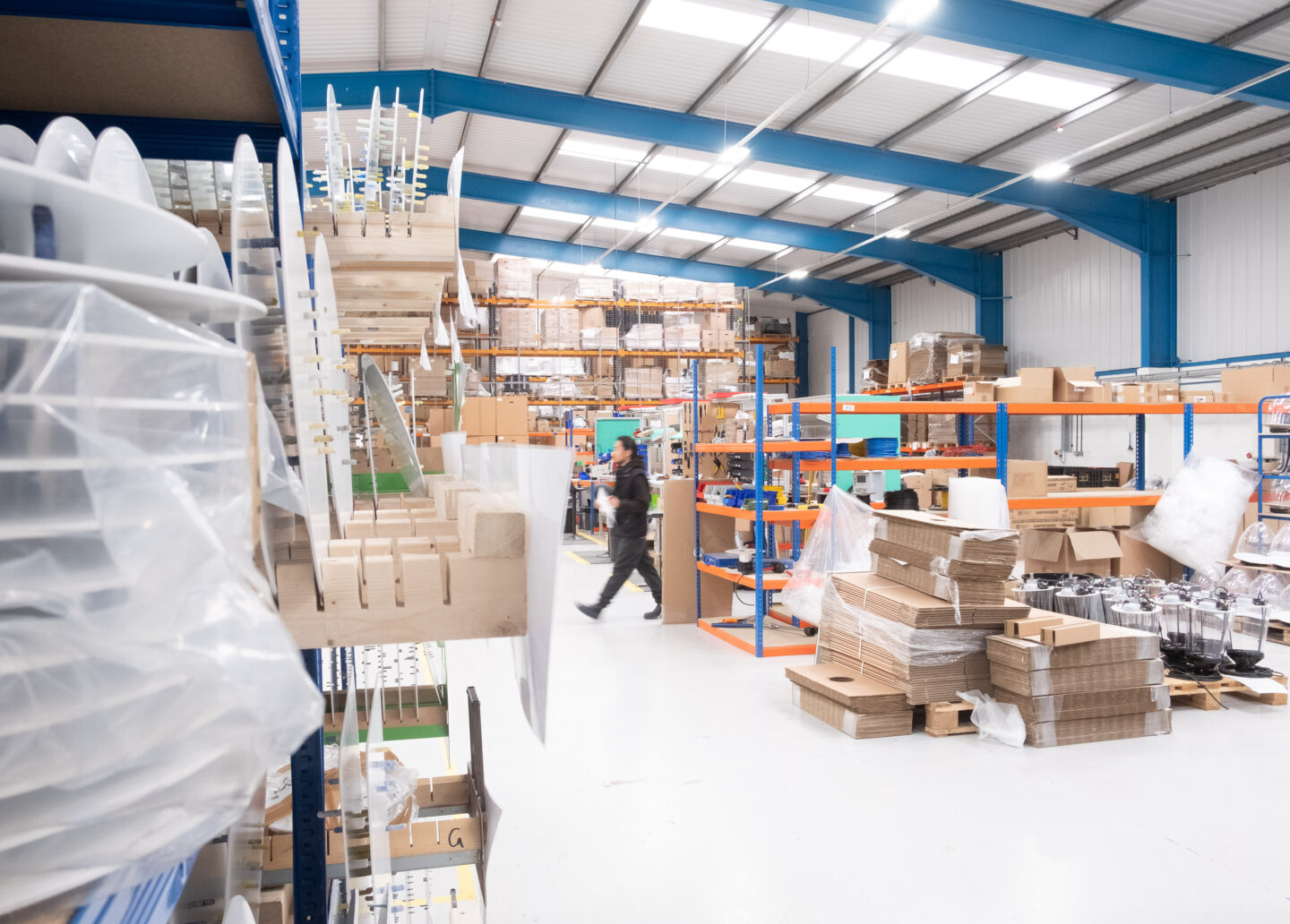
Acrospire now inhabits a 14000² ft manufacturing facility in Basingstoke, Hampshire. We’re a proud partner of the Made in Britain scheme, ISO9001 certified and a member of all relevant lighting industry trade bodies.

We've built a reputation to be proud of

Along with great relationships with our customers and a great team! We've attracted some of the most experienced members of the lighting industry, all by following one golden rule.

A simple ethos

Creating work to be proud of

That runs through all that we do. Customers who have made the switch to Acrospire have found working with us to be a breath of fresh air.

Market leading warranty

If you’re a professional in the lighting industry, you’re probably familiar with warranties that range from 3 to 10 years, with extensions available on special request or at additional cost. At Acrospire, where we’re proud to be different, we offer a market-leading simple 12-year warranty, as standard.

Tight Control on Quality

We focus on our customers not our competition. We manufacture our products in the UK: with the exception of our solar products, our supply chain is within a 60-mile radius of our factory in Basingstoke: to maintain greater control over quality. We al

Speed is key

Speed of response is crucial when it comes to resolving warranty issues. If we’ve made a mistake, we own it, get to the root cause, and fix it as quickly as possible. We believe in timely communication with our customers and making the resolution pro

Test and Test Again

We believe in independent testing and certification. Our new product development is in line with ISO 9001. Many of our products hold ENEC Certification. To meet the requirements of ENEC we also send random product samples for third party safety testi

Quality by design

Our product design is another key factor in our ability to offer a 12-year warranty. We value engineer rather than cost cut, never compromising on quality. We stick to our processes and engage with our supply chain to ensure that every product meets