shining bright

a British lighting manufacturer with a difference

Obsessed with solving problems, not just selling 'stuff': we were born from a belief that the lighting industry deserved better.

10 Tips for Choosing a Reliable Inverter Importer

Solar markets are expanding, but a booming sector does not make every supplier dependable. The International Energy Agency’s Renewables 2023 report forecast nearly 440 gigawatts of new renewable power capacity in 2023, with solar photovoltaic systems driving much of that growth. IEA Executive Director Fatih Birol described solar as “the new king of electricity markets around the world.” That momentum makes the Inverter Importer you choose a consequential business partner, not just a line on a purchase order.

A reliable importer should provide more than an attractive quotation. Check product certifications, manufacturer authorization, warranty procedures, technical support, delivery history, and clear documentation. Ask practical questions: Who handles a failed unit? Are replacement parts available? Can the importer explain compatibility with your panels and grid requirements? A careful review may reveal gaps that polished brochures hide. Still, no checklist removes every risk; even experienced buyers can overlook details under deadline pressure.

This guide presents ten ways to assess an Inverter Importer before committing to a shipment. Compare written specifications with the exact model being offered. Request references, traceable product records, and realistic lead times. Confirm how freight, packaging, and after-sales support are handled. Treat vague answers as a reason to pause, not as proof of misconduct. The aim is a supplier relationship that works after delivery, when a fault, delay, or technical question tests the promises made during negotiation. These checks cannot guarantee a perfect outcome. They can make your decision more informed, transparent, and defensible.

10 Tips for Choosing a Reliable Inverter Importer

Define Your Inverter Requirements and Import Scope

Before approaching an inverter importer, define the system the equipment must serve. Record the input voltage, phase, frequency, required output, and whether batteries or solar panels are involved. Note the installation setting too: a dusty workshop, a hot utility room, and an outdoor cabinet create different cooling and protection needs. Be specific. “For a small site” is not a usable specification.

Set the import scope alongside the technical requirements. Estimate the quantity, preferred shipment schedule, packaging needs, and any accessories, such as monitoring devices or spare fuses. Identify which product documents and destination-market certifications you need, then ask the importer to confirm what can be supplied. A common oversight is focusing on unit price while leaving testing, delivery terms, or after-sales support unclear. I would revisit that list before requesting a quote; it is easy to miss one item.

Tips: Send a one-page specification sheet. Ask for written confirmation of model ratings and included accessories. Request a sample datasheet and clarify who handles inspection and warranty communication. Keep assumptions visible. Small details matter. If the final load estimate is uncertain, label it as provisional rather than presenting it as a fixed requirement. That gives the importer a chance to flag a mismatch before the order is prepared.


Verify the Importer’s Credentials and Industry Experience

Before discussing price, verify who stands behind the shipment. Ask for the importer’s registered business details, years in the solar sector, and named technical contacts. Request references from projects using similar inverter capacities and grid conditions. Then call one reference and ask how faults, replacement units, and documentation were handled. Small details matter. A vague answer about after-sales support is a warning, even when the sales presentation looks polished.

Check that certificates and test documents match the exact inverter model, not just a similar product family. Confirm serial-number traceability, warranty terms, and the importer’s process for handling damaged or defective units. IRENA’s Renewable Capacity Statistics 2024 reports that global renewable capacity grew by 473 GW in 2023, with solar accounting for 346 GW of that increase. That rapid expansion makes careful supplier checks more important, not less. A certificate alone proves little about local service capability. It is easy to rush this check when a project is behind schedule; I would still ask for the paperwork and one verifiable customer reference before approving a purchase.

Assess Product Quality, Safety Standards, and Warranty Coverage

A reliable inverter importer should make product quality verifiable, not merely describe it. Ask for test reports tied to the exact model and production batch. Check whether the stated efficiency, temperature range, and protection features match the datasheet. Request a sample unit when possible, then inspect its terminals, labels, casing, and installation instructions. Small details matter. A loose connector can cause a costly delay.

Safety claims deserve careful checking. Confirm that certificates come from recognized testing bodies and cover the intended market and inverter configuration. Do not rely on a logo in a brochure; match certificate numbers, model names, and dates with the issuing body. Ask how incoming units are inspected and how defects are recorded. This step can feel tedious. It is still useful. Requirements differ by destination, so one certificate may not cover every configuration.

Warranty terms show how an importer handles problems after delivery. Read the coverage period, exclusions, replacement process, and responsibility for freight or labor. Ask who receives claims, what evidence is needed, and how long decisions usually take. Get answers in writing. A long warranty can look reassuring, but I would check the exclusions twice. Clear support and a practical claims process may matter more than an impressive number of years.

Review Pricing, Logistics, Customs, and After-Sales Support

A low inverter price can hide expensive gaps. Compare the full landed cost: product price, freight, insurance, inland delivery, and any applicable import charges. Ask for a dated quotation with currency, payment milestones, shipment terms, and validity period. Get it in writing. Then compare equivalent models, warranties, and included accessories rather than headline prices alone.

Logistics deserve equal scrutiny. The World Bank’s Logistics Performance Index 2023 assessed 139 economies across six areas, including customs efficiency and shipment timeliness. Use it to understand route-level risks, not to judge an individual importer. Request a sample shipping schedule, packing details, tracking procedures, and a clear list of documents your customs broker will need. Confirm who handles delays or damaged cartons. Small details matter.

After-sales support can protect a project long after delivery. Ask how warranty claims work, where replacement units or parts are held, and how quickly technical questions receive a response. The IEA PVPS Snapshot of Global PV Markets 2024 estimated 446 GW of new solar PV installations in 2023, underscoring the scale of equipment demand—but growth alone does not prove supplier reliability. Request references for comparable shipments and verify them. I still leave room for a mistake: schedules are estimates, not promises. Check the assumptions before paying.

Compare Importers and Confirm the Partnership Terms

Compare importers using the same checklist, not polished presentations alone. Request inverter datasheets, test reports, warranty terms, and references from buyers with similar order sizes. Check whether quoted models match your voltage, frequency, and operating conditions. Details matter.

Ask each importer to explain lead times, minimum order quantities, packaging, and who handles freight at each stage. Confirm payment milestones and how pricing may change if component costs or exchange rates shift. Put defect reporting, replacement procedures, spare-part availability, and technical support response times in writing. Vague promises can become expensive delays.

Look closely at sample documents and communication quality. Are answers specific, consistent, and supported by records? Keep a comparison sheet with dates and open questions; memory is unreliable. A lower quote may omit testing documents or after-sales support. I once overlooked a small difference in warranty wording, and it changed how a claim could be handled. Not every concern has a perfect answer. Ask the importer to clarify it before signing, and consider a modest trial order when practical.

10 Tips for Choosing a Reliable Inverter Importer - Compare Importers and Confirm the Partnership Terms

No. Comparison Area What to Verify Reliable Evidence or Practice Terms to Confirm
01 Business legitimacy Confirm the importer’s registered business details, operating address, and the legal entity named on its quotations and contracts. Check applicable public business records and make sure the payment beneficiary matches the contracting entity, or that any difference is clearly documented. Contracting party, payment recipient, invoice details, and notice addresses.
02 Product suitability Compare inverter type, rated output, input voltage range, phase, frequency, grid requirements, and intended application. Request model-specific datasheets and confirm compatibility with the project design, local electrical system, and connected equipment. Exact model and configuration, permitted substitutions, and approval required for any change.
03 Compliance and certification Identify the safety, electromagnetic compatibility, and grid-interconnection requirements that apply in the destination market. Verify certificates or test documents against the exact model and relevant standard. Check requirements with the local authority or qualified installer. Responsibility for documentation, import approvals, testing costs, and any compliance-related delays.
04 Product traceability Check that model numbers, serial numbers, labels, accessories, and supplied documents match the purchase order. Request sample labels and packing-list formats before shipment; inspect delivered goods and record serial numbers at receipt. Packaging and labeling requirements, inspection rights, and process for mismatched or missing items.
05 Quality inspection Agree on checks appropriate to the order, such as visual condition, model and quantity verification, and review of test records. Use a written inspection checklist and define who may inspect, when inspection occurs, and how nonconformities are documented. Inspection timing, acceptance criteria, rework or replacement process, and allocation of inspection costs.
06 Warranty coverage Read the applicable warranty document rather than relying on a verbal summary. Check coverage, exclusions, and claim procedure. Confirm whether coverage is provided by the importer, manufacturer, or another party, and whether it applies in the destination country. Warranty start date, claim response process, repair or replacement options, freight responsibility, and remedy for unavailable parts.
07 Technical support and spare parts Ask how installation questions, fault reports, software updates, and parts requests are handled. Agree on support channels, required diagnostic information, escalation contacts, and a documented method for tracking open cases. Support hours, response targets, language, service fees, parts availability, and responsibility for field visits.
08 Price and payment security Compare like-for-like quotations, including model, included accessories, taxes, freight, insurance, and other charges. Request an itemized quotation and verify bank details independently through a known contact before transferring funds. Currency, payment schedule, deposit conditions, balance due date, refund terms, and charges for payment changes.
09 Delivery and logistics Check production or dispatch lead time, shipment method, packaging, destination handling, and required shipping documents. Use a clearly stated Incoterms® rule and named place, with the edition specified; confirm which party handles export, freight, insurance, and import clearance. Delivery milestones, shipment tracking, delay notification, risk transfer, title transfer, and procedure for transit damage.
10 Written partnership terms Ensure the final agreement covers order changes, cancellations, confidentiality, dispute handling, and how notices are given. Compare the signed agreement with the quotation and purchase order. Resolve inconsistent terms in writing before making payment. Governing law, dispute process, termination rights, renewal or exclusivity (if any), and the priority of contract documents.

Our story

When The Light Went On

The idea for Acrospire was formed in 2012 when founder Tim envisioned a different kind of lighting manufacturer: one that would not only deliver outstanding customer experiences but also prioritise fair treatment for its employees.

We’ve come a long way

Working from any nook and cranny we could find

Motivated by the belief the industry wanted and needed better, Tim shared his plan to establish his own venture with Hatty, who simply couldn't let him do it alone.

The rest, as they say, is history.

Protecting local jobs and ensuring the best quality possible.

The products sold should, where possible be manufactured here in the UK

Working from a rented office by day and assembling lanterns in a garage at night, Tim and Hatty set to work.

11 Years later

and a lot has changed

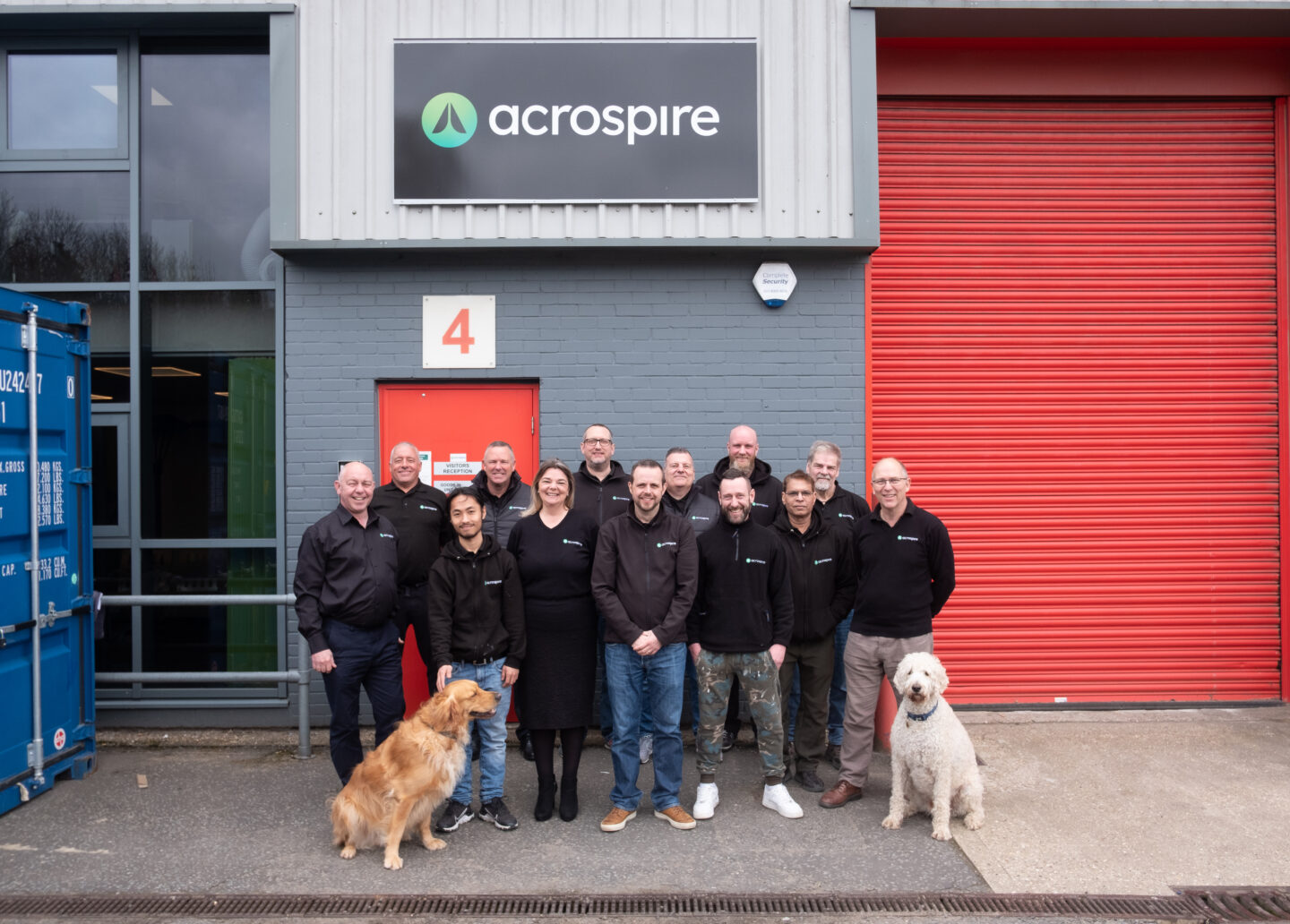
Acrospire now inhabits a 14000² ft manufacturing facility in Basingstoke, Hampshire. We’re a proud partner of the Made in Britain scheme, ISO9001 certified and a member of all relevant lighting industry trade bodies.

We've built a reputation to be proud of

Along with great relationships with our customers and a great team! We've attracted some of the most experienced members of the lighting industry, all by following one golden rule.

A simple ethos

Creating work to be proud of

That runs through all that we do. Customers who have made the switch to Acrospire have found working with us to be a breath of fresh air.

Market leading warranty

If you’re a professional in the lighting industry, you’re probably familiar with warranties that range from 3 to 10 years, with extensions available on special request or at additional cost. At Acrospire, where we’re proud to be different, we offer a market-leading simple 12-year warranty, as standard.

Tight Control on Quality

We focus on our customers not our competition. We manufacture our products in the UK: with the exception of our solar products, our supply chain is within a 60-mile radius of our factory in Basingstoke: to maintain greater control over quality. We al

Speed is key

Speed of response is crucial when it comes to resolving warranty issues. If we’ve made a mistake, we own it, get to the root cause, and fix it as quickly as possible. We believe in timely communication with our customers and making the resolution pro

Test and Test Again

We believe in independent testing and certification. Our new product development is in line with ISO 9001. Many of our products hold ENEC Certification. To meet the requirements of ENEC we also send random product samples for third party safety testi

Quality by design

Our product design is another key factor in our ability to offer a 12-year warranty. We value engineer rather than cost cut, never compromising on quality. We stick to our processes and engage with our supply chain to ensure that every product meets