What Is a Steam Turbine Blade and How Does It Work?
A Steam Turbine Blade may look like a small curved piece of metal, but it helps convert steam energy into rotation. The scale of that work matters. The International Energy Agency’s Electricity 2024 report states that coal supplied about 35% of global electricity in 2023. Coal-fired plants commonly use steam turbines, while nuclear and some renewable plants use steam cycles too. The figure gives useful context, though it does not mean every plant uses the same turbine design.
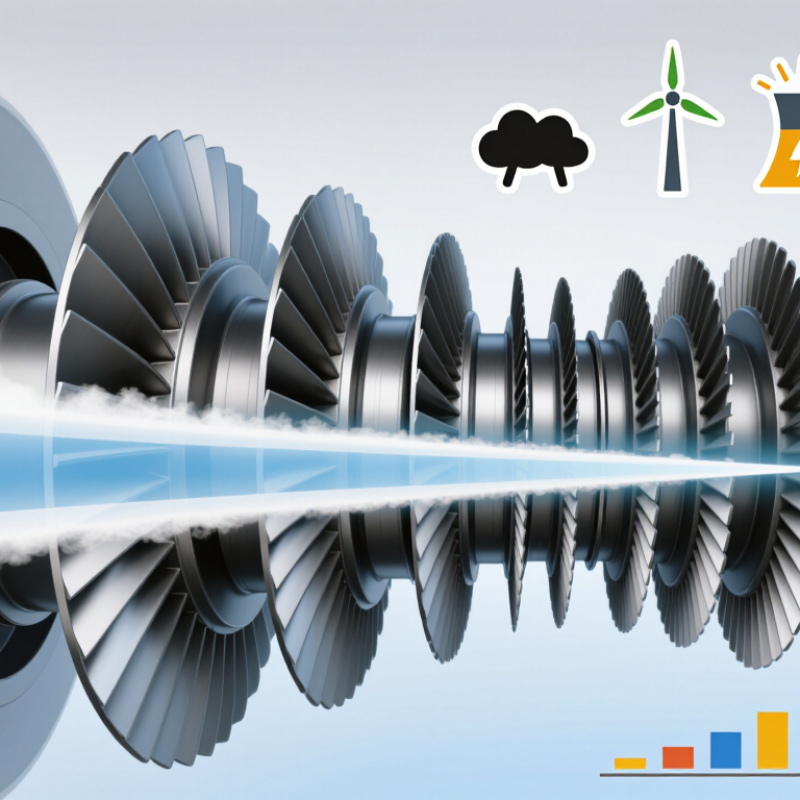
Inside a turbine, hot, pressurized steam expands through fixed and moving blades. Fixed blades guide the flow; moving blades turn the rotor. Picture a row of curved metal surfaces catching a fast, invisible stream. Repeated stages transfer energy, and the rotating shaft can drive a generator. Small geometry changes matter. Blade shape, material, temperature, and operating speed all affect performance and durability. A damaged blade can also disrupt safe, reliable operation.
This introduction examines what a Steam Turbine Blade is, how it works, and why its design matters. It will also touch on materials, common operating stresses, and maintenance. These explanations simplify a complex machine. Real turbines differ by pressure, temperature, and application. That distinction is easy to overlook. Industry reports establish the broader energy context; engineering references explain the blade-level mechanics. Neither alone tells the whole story.
What a Steam Turbine Blade Is
A steam turbine blade is a shaped metal component that guides steam or receives force from it. Blades are arranged in rows inside the turbine, forming passages through which steam expands. Some remain fixed to the casing; others attach to the rotating shaft. Both types matter. Fixed blades redirect and accelerate the steam, while moving blades absorb some of its energy and help turn the rotor.
The blade’s curved, airfoil-like surface controls how steam flows across it. Its profile, spacing, and angle affect the force produced and the smoothness of the flow. Small, but exacting. A moving blade also faces strong centrifugal forces, heat, vibration, and, in some turbine sections, moisture carried by the steam. Engineers account for these conditions when choosing materials and designing the blade root, which locks the blade to the rotor. The details vary with turbine size and operating conditions, so one blade shape cannot suit every machine. It is easy to picture a blade as a tiny paddle; that image helps, but it misses how carefully its shape must manage fast, changing steam.
Where Blades Are Located in a Steam Turbine
Where Blades Are Located in a Steam Turbine
Steam turbine blades sit in rows along the machine’s central flow path. Moving blades attach to the rotor, which turns inside the casing. Between these rows, stationary blades are fixed to the casing or internal diaphragms. They guide steam toward the next moving row. The arrangement repeats through the turbine.
At the inlet, the first blade rows handle hot, high-pressure steam. Farther along, the steam expands, and the blades often grow larger to accommodate its increasing volume. Each stage changes the steam’s direction or pressure and transfers energy to the rotor. Not every turbine uses an identical layout; stage design depends on operating conditions. The distinction can be easy to miss during a visual inspection, especially when internal parts are hidden by the casing.
Tips: When viewing a turbine section drawing, trace the steam path from inlet to exhaust. Look for alternating fixed and moving rows. The rotor carries the moving blades; the casing supports the stationary ones. Check carefully. A simplified diagram may not show every seal or support.
How Blade Shape Affects Energy Transfer
A steam turbine blade does more than catch moving steam; its profile guides the flow and converts some of its energy into rotation. Curved surfaces redirect the steam, changing its momentum and applying force to the rotor. As steam expands through a stage, the blade passage also shapes its speed and pressure. Small angles matter. If steam strikes a blade too sharply, flow can separate, creating turbulence and reducing useful torque.
Blade shape varies along its length. Near the root, a blade may be thicker to withstand heavy mechanical loads. Toward the tip, its angle often changes to match steam moving at a different speed. This twist helps maintain a useful flow direction across the blade span. A technician inspecting a worn blade might look for erosion near the leading edge, where fast droplets or particles can gradually alter its profile. Even small damage can change how smoothly steam passes over the surface.
A more aggressive curve may extract energy effectively under one set of conditions, yet perform poorly when pressure or flow changes. The best shape is a compromise among efficiency, strength, vibration, and manufacturing limits. Clearances matter, too. Steam leaking around a blade tip can bypass the intended path, so blade geometry must work with the surrounding casing. Simplified diagrams often show clean, even flow; real turbines are less tidy, and that gap is worth remembering.
How Blade Shape Affects Steam Turbine Energy Transfer
Turbine blades turn the steam flow, changing its tangential velocity. By the Euler turbine equation, specific work is proportional to blade speed multiplied by the change in tangential velocity. This illustrative calculation holds blade speed at 300 m/s and inlet tangential velocity at 450 m/s; the plotted work values are calculated, not measured.
Materials and Forces That Shape Blade Design
Steam turbine blades convert moving steam into rotation. Steam flows across their shaped surfaces, creating force that turns the rotor. Each blade must guide the flow while staying securely attached at high speed. Small changes in blade shape can affect efficiency, vibration, and power output.
Material choices depend on temperature, pressure, and operating conditions. Lower-temperature stages often use corrosion-resistant steels, while hotter stages may require nickel-based alloys. Centrifugal force pulls each rotating blade outward; steam pressure bends it, and vibration adds repeated stress. Heat can also create uneven expansion across a blade. Engineers account for these loads through testing and careful design. No material handles every condition perfectly. That trade-off is easy to underestimate.
Tips: Look for erosion, cracks, and deposits during qualified inspections. Even small surface damage can disturb steam flow. Maintenance intervals should follow the turbine’s operating history, not guesswork.