What is a Panel Light and How to Choose the Best One?
When considering lighting options for your space, a Panel Light often stands out. This modern lighting solution offers a sleek and versatile design, fitting seamlessly into various interior styles. Panel Lights are not just about aesthetics; they provide functional benefits too. They deliver uniform illumination, reducing shadows and enhancing visibility in your home or office.
Choosing the best Panel Light may seem straightforward, but it requires careful thought. Factors like brightness, size, and color temperature play vital roles in achieving the desired ambiance. Understanding your specific needs can help you avoid common pitfalls. For example, a light too harsh can create discomfort, while one too dim can be ineffective.
As you navigate this process, keep in mind the importance of quality. Not all Panel Lights are created equal. Many options promise savings, but they may lack durability and efficiency. Reflecting on your choices ensures you invest in a reliable product that truly meets your needs. Therefore, take the time to research and consider expert recommendations. Your lighting choice can profoundly affect the atmosphere in your space.
What is a Panel Light?
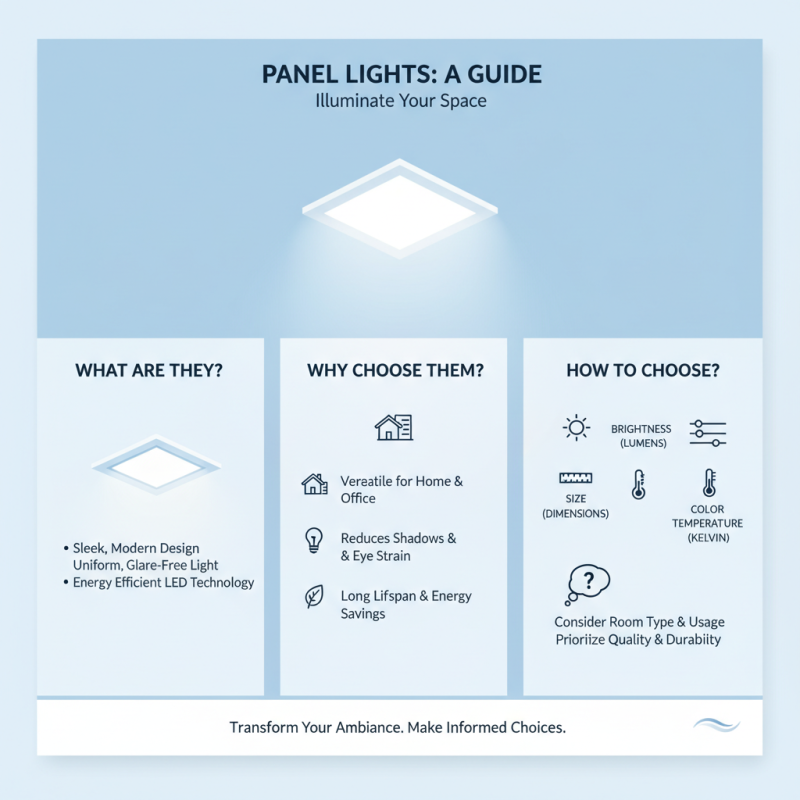
Panel lights are flat lighting fixtures widely used in commercial and residential spaces. They are known for their sleek design and energy efficiency. According to the U.S. Department of Energy, LED panel lights can use up to 75% less energy than traditional lighting. This makes them a popular choice for environmentally conscious consumers.
When selecting a panel light, consider factors like brightness, color temperature, and installation type. Brightness is measured in lumens, while the color temperature affects the ambiance. Warmer tones are ideal for living spaces, while cooler tones suit work areas. Reflecting on your needs can guide your choice. Remember, not every panel light fits all environments.
Tips:
- Evaluate your space's dimensions and existing lighting.
- Check for dimmable options for added versatility.
- Be mindful of the panel's lifespan; quality varies widely.
The difference in durability can be significant. Investing in higher-quality lights might result in lower long-term costs. Don't rush your decision; consider how each option aligns with your personal and environmental values.
Types of Panel Lights Available in the Market
When choosing a panel light, understanding the types available is crucial. There are several types of panel lights in the market today. The most common are edge-lit and backlit panel lights. Edge-lit panels offer sleek designs. They distribute light evenly and are ideal for modern spaces.
Backlit panels, on the other hand, provide more uniform lighting. They are often thicker but deliver greater brightness. Consider where you'll install the light. For example, edge-lit panels may fit better in low-profile ceilings. Meanwhile, backlit panels work well in areas requiring brighter illumination.
Another type is the recessed panel light. These fit into ceilings, offering a clean look. They can blend with the ceiling, creating a seamless feel. However, installing these can be challenging. You may need professional help. Also, there's the option of dimmable panel lights, which add versatility. Not every space will need dimmable features, so assess your needs. Evaluating these types carefully will ensure you choose the right panel light for your environment.
Key Features to Consider When Choosing Panel Lights
When choosing panel lights, several key features can greatly influence your decision. One of the most important is the lumens output. A standard panel light typically provides between 3000 and 5000 lumens. This means you need to assess the space where you will install the light to ensure it offers adequate brightness without being overwhelming.
Another feature to consider is color temperature. Most panel lights range from warm white (3000K) to cool white (6500K). According to a report from the American Lighting Association, the right color temperature can enhance mood and productivity. Warmer colors are often suited for living spaces, while cooler tones are more appropriate for work areas.
Tip: Think about dimmable options. Dimmable panel lights allow flexibility in lighting, which can cater to different activities and times of day.
Energy efficiency is also paramount. Look for panel lights with a high efficacy rating, measured in lumens per watt. A panel with a rating of 100 lumens per watt can save significant energy costs, as noted by the Department of Energy.
Tip: Don’t overlook the design. The style and finish of the panel light should complement your space, influencing both aesthetics and functionality.
Factors Influencing the Performance of Panel Lights
When choosing a panel light, several factors can impact its performance and effectiveness. One key element is the lumens output, which indicates how much light the fixture produces. Higher lumens mean brighter light. However, too much brightness can cause glare, making it uncomfortable for users. It's crucial to find a balance that suits the intended space.
Color temperature also plays a vital role in the overall ambiance. Typically, panel lights can emit warm, neutral, or cool tones. Warmer tones (around 3000K) are cozy and inviting, while cooler tones (5000K and above) promote alertness and focus. Choosing the right temperature for the room's purpose can enhance motivation and productivity. Some users may overlook this, leading to a mismatch with their needs.
Another important factor is energy efficiency. Look for panel lights with a high luminous efficacy rating. This indicates better light output for less energy consumption. However, beware of cheaper options that compromise quality for lower prices. Quality lights may have a higher upfront cost, but they prove to be more reliable and longer-lasting in the long run. Making informed decisions is key. Reflecting on your needs can guide you to the best choice.
Panel Light Performance Factors
Tips for Installing and Maintaining Panel Lights
Panel lights are becoming increasingly popular for their sleek design and energy efficiency. To ensure your panel lights function well, proper installation and maintenance are key. According to the Department of Energy, energy-efficient lighting systems can reduce electricity use by about 50% in commercial spaces. Regular maintenance extends the lifespan and efficiency of these lights.
When installing panel lights, consider the mounting options. Recessed installation provides a clean look, but surface-mounted lights are easier to install. Ensure the ceiling space is suitable for your chosen method. Use LED panel lights for optimal energy savings and longevity. The initial investment may be higher, but LED lights can last up to 50,000 hours, significantly reducing overall costs.
For maintenance, regularly clean the panels to remove dust and debris. This simple step improves light output. Check for flickering or dimming, which can indicate issues. Replace any damaged parts promptly. This attention to detail can enhance safety and improve aesthetic appeal. While panel lights are generally low-maintenance, being proactive ensures they remain effective throughout their lifespan.