What Are Night Vision Goggles and How Do They Work?
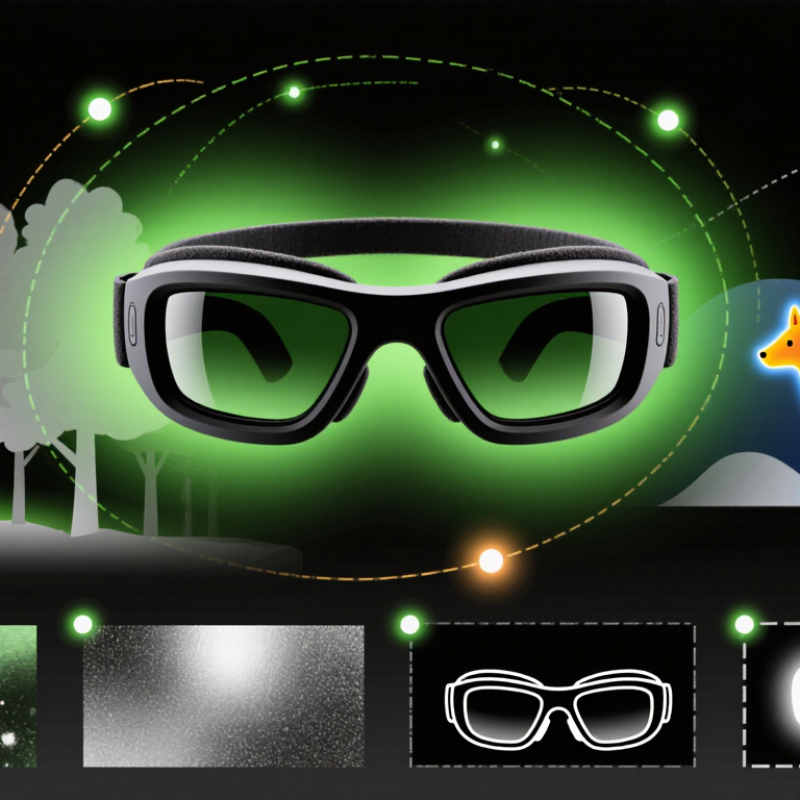
Night Vision Goggles help people see in darkness by turning faint light or infrared energy into a visible image. The view may appear green, black and white, or shaped by the device’s display. Either way, it is not ordinary daylight. A concise paraphrase of optical-imaging expert Glenn D. Boreman’s field—not a verbatim quotation—is: “A night image is a measured signal, not daylight restored.” That distinction matters.
Many goggles use image intensification. A lens gathers available light, including light beyond what our eyes can easily see. Inside the device, a photocathode converts incoming photons into electrons. Those electrons are amplified, then strike a phosphor screen to form an image. A dim tree line can become visible. So can grain, glare, or a sudden bright patch that hides detail.
Other systems use digital sensors, while thermal imaging detects differences in heat rather than reflected light. These technologies can look similar in product descriptions, but they do not show the same information. A warm animal may stand out against cool ground in a thermal image; image-intensifying goggles may reveal its outline through faint reflected light. Not magic. Just different signals.
The actual view depends on ambient light, optics, sensor quality, and the scene itself. Deep shade, fog, rain, or a bright lamp can change what the user sees. Edges may blur. Distance can be hard to judge. Those limits deserve more attention than glossy demonstrations usually give them. Understanding how Night Vision Goggles work makes their strengths clearer—and their blind spots harder to ignore.
Night Vision Goggles: Main Types and the Standard 40° Field of View
Night vision goggles gather limited light and convert it into an image a person can see. Image-intensifier models amplify available light, such as starlight, while digital models use a sensor and display. Thermal devices show differences in heat rather than relying on visible light. These approaches are not interchangeable. Fog, bright lamps, and nearby reflections can affect what appears in the eyepiece.
A 40-degree field of view is a common reference for night vision goggles.
It describes the scene visible through the optics, not how far the device can see. At night, that view may feel like looking through a round window: useful for detail, but narrower than natural peripheral vision. That matters. Users may need to move their eyes or turn their heads to check the edges of a scene. The exact field of view varies with the optical design, and specifications may describe horizontal or diagonal coverage. It is easy to treat “40 degrees” as a universal standard; it is not. Check the stated measurement and try the viewing angle in realistic conditions, since even a small difference can change comfort and awareness over time.
Image Intensification: How Photocathodes Turn Low Light into Electrons
Night vision goggles do not simply make darkness disappear. In image intensification, a front lens gathers available light, including faint moonlight or starlight. That light reaches a photocathode, a thin surface designed to release electrons when photons strike it. This process is called the photoelectric effect. Each photon carries energy, and it may free an electron when it hits the photocathode. More incoming light usually produces more electrons, though the conversion is not perfectly efficient. Tiny signals matter. A shaded fence can begin to separate from a dark yard.
An electric field pulls the electrons through the intensifier. In many systems, a microchannel plate multiplies them as they pass through narrow channels. The resulting electron pattern strikes a phosphor screen, which emits visible light. An eyepiece lets the user view that image, often with a green tint. The image may look grainy, and bright points can bloom. This is not a perfect record of the scene. Photocathode sensitivity, lens quality, and ambient light all affect the result. In near-total darkness, there may be little light to amplify, so some devices use separate infrared illumination. Conditions change. So does the view.
Microchannel Plates: Amplifying Electrons by Thousands of Times
Night vision goggles make faint scenes easier to see by converting available light into a brighter image. A lens gathers photons from moonlight, starlight, or nearby lamps. At the image intensifier’s photocathode, incoming photons release electrons. The device then directs those electrons toward a microchannel plate, a thin disk packed with microscopic channels. It works in a vacuum. Small details matter.
Each channel acts like a tiny electron pathway. When an electron strikes its inner wall, it can release more electrons. Those electrons travel onward and trigger further releases, creating a cascade. Across millions of channels, this process can amplify the electron signal by thousands of times, depending on the device and operating conditions. A phosphor screen converts the amplified signal back into visible light, often as a green image. The explanation sounds tidy, but real images can show grain, blur, or bright spots. Amplification does not restore details that the lens never captured.
Tips: Keep the lens clean, and avoid pointing the device at intense lights. Sudden brightness can wash out the view or strain the intensifier. Let your eyes adjust to the dark before relying on the image. A faint, noisy picture is not always a malfunction; limited light and imperfect alignment can affect what you see.
Phosphor Screens and Eyepieces: Converting Amplified Electrons into Images
Inside a night vision device, incoming light has already been converted into electrons and amplified. Those electrons strike a phosphor screen, a coated surface that turns their energy back into visible light. The screen forms a tiny image inside the tube. That is the key. Its glow may appear green or white, depending on the phosphor used. Bright areas and dim areas correspond to differences in the light collected at the front of the device, though the result is not a perfect copy of the scene.
The eyepiece then magnifies this small screen image and directs it toward the eye. Turning its focus ring can sharpen edges, such as a branch against the sky, but it cannot restore detail the system never captured. Not quite a photograph. Grain, halos around bright points, and soft edges can remain visible, especially in very dark conditions. These are clues about the limits of the image, not necessarily signs of a fault. A useful check is to focus the objective and eyepiece separately, then compare the same stationary detail. It can feel counterintuitive: the screen looks bright, yet fine detail may still be missing.
Phosphor Screens and Eyepieces: From Electrons to Visible Light
A phosphor screen converts incoming amplified electrons into visible photons. The eyepiece magnifies that light for viewing. These bars show approximate midpoints of visible color bands in nanometers—not measured phosphor output spectra. Actual phosphor emission depends on the screen material.
Tube Performance: Gen 3 Resolution Commonly Reaches 64–72 lp/mm
What Are Night Vision Goggles and How Do They Work?
A Gen 3 image-intensifier tube is commonly rated at 64–72 line pairs per millimeter (lp/mm). A line pair means one light line beside one dark line. The figure describes how finely the tube can separate a test pattern under specified conditions. It is not a promise that every object will look equally sharp. The U.S. Army’s night-vision evaluation materials treat resolution as one measure among several, including signal-to-noise performance. That context matters.
On a resolution chart, closely spaced bars gradually blur together as the pattern becomes finer. At 64–72 lp/mm, a strong tube can resolve very fine detail in controlled testing. In use, however, lens quality, focus, image contrast, and low-light conditions all affect what reaches the eye. A dim fence line may appear less defined than the chart suggests. Small imperfections in focus can also soften edges. The rating helps compare tubes, but it is easy to overrate it: higher resolution alone does not guarantee a clearer view.
What Are Night Vision Goggles and How Do They Work? — Tube Performance: Gen 3 Resolution Commonly Reaches 64–72 lp/mm | Tube generation | Typical image-intensifier technology | Common resolution range | How to interpret the performance | Important considerations |
| Generation 1 | Photocathode and image intensifier, generally without a microchannel plate | Approximately 20–35 lp/mm | Can make a dark scene visible when some ambient light is available. | Image detail and performance in very low light are generally more limited than in later generations. |
| Generation 2 | Microchannel-plate intensifier; commonly uses a multialkali photocathode | Approximately 45–64 lp/mm | The microchannel plate amplifies electrons to produce a brighter, more detailed image. | Performance varies by tube design, condition, and operating environment. |
| Generation 3 | Microchannel-plate intensifier, commonly using a gallium-arsenide photocathode | Commonly 64–72 lp/mm | Often provides high image detail and strong sensitivity in low-light conditions. | Resolution alone does not determine overall image quality; signal-to-noise ratio, blemishes, optics, and available light also matter. |
| Resolution unit | Line pairs per millimeter (lp/mm) | Higher values indicate finer detail can be distinguished under specified test conditions. | A line pair consists of one dark line and one adjacent light line. | Figures are indicative ranges, not guaranteed specifications. Actual measurements and grading criteria can differ among tubes and test methods. |