How to Choose the Best Reefer Cargo Van?
Choosing a Reefer Cargo Van is not just a matter of selecting a cooling unit. The right vehicle must hold a stable temperature through loading, traffic delays, frequent door openings, and changing outdoor conditions. Grand View Research valued the global refrigerated transportation market at approximately $17.3 billion in 2022 and projected continued growth. That trend makes careful vehicle selection more important for businesses moving temperature-sensitive goods.
Cold-chain author Dr. John Ryan’s published guidance emphasizes that temperature control depends on the whole transport journey, not refrigeration equipment alone. That is a useful test for any van. Look at insulation, usable cargo space, refrigeration capacity, temperature monitoring, and service support together. A display showing the set temperature is not proof that every corner of the cargo area stays consistent. Ask for temperature-mapping records under realistic operating conditions. Check the rear doors, too; worn seals can quietly undermine performance.
Small details matter. How long does the van take to recover temperature after a delivery? Can the unit maintain its target during a hot afternoon stop? Will the payload leave enough room for airflow around each container? These questions help distinguish a suitable vehicle from one that merely looks capable. The cheapest option may cost more in downtime or spoiled inventory. And specifications can be confusing. Compare them carefully.
This guide explains how to assess vehicle size, cooling performance, insulation, energy use, monitoring features, and after-sales support. It also highlights where published figures may not match real delivery routes. No single model fits every operation. A short urban route and a full-day multi-stop schedule place very different demands on a Reefer Cargo Van.
Define Cargo and Setpoint: FDA Food Code Cold-Holds TCS Food at 41°F or Below
Before choosing a reefer cargo van, define the food and its required holding temperature. The FDA Food Code 2022 sets cold-held time/temperature control for safety food at 41°F (5°C) or below. That is the food’s limit, not automatically the van’s ideal setpoint. Air isn't food. Warm loading, frequent door openings, and uneven airflow can leave some packages warmer than the display suggests.
Match the van’s usable cargo space and refrigeration capacity to your load, route, and loading routine. Pre-chill the cargo when appropriate, leave space for airflow, and check product temperature with a calibrated probe. A data logger can reveal temperature swings between stops. Small margins matter. The CDC’s Estimates of Foodborne Illness in the United States reports about 48 million illnesses, 128,000 hospitalizations, and 3,000 deaths annually from foodborne agents. Those estimates are broad, but they show why cold holding deserves careful attention. I would not rely on one dashboard reading; it measures the unit’s conditions, not every item’s core temperature. Test the van under realistic loading and delivery conditions before settling on a setpoint. A little inconvenient, yes. Better than guessing.
Match Cooling Class to Cargo: ATP Classes A, B, and C Reach 0°C, −10°C, and −20°C
Choosing a reefer van starts with the cargo’s required temperature, not the coldest setting available. ATP Class A is designed to maintain temperatures from 0°C and above. Class B reaches −10°C, while Class C reaches −20°C. These are capability ranges, not promises that every load will stay perfectly uniform.
For chilled produce, dairy, or prepared foods, Class A may be sufficient when the cargo needs to remain near or above freezing. Class B suits goods that need deeper chilling, such as some fresh proteins. Class C is intended for frozen cargo. Check the product’s handling guidance before choosing; “cold” is not a precise specification. Small differences matter.
The van’s performance depends on more than its class. Pre-cool the cargo space, leave room for air to circulate, and limit door-open time during deliveries. A tightly packed load can block airflow near the rear doors. That detail is easy to miss. Use a calibrated thermometer or data logger to check conditions at several points, especially on longer routes. Ambient heat, loading delays, and frequent stops can all affect temperatures. The best match is the lowest class that reliably meets the cargo’s documented needs, with a practical margin for real delivery conditions.
How to Choose the Best Reefer Cargo Van? — Match Cooling Class to Cargo: ATP Classes A, B, and C Reach 0°C, −10°C, and −20°C
| Selection factor | ATP Class A | ATP Class B | ATP Class C |
| ATP temperature range | Designed to maintain an internal temperature from +12°C down to 0°C. | Designed to maintain an internal temperature from +12°C down to −10°C. | Designed to maintain an internal temperature from +12°C down to −20°C. |
| Typical cargo fit | Chilled goods whose approved transport temperature is at or above 0°C, such as many fresh foods and some dairy products. | Goods requiring temperatures below 0°C but not colder than the class limit, where the product specification permits it. | Frozen goods requiring temperatures down to −20°C; often the appropriate class when a load must be carried at around −18°C. |
| Choose this class when… | Your cargo needs chilled—not frozen—transport and its required temperature can be maintained within the Class A range. | Your cargo needs sub-zero transport, and its specified limit is no colder than −10°C. | Your cargo needs deeper-freeze capability, including products with a specified transport temperature near −18°C. |
| Check before buying | Confirm the cargo’s permitted temperature range and whether the van can maintain it during the planned route and delivery pattern. | Check that the product specification does not require a temperature below −10°C. | Confirm that the refrigeration unit, insulation, and vehicle configuration are suitable for the required set point and operating conditions. |
| Important operating factors | Pre-cool the cargo and compartment as appropriate, allow for door openings and loading conditions, maintain unobstructed airflow, and monitor temperatures with suitable equipment. Refrigerated vehicles are generally intended to maintain cargo temperature, not rapidly cool warm loads. |
Note: ATP classes describe the vehicle’s certified refrigeration capability, not a universal storage temperature for each food. Always follow the cargo owner’s temperature specification and applicable transport rules. Verify the vehicle’s ATP documentation and the required operating conditions before purchase.
Size Payload and Insulation for Usable Volume and Expected Heat Load
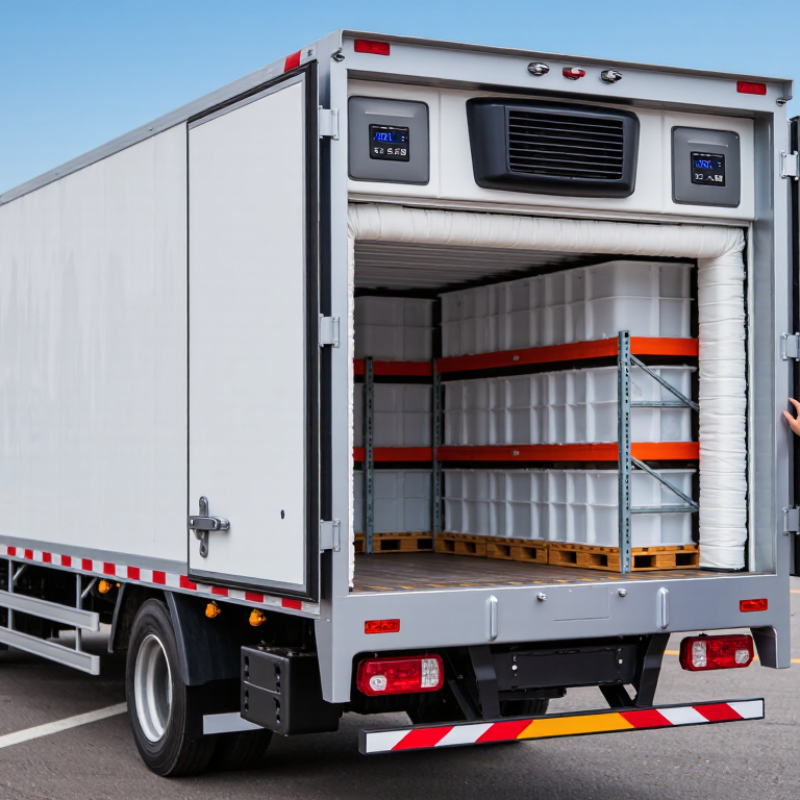
Choosing a reefer cargo van starts with usable interior dimensions, not exterior size. Measure the floor, door opening, and space between wheel wells. Allow room for insulation panels and the cooling unit, which reduce cargo space. Measure twice. A van that looks spacious may leave little room for stacked boxes or airflow.
Check payload on the vehicle’s rating plate, then account for the driver, equipment, packaging, and cargo. Do not plan around the maximum figure alone; uneven loading can affect handling.
Insulation also shapes the expected heat load. Thicker panels can slow heat transfer, but seams and frequent door openings still let warmth in. Consider outside temperatures, time parked in direct sun, and whether goods enter already chilled. These details influence the cooling capacity needed.
Small details matter. It is easy to focus on cubic volume and overlook the warm air admitted during deliveries.
For a demanding route, have a qualified refrigeration specialist assess the load and operating conditions before choosing equipment.
Compare Cooling Capacity and Airflow at the Van’s Design Ambient Temperature
A reefer van should be selected against the hottest ambient temperature it will actually face, not a mild showroom test. High ambient heat raises the load on the refrigeration system, while door openings add warm, moist air. ASHRAE’s Handbook—Refrigeration explains how heat transfer, infiltration, and product pull-down contribute to refrigeration load. Compare cooling capacity at the vehicle’s stated design ambient temperature, with the intended cargo and operating cycle in mind. A rating without its test conditions tells you little.
Airflow matters just as much. Cold air must reach the front, rear, and upper parts of the load; blocked floor channels or tightly packed cartons can create warm pockets. USDA FSIS advises keeping refrigerated foods at 40°F (4.4°C) or below, but that is a food-safety reference, not a universal reefer setpoint. Verify the cargo’s specific temperature requirement, then ask for temperature-mapping results under a realistic load.
Tips: Request capacity and airflow data at the design ambient temperature. Check supply and return air readings, and test with representative cargo. A quick empty-van test can mislead. Reflect on door-open time, sun exposure, and delivery stops; these details may matter more than a large headline capacity figure.
Check Temperature Monitoring, Compliance, Serviceability, and Operating Costs
A strong reefer van is judged by stable cargo temperatures, not the lowest number on its display. Request calibrated air and cargo probes, alarm history, and downloadable trip logs. Test it loaded; empty-box readings can flatter performance. FDA’s Sanitary Transportation rule calls for temperature controls when needed to protect food safety. FAO’s 2023 State of Food and Agriculture estimated that 13.2% of food was lost after harvest and before retail in 2021. That global estimate is not van-specific, but it underscores the value of documented handoffs. Small details matter.
Inspect insulation, door seals, airflow, and probe placement. Ask how quickly local technicians can access refrigeration components, and whether routine service requires long downtime. ATRI’s 2024 trucking-cost report put average marginal costs at $2.27 per mile in 2023. That is a heavy-truck benchmark, not a reefer-van quote. Build your own estimate from route length, fuel or electrical use, refrigeration hours, maintenance, and spoilage risk. I would leave room for uncertainty: stop frequency and hot weather can make a neat spreadsheet look wrong. Compare service schedules and repair access before choosing the van with the lowest purchase price.