shining bright

a British lighting manufacturer with a difference

Obsessed with solving problems, not just selling 'stuff': we were born from a belief that the lighting industry deserved better.

How to Choose Electric Mini Trucks in 2026?

Choosing Electric Mini Trucks in 2026 is less about chasing the biggest battery and more about matching a vehicle to daily work. The International Energy Agency’s Global EV Outlook 2024 reported nearly 14 million electric car sales worldwide in 2023, about 18% of new car sales. It projected sales could reach 17 million in 2024. These figures cover electric cars, not mini trucks, so they signal wider market momentum—not proof that every small commercial vehicle is ready for every job.

The right choice starts with a route. A delivery van covering short urban loops faces different demands from a truck carrying tools up steep roads. Compare usable payload, real-world range, charging time, battery warranty, service access, and total ownership cost. Then check the details: Can the truck finish a full shift with heating or air conditioning on? Is charging available at the depot overnight? Small questions. Costly surprises.

This guide will help buyers assess those trade-offs using practical criteria and credible market context. Manufacturer range claims deserve careful scrutiny; temperature, cargo weight, and stop-and-go traffic can change daily performance. A specification sheet may look reassuring and still miss the hardest hour of a workday. That gap is easy to overlook. It should not be.
How to Choose Electric Mini Trucks in 2026?

Identify Your Intended Uses and Payload Requirements

Start with the work the truck will do, not its advertised range. Will it carry tools between job sites, move produce around a property, or make repeated deliveries? A short route can still be demanding. Frequent stops, steep driveways, and rough surfaces change the job. Note your typical daily distance, longest regular trip, and where charging is available. Be specific: a toolbox, two workers, and a loaded bed create a different duty cycle from light parcel runs.

Payload needs careful counting. Include passengers, tools, fittings, and anything added after purchase, such as racks or a storage box. Weigh a representative load if possible; guessing from the bed’s appearance is unreliable. Also check cargo dimensions and how weight sits in the bed. A bulky but light load may need more space, while concentrated weight can affect handling. Compare your normal load with the truck’s published payload rating, and leave room for occasional heavier days. Range can fall with extra weight, cold weather, hills, and repeated acceleration. My estimate might still miss a seasonal task, so review a full week of work before choosing.


Compare Electric Mini Truck Types, Dimensions, and Capabilities

How to Choose Electric Mini Trucks in 2026?

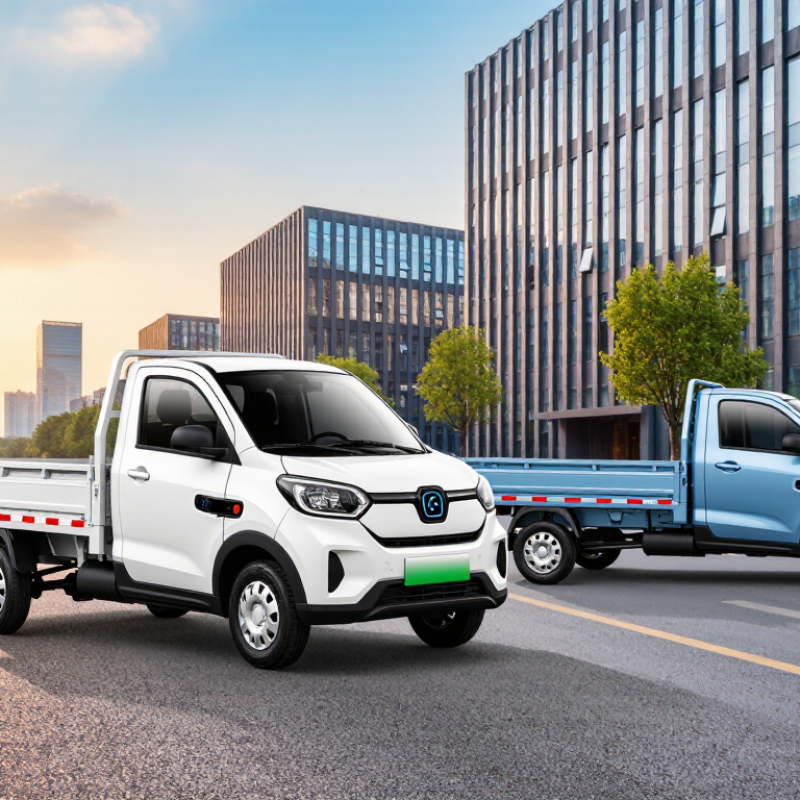
Electric mini trucks generally fall into open-bed utility, flatbed, enclosed-cargo, and crew-cab types. Open beds suit landscaping tools or farm supplies, while enclosed bodies protect boxes from rain and dust. Crew cabs carry extra passengers, but their larger cabins can reduce usable cargo space. Measure the work area, not just the truck. A narrow aisle or low garage entrance can rule out a model that looks compact on paper.

Compare overall length, width, height, bed dimensions, payload, and turning circle. Small models may measure roughly 3–4 metres long, but dimensions vary by configuration. Payload figures include people, tools, and fitted equipment, so leave a sensible margin. Check the route, too: steep ramps, repeated stops, and cold weather can reduce practical range. A claimed range is not a guarantee. I would test the truck with a typical load; it is easy to underestimate how much space even basic equipment needs.

Tips: Measure doorways and loading bays before shopping. Ask for payload and range figures under realistic conditions. Check charging access, ground clearance, and whether the bed fits your longest item. Take a tape measure. A little extra capacity can help, though it may mean a larger vehicle than your site needs.

Evaluate Battery Range, Charging Options, and Performance

How to Choose Electric Mini Trucks in 2026?

Evaluate Battery Range, Charging Options, and Performance

Choose a mini truck around the work route, not its advertised maximum range. Record daily distance, payload, hills, stop frequency, and overnight parking access. Cold mornings, cabin heating, and repeated short trips can reduce usable range. Leave a practical buffer; real routes are less tidy than spreadsheets. Small details matter.

The International Energy Agency’s Global EV Outlook 2024 reported that public charging points grew about 40% worldwide in 2023, while fast chargers grew about 55%. That expansion is useful context, but it does not guarantee a convenient charger near your depot.

For predictable overnight charging, check whether site wiring supports the truck’s charging needs. The U.S. Department of Energy’s Alternative Fuels Data Center says Level 2 charging commonly adds about 10–20 miles of range per hour. Confirm the vehicle’s actual onboard charging rate, then compare it with your available charging window.

Treat fast charging as a backup unless your route and schedule genuinely require it. Check payload and grade performance with a loaded test drive; an empty truck can feel deceptively capable.

Check Safety Features, Regulations, and Total Ownership Costs

When comparing electric mini trucks, inspect the safety equipment, not just the load rating. Check that seat belts, head restraints, mirrors, lighting, and braking systems suit your daily routes. If the truck has a cab, ask about its rollover protection and available crash-test information; ratings may not match those of full-size vehicles. Small details matter. Test visibility from the driver’s seat, especially around the rear corners, and confirm that the tires are rated for the truck’s maximum payload.

Regulations depend on where and how you plan to drive. A vehicle permitted on private property may not qualify for public roads. Confirm its vehicle classification, registration requirements, speed limits, licensing rules, and insurance needs with your local transport authority before purchase. Get the vehicle’s specifications in writing. Seller descriptions can be incomplete, and I would not rely on a verbal promise about road eligibility.

Calculate ownership costs over several years, not only the purchase price. Include charging equipment, electricity, scheduled service, tires, insurance, and likely downtime. Ask for the battery warranty’s time and mileage limits, plus exclusions and replacement costs. Costs add up. A small truck used for short, predictable trips may be economical, but frequent heavy loads or cold-weather work can reduce range. I’d compare the expected daily route with a practical reserve, even if that makes the estimate less flattering.

Inspect Available Models and Verify Their Warranty and Support

When comparing electric mini truck models, inspect the exact configuration you would buy, not just a brochure photo. Check payload, bed dimensions, ground clearance, and turning space against your daily routes. If possible, sit in the cab and test the visibility, controls, and step height. Small details matter. A truck that fits a narrow loading area may still feel cramped during repeated deliveries.

Read the warranty document before discussing price. Confirm the coverage period for the battery, motor, charger, and vehicle structure; these terms may differ. Ask how battery capacity is measured and what conditions could limit coverage. Clarify who pays for transport if a repair requires an authorized service location. Get it in writing. A verbal promise can sound reassuring, but it is difficult to rely on later.

Then verify support near your operating area. Ask where routine servicing happens, how quickly common parts are usually available, and what assistance is offered if the truck stops working. Request contact details for the service team and a sample maintenance schedule. Compare the answers across models, and keep notes; small differences are easy to forget. No checklist catches everything, and warranty language can be dense, so have unclear terms explained before signing.

How to Choose Electric Mini Trucks in 2026: Check Warranty and Support

Warranty terms vary by vehicle and market. As a reference example—not a universal requirement—an EV battery warranty may be stated as 100,000 miles, equivalent to approximately 160,934 km. Confirm the exact term, exclusions, and claim process in the vehicle’s written warranty.

Before choosing a truck, verify the battery and vehicle warranty periods, mileage limits, covered components, authorized service locations, parts availability, and roadside or technical support.

Our story

When The Light Went On

The idea for Acrospire was formed in 2012 when founder Tim envisioned a different kind of lighting manufacturer: one that would not only deliver outstanding customer experiences but also prioritise fair treatment for its employees.

We’ve come a long way

Working from any nook and cranny we could find

Motivated by the belief the industry wanted and needed better, Tim shared his plan to establish his own venture with Hatty, who simply couldn't let him do it alone.

The rest, as they say, is history.

Protecting local jobs and ensuring the best quality possible.

The products sold should, where possible be manufactured here in the UK

Working from a rented office by day and assembling lanterns in a garage at night, Tim and Hatty set to work.

11 Years later

and a lot has changed

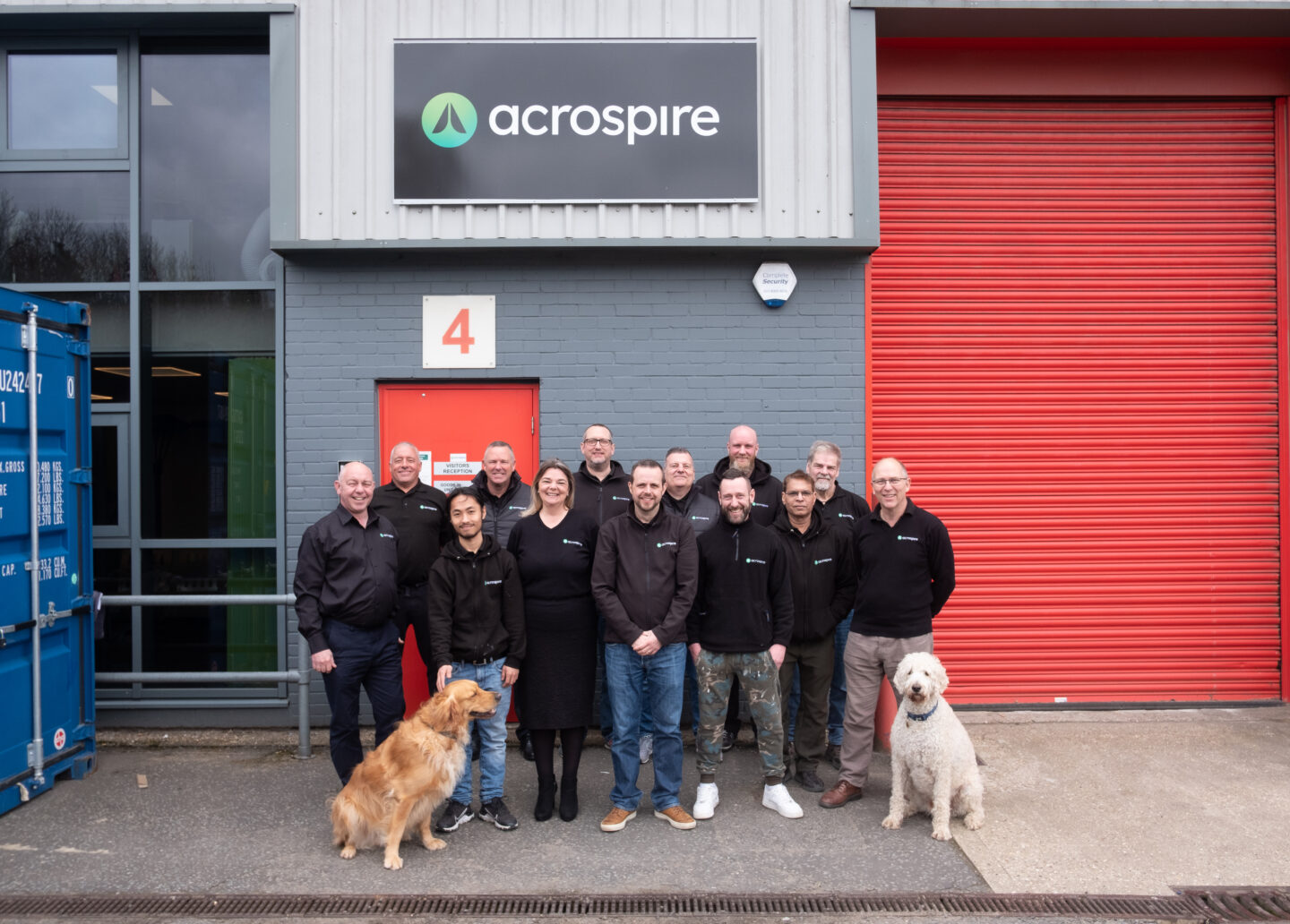
Acrospire now inhabits a 14000² ft manufacturing facility in Basingstoke, Hampshire. We’re a proud partner of the Made in Britain scheme, ISO9001 certified and a member of all relevant lighting industry trade bodies.

We've built a reputation to be proud of

Along with great relationships with our customers and a great team! We've attracted some of the most experienced members of the lighting industry, all by following one golden rule.

A simple ethos

Creating work to be proud of

That runs through all that we do. Customers who have made the switch to Acrospire have found working with us to be a breath of fresh air.

Market leading warranty

If you’re a professional in the lighting industry, you’re probably familiar with warranties that range from 3 to 10 years, with extensions available on special request or at additional cost. At Acrospire, where we’re proud to be different, we offer a market-leading simple 12-year warranty, as standard.

Tight Control on Quality

We focus on our customers not our competition. We manufacture our products in the UK: with the exception of our solar products, our supply chain is within a 60-mile radius of our factory in Basingstoke: to maintain greater control over quality. We al

Speed is key

Speed of response is crucial when it comes to resolving warranty issues. If we’ve made a mistake, we own it, get to the root cause, and fix it as quickly as possible. We believe in timely communication with our customers and making the resolution pro

Test and Test Again

We believe in independent testing and certification. Our new product development is in line with ISO 9001. Many of our products hold ENEC Certification. To meet the requirements of ENEC we also send random product samples for third party safety testi

Quality by design

Our product design is another key factor in our ability to offer a 12-year warranty. We value engineer rather than cost cut, never compromising on quality. We stick to our processes and engage with our supply chain to ensure that every product meets