How to Choose the Right Dichroic Beamsplitter for Your Needs?
Choosing the right Dichroic Beamsplitter is crucial for achieving optimal optical performance. These components play a pivotal role in separating light based on wavelength. When selecting a dichroic beamsplitter, one must consider various factors like wavelength ranges, loss percentages, and compatibility with your system. Each application may require different specifications, which complicates the decision-making process.
Understanding the unique features of different dichroic beamsplitters can enhance your setup. For instance, the spectral performance and angular sensitivity can vary significantly among products. It can be challenging to balance quality with budget constraints, which might lead to difficult choices. Make sure to consult expert resources or manufacturers to gain insights into the most suitable options.
In this complex field, ongoing research and feedback from users are essential. There may not always be a perfect solution, and sometimes compromises are necessary. Keeping abreast of advancements in technology can ensure you select the best dichroic beamsplitter for your needs. Thus, thorough evaluation and expert guidance can lead to more informed decisions in your optical projects.
Understanding the Basics of Dichroic Beamsplitters
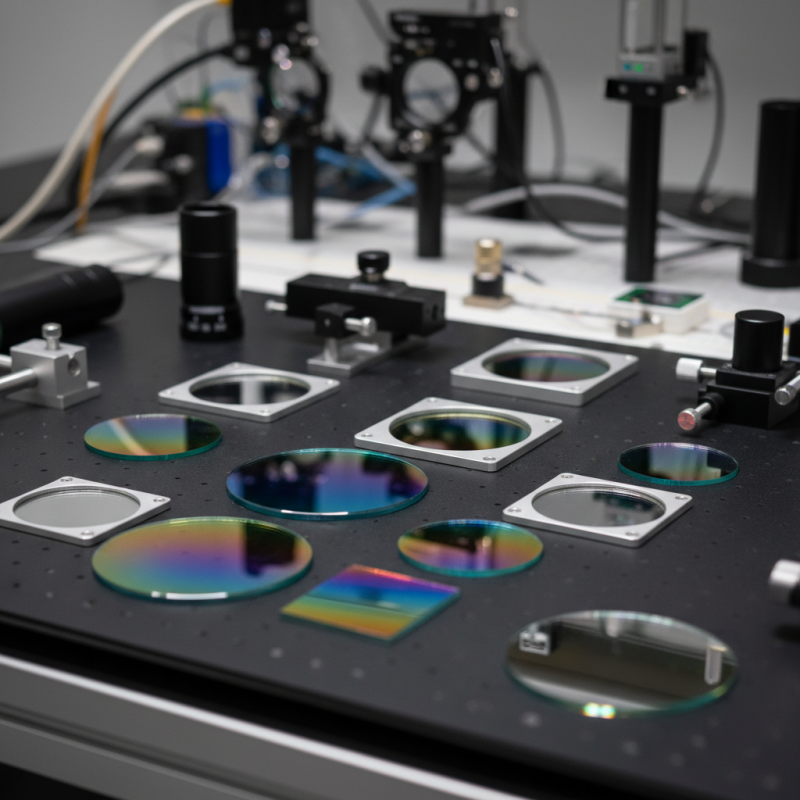
Dichroic beamsplitters are essential tools for optical applications. They selectively transmit and reflect light based on wavelength. Understanding their basics helps in choosing the right one for specific needs. This includes recognizing their coating and design.
A dichroic beamsplitter has a special coating. This coating defines its reflective and transmissive properties. Factors like angle of incidence and wavelength range matter significantly. Most available beamsplitters target specific parts of the spectrum. For instance, some may reflect blues while allowing reds to pass.
Consider your application carefully. Misalignment of a beamsplitter can lead to undesired results. It might not separate light as intended. This could affect experiments or imaging systems. Therefore, testing and calibrating before finalizing choices is crucial. Knowing these details enhances the effectiveness of optical setups.
Understanding the Characteristics of Dichroic Beamsplitters
Key Factors to Consider When Choosing a Dichroic Beamsplitter
Choosing the right dichroic beamsplitter is critical for optimal optical performance. Key factors such as wavelength range, transmission efficiency, and polarization sensitivity greatly influence your selection. Industry reports indicate that beamsplitters can impact system performance by up to 30% if not chosen properly. This highlights the importance of understanding specific project requirements.
Wavelength range is particularly crucial. Beamsplitters designed for specific wavelengths enhance signal quality. For example, visible light beamsplitters typically work best in the 400-700 nm range. If your application spans multiple wavelengths, consider a broadband dichroic option.
Transmission efficiency is another key factor. Quality beamsplitters can exceed 90% efficiency in their designated wavelength bands. However, misalignment or poor installation can lower this efficiency and lead to unpredictable results. Being aware of these potential pitfalls is vital for maintaining system integrity. Always incorporate precise alignment techniques to maximize performance.
Analyzing Your Application Needs for Optimal Performance
When selecting a dichroic beamsplitter, understanding your application needs is crucial for achieving optimal performance. Data from the Photonics Industry Association indicates that improper selection can lead to a 30% loss in efficiency. Therefore, consider the specific wavelengths you intend to work with. Some applications might require high transmittance for certain wavelengths while reflecting others. Getting this right can significantly enhance your system's effectiveness.
Additionally, assess the environment where the beamsplitter will be used. Factors like temperature and humidity can impact performance. Research shows that operating outside recommended conditions can shorten the lifespan of optical components by up to 50%. It’s essential to analyze the power density as well. Overwhelming intensities can cause thermal effects, which might yield faulty results.
Lastly, be prepared to reflect on your choices. Sometimes, a beamsplitter may not fit perfectly with your system, and slight adjustments could be necessary. Collaborate with optical engineers to ensure that you minimize performance trade-offs. Balancing cost and performance often requires a nuanced approach. Striving for perfection in this choice will significantly affect your project's success.
How to Choose the Right Dichroic Beamsplitter for Your Needs?
| Application | Wavelength Range (nm) | Transmission (% at Selected Wavelength) | Reflection (% at Selected Wavelength) | Polarization Type |
| Fluorescence Microscopy | 400 - 700 | 90 | 10 | Linear |
| Laser Applications | 500 - 800 | 95 | 5 | Circular |
| Optical Coherence Tomography | 800 - 1300 | 85 | 15 | Linear |
| Spectroscopy | 300 - 900 | 92 | 8 | Linear |
| Telecommunications | 1200 - 1600 | 88 | 12 | Circular |
Comparing Different Types of Dichroic Beamsplitters Available
Dichroic beamsplitters play a crucial role in optical applications by selectively splitting light based on wavelength. When choosing the right type, understanding the available options is essential. Common types include edge, bandpass, and notch beamsplitters. Each type has distinct characteristics suited for specific uses. For instance, edge beamsplitters are ideal for separating light into two distinct beams. Conversely, bandpass beamsplitters efficiently transmit certain wavelengths while reflecting others. A comprehensive report by SPIE indicates that these components are key in sectors such as microscopy and laser technology.
When selecting a dichroic beamsplitter, consider your specific needs. Do you require high transmission? Look for coatings designed for maximum throughput. If your application involves lasers, prioritize components that minimize loss. Tips: Check the angle of incidence specified for optimal performance. Ensure the thermal sensitivity aligns with your system requirements.
Understanding the performance metrics can be daunting. For example, if a beamsplitter reflects 50% of light and transmits 50%, what happens to the phase? This is where knowing the source characteristics becomes vital. Sometimes, the material selection can create unexpected outcomes. Always review technical data thoroughly. Measurements might not match ideal conditions. This emphasizes the importance of experimentation in real-world applications.
Best Practices for Maintaining and Using Dichroic Beamsplitters
Dichroic beamsplitters are essential tools in optics. They separate light into different wavelengths. Proper maintenance is vital for their performance. Regular cleaning is one key step. Use a soft, lint-free cloth with a suitable solvent. Avoid touching the surface directly. Fingerprints and dust can significantly affect performance.
Storing dichroic beamsplitters correctly extends their lifespan. Keep them in a dry, dust-free environment. Humidity and temperature fluctuations can cause damage. According to the Optical Society, improper storage can lead to optical degradation over time. Use protective cases to shield them from physical impact. This can prevent scratches and ensure reliability.
For optimal performance, routinely check alignment. Misalignment can lead to reduced efficiency. Engage with an optical expert for periodic assessments. They can ensure your beamsplitters are functioning at their best. Remember, even minor variations in setup can lead to significant changes in results. Keeping a consistent operational protocol is crucial. Follow these practices for long-lasting and effective usage.