Best Tube Bending Machine in 2026 Which Type to Choose?
Choosing the Best Tube Bending Machine in 2026 is not about buying the largest or fastest model. It is about matching the machine to the tube, bend geometry, and production target. A thin-wall stainless tube may wrinkle under pressure. A tight-radius bend may demand precise mandrel support. And a machine that excels on one sample can struggle with another. Small details matter.
Automation is reshaping manufacturing, including tube processing. The International Federation of Robotics’ World Robotics 2024 report recorded 4.28 million industrial robots operating in factories worldwide in 2023. That figure does not measure tube-bending-machine sales, but it signals the growing role of automated production. For buyers, the practical question is whether CNC control, automatic loading, or integrated measuring can reduce handling and repeat setup work. More automation is not always better. It can add cost and complexity.
Manufacturing engineer Shigeo Shingo is widely credited with the observation, “The most dangerous kind of waste is the waste we do not recognize.” It is a useful lens for machine selection: hidden scrap, slow changeovers, and repeated trial bends can quietly outweigh a low purchase price. Still, no report or quotation can choose a machine for your shop. Test your actual material, wall thickness, and bend radius before deciding. A ranking is only a starting point. This guide compares rotary-draw, roll, compression, and CNC options, so readers can identify the best Tube Bending Machine for their workload—and question assumptions that may not hold on the production floor.
What Is a Tube Bending Machine and How Does It Work?
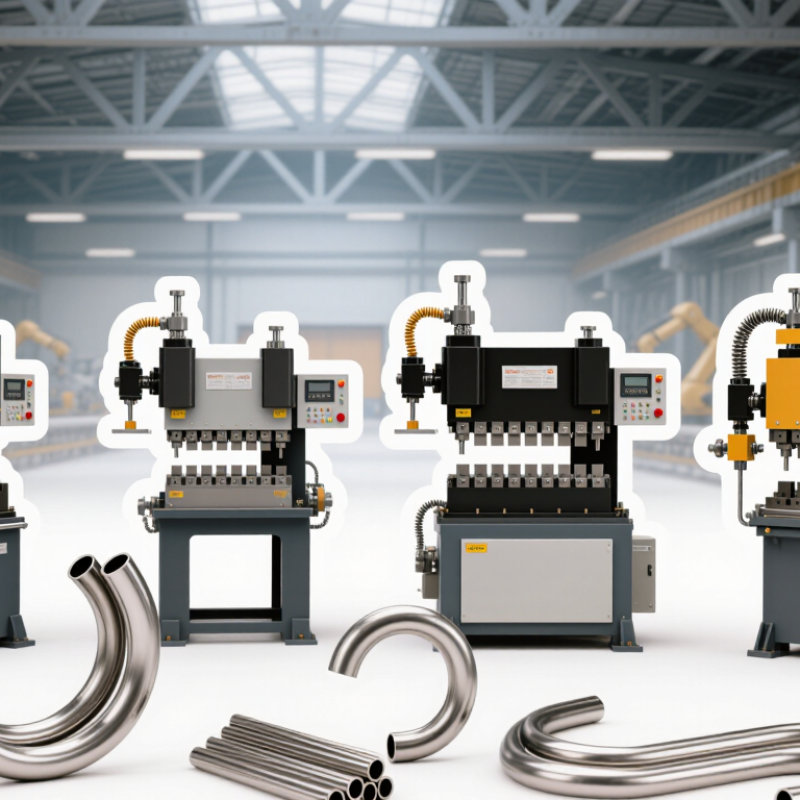
A tube bending machine reshapes straight metal tubing into controlled curves without cutting it. The tube is clamped against a bend die, while a pressure die guides it around the die’s radius. For thin-walled tubes, a mandrel inside the tube helps limit flattening and wrinkles. The setup matters. Material, wall thickness, diameter, and bend radius all affect the result.
Manual machines suit occasional, simple bends. CNC machines control feeding, rotation, and bend angle for repeatable parts. The International Federation of Robotics’ World Robotics 2024 report recorded 541,302 industrial robot installations worldwide in 2023, reflecting broader growth in manufacturing automation. That figure does not measure tube benders specifically, but it shows why automated production is gaining attention. Still, a CNC machine cannot fix poor tooling choices. Even experienced operators can miss springback on a new material batch.
Tips: Run a short test piece before production. Measure the finished angle and check for flattening at the outer curve. Record the settings, but treat them as a starting point; small material differences can change the bend.
Which Types of Tube Bending Machines Are Available?
Tube-bending machines differ by how they form the tube and how much control they offer. Manual rotary-draw machines suit occasional work and simple parts, but depend heavily on operator skill. Hydraulic rotary-draw models add force for thicker sections. With a mandrel inside the tube, they can reduce flattening and wrinkles on tight bends. That detail matters.
Roll-bending machines use several rollers to form broad, gradual curves, often for frames and handrails. Compression benders press the tube around a fixed die; they are simpler, though less suitable for demanding tight-radius bends. CNC machines control bend angle, rotation, and feed, making repeat batches more consistent. Some also use mandrels. Cost and setup time rise, so automation is not automatically the right choice.
The International Energy Agency’s Global EV Outlook 2024 reports nearly 14 million electric-car sales in 2023, around 18% of global car sales. That shift can increase demand for accurately formed chassis and cooling-system tubes, though it does not dictate one machine type. Match the machine to material, diameter, wall thickness, bend radius, and production volume. Test a sample tube. A small springback difference can spoil fit-up, and software estimates may not capture every material variation.
What Should You Compare When Choosing a Machine in 2026?
When comparing tube bending machines in 2026, start with the work you actually produce. Check tube diameter, wall thickness, material, and required bend radius against the machine’s rated capacity. A stainless tube with a thick wall needs different force and tooling from a thin aluminum tube. Ask for a sample bend using your own material, then inspect the angle, surface marks, and springback. A clean brochure photo proves little.
Compare control options, setup time, tooling changes, and the space needed around the machine. CNC control can improve repeatability on complex parts, but it may add cost and training demands. For short runs, simpler controls might be easier to manage. Check what routine maintenance involves, how quickly common wear parts are available, and whether operators can get practical training. There is no perfect setup. A small compromise may still be the right one.
Tips: Bring a drawing and a real tube sample to a supplier demonstration. Ask how the machine handles your tightest radius and longest part. Record cycle time, setup steps, and any manual corrections. Compare the full working cost, not just the purchase price. I would leave some capacity in reserve, though too much machine can mean paying for power and features your shop rarely uses.
Best Tube Bending Machine in 2026: Which Type Should You Choose?
Compare common bending processes by their typical suitability for key production needs.
How to read this chart: Ratings are qualitative application-fit indicators from 1 (limited fit) to 5 (strong fit), not measured machine specifications. CNC rotary draw bending is commonly selected for precise, repeatable bends; roll bending for broad-radius curves; compression bending for simpler bends; and induction bending for large or heavy sections. Actual suitability depends on tube material, diameter, wall thickness, bend radius, tooling, and setup.
Which Machine Type Best Fits Your Application?
Choosing a tube bending machine starts with the bend, not the machine’s headline capacity. Rotary-draw bending suits repeatable parts with defined angles, such as frames or handrails. For thin-wall tube or tight radii, a mandrel can support the inside wall and reduce flattening. It adds setup work, though. The tooling must match the tube’s diameter and material.
Roll bending is usually a better fit for long, gradual curves, such as large-radius rails or architectural sections. It is less suited to short, sharply defined bends. Compression bending can work for simpler shapes and moderate production needs, but the outside of the tube may distort more. Small detail. Check the finished part, not just the bend diagram.
Before choosing, note the tube material, wall thickness, bend radius, angle tolerance, and daily production volume. A machine that handles one sample beautifully may struggle with a full shift of mixed parts. Ask for a trial using your actual tube, and measure ovality and springback afterward. One detail is easy to miss: loading space. A long tube needs room to swing, even when the bend itself is small. The “best” type can change once the shop layout enters the picture.