Best Factory Workshop Light Options for Global Buyers?
When selecting the right Factory Workshop Light, buyers face numerous choices. According to a recent report by the International Association of Lighting Designers, nearly 30% of manufacturing facilities report inadequate lighting as a significant issue. Poor lighting can decrease productivity and impact safety, make workspaces uncomfortable, and lead to increased accidents.
Effective lighting enhances worker efficiency by up to 25% and reduces errors significantly. Modern lighting solutions, such as LED fixtures, are energy-efficient and offer longer lifespans, which can save costs. However, many factories still rely on outdated systems. This reliance raises questions about sustainability and operational excellence.
As global buyers evaluate their options, they must consider factors such as brightness, energy consumption, and long-term performance. Choosing the right Factory Workshop Light is not merely about illumination; it is a strategic decision impacting overall factory operations. A thoughtful approach can bridge the gap between current lighting conditions and the ideal environment for manufacturing success.
Best Factory Workshop Light Options for Global Buyers
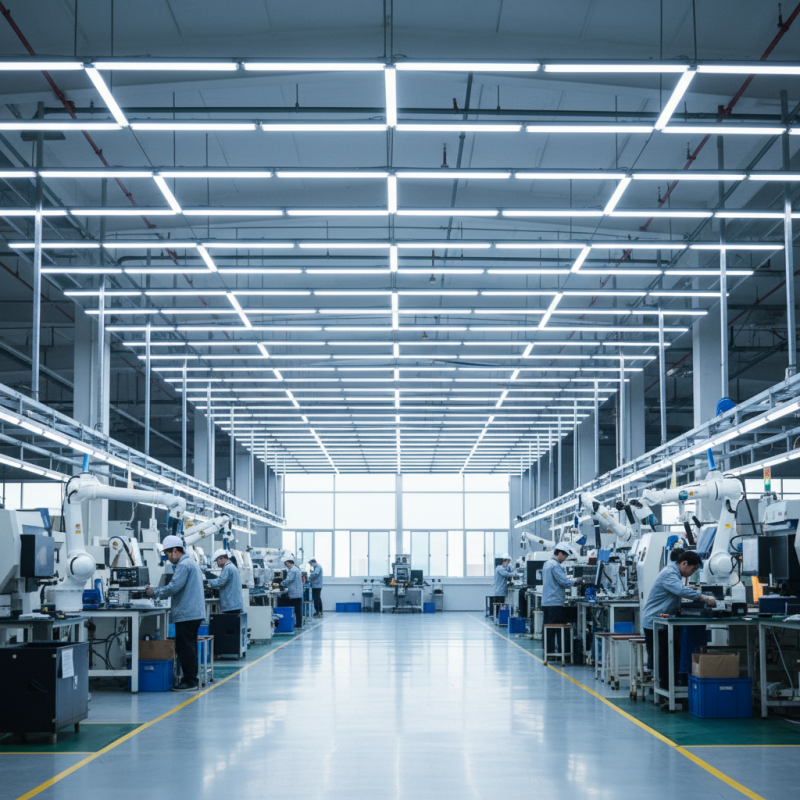
When choosing the best factory workshop lights, global buyers must consider multiple factors. Light quality is paramount. Brightness, color temperature, and energy efficiency are essential. LED lights often provide superior illumination while reducing energy costs.
In workshops, durability is another critical aspect. Lights should withstand harsh conditions like dust and vibrations. Look for waterproof or impact-resistant options. However, not all durable lights offer optimal brightness. Some may focus too much on toughness, compromising visibility.
Understanding local requirements is crucial too. Different regions may have specific electrical standards and safety regulations. Some buyers might overlook this and face compliance issues later. Balancing these varying aspects requires careful consideration. Each element plays a role in creating an effective work environment. Therefore, buyers should prioritize their unique needs and expectations.
Best Factory Workshop Light Options for Global Buyers
| Light Type | Lumen Output | Energy Efficiency (watts) | Lifespan (hours) | Cost ($) |
| LED High Bay | 15,000 | 150 | 50,000 | 80 |
| Fluorescent Fixture | 10,000 | 120 | 15,000 | 50 |
| Incandescent Bulb | 800 | 60 | 1,000 | 2 |
| LED Panel Light | 3,000 | 40 | 50,000 | 30 |
| LED Tube Light | 1,200 | 15 | 30,000 | 10 |
Overview of Factory Lighting: Importance and Industry Standards
Proper factory lighting plays a crucial role in ensuring safety and productivity in industrial environments. Poor lighting can lead to accidents, reduced efficiency, and diminished worker morale. According to the International Lighting Commission (CIE), improper lighting can decrease work performance by up to 30%. This statistic highlights the need for adherence to industry standards while selecting appropriate lighting solutions.
When evaluating lighting options, consider the lighting intensity required for specific tasks. For instance, assembly lines may need up to 1,000 lux for optimal visibility, while storage areas might only require 100 lux. It’s essential to balance brightness with energy efficiency to meet environmental goals. The U.S. Department of Energy reports that upgraded lighting can reduce energy costs by approximately 50%.
Tips: Regularly assess your factory’s lighting to identify areas that may need improvement. Incorporate both artificial and natural light sources to boost morale. Remember to involve your staff in discussions about lighting preferences; their input can provide valuable insights into how lighting affects their work. Adjustments can be as simple as repositioning fixtures or changing bulb types. It’s an ongoing process that requires reflection and adaptation to keep up with evolving standards and needs.
Types of Workshop Lights: Fluorescent, LED, and HID Compared
When choosing workshop lights, understanding the three main types is crucial. Fluorescent lights have been widely used for years. They consume less energy than incandescent options. However, their color rendering ability is often considered inferior. Studies show that their lifespan averages around 10,000 hours. This can lead to higher maintenance costs over time.
LED lights are gaining popularity due to their efficiency. They consume up to 75% less energy than traditional bulbs. The lifespan can reach 50,000 hours, significantly reducing replacement frequency. Many professionals appreciate their bright, clear illumination. However, quality can vary between manufacturers. Choosing reliable sources is essential to ensure durability and performance.
High-Intensity Discharge (HID) lights offer another option. They provide intense brightness, suitable for large spaces. HID lights can improve visibility in workshops, but they also have downsides. Their warm-up time can be lengthy. Additionally, they often require special fixtures. Comparing these types reveals a trade-off between initial costs and long-term sustainability. Each type has strengths and weaknesses, and being informed is key for global buyers.
Key Factors in Choosing Factory Lights: Lumen Output and Efficiency
When selecting factory lights, lumen output is crucial. Lumen measures brightness. A higher lumen output means more light, enhancing visibility. According to the Illuminating Engineering Society (IES), an adequate lumen level for industrial spaces ranges between 300 to 1,000 lumens per square meter, depending on the tasks performed. Poor lighting can lead to errors. Workers may struggle to see details, negatively affecting productivity.
Efficiency also plays a significant role. Energy-efficient lights save costs in the long run. Reports from the U.S. Department of Energy indicate LED lights can provide up to 80% energy savings compared to traditional incandescent bulbs. This reduction in energy usage lowers electric bills. Additionally, energy-efficient options reduce environmental impact, making factories more sustainable.
It's essential to balance lumen output with energy efficiency. Sometimes, high lumen levels come with increased energy consumption. A careful assessment is necessary to avoid over-lighting spaces. While it may seem beneficial, excessive brightness can cause glare. This discomfort can hinder worker performance. Choosing the right factory lights requires thoughtful evaluation and understanding of both lumens and efficiency.
Global Market Trends: Growth Rates in Industrial Lighting Solutions
The global industrial lighting market is experiencing significant changes. A shift towards energy-efficient solutions is shaping buyer preferences. Many buyers are seeking products that not only brighten up factory workshops but also minimize energy consumption. This trend is primarily driven by rising electricity costs and environmental concerns.
Recent reports highlight that LED technology is gaining traction. These lights provide better illumination and last longer than traditional options. However, not all LEDs are equal in quality. Some cheaper options may fail to meet expected performance. Buyers should be aware of varying standards and specifications. It's essential to prioritize quality over price to ensure long-term satisfaction.
Additionally, customized lighting solutions are becoming more popular. Workshops have unique requirements, and a one-size-fits-all approach may not work. Companies are looking for tailored options that suit their specific environments. Nonetheless, finding reliable suppliers for custom solutions can be challenging. Many buyers need to invest time in researching potential partners and evaluating their performance history.
Conclusion
The article "Best Factory Workshop Light Options for Global Buyers" provides an in-depth exploration of the critical role of effective factory lighting in enhancing productivity and safety. It outlines the importance of adhering to industry standards for lighting, emphasizing that well-lit environments contribute significantly to operational efficiency. The discussion includes a comparison of different types of workshop lights, such as fluorescent, LED, and HID options, highlighting their advantages and suitability for various factory settings.
Moreover, the article examines key factors to consider when selecting factory workshop lights, including lumen output and energy efficiency. Global market trends indicate a burgeoning demand for advanced industrial lighting solutions, driven by increased awareness of energy conservation and enhanced workplace visibility. Through case studies of successful factory lighting implementations worldwide, the article illustrates the transformative impact of optimal lighting in manufacturing environments, making a compelling case for global buyers to invest in quality lighting solutions for their workshops.